A torn distal biceps tendon can seriously affect your arm strength and daily function. Distal biceps repair is a surgical procedure that reattaches the tendon to the radius bone in your forearm.
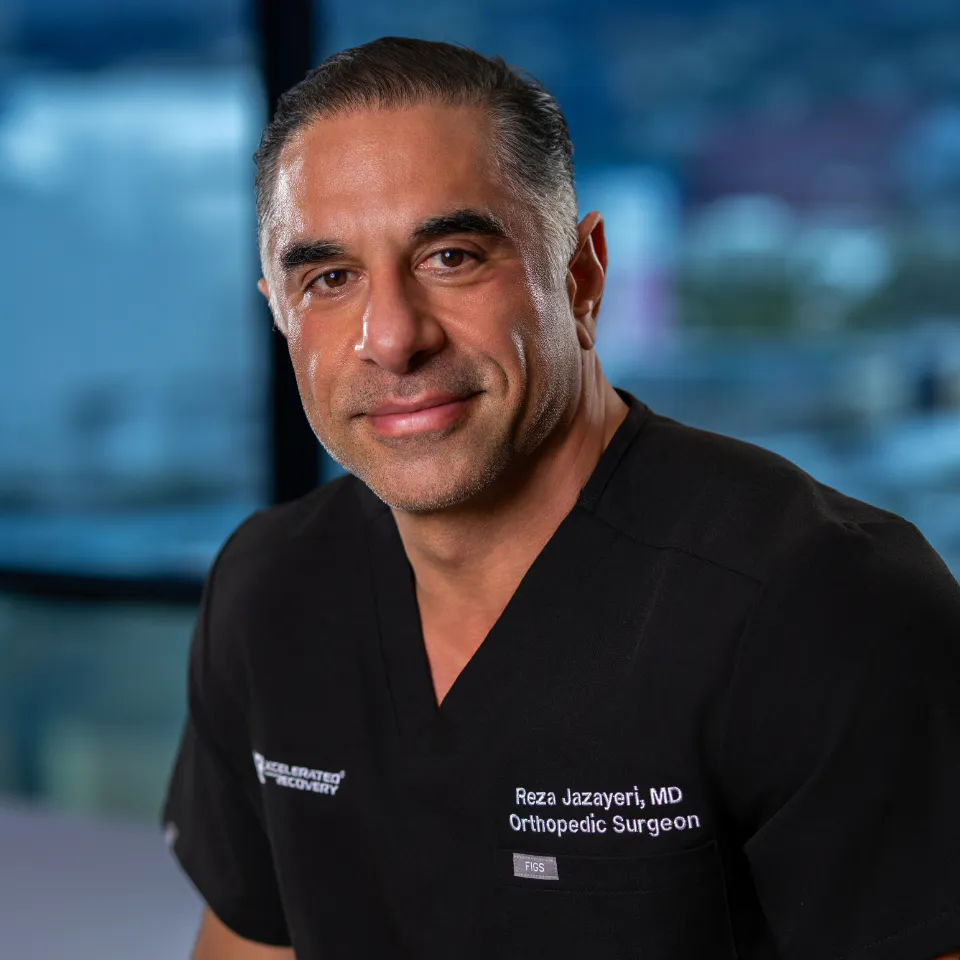
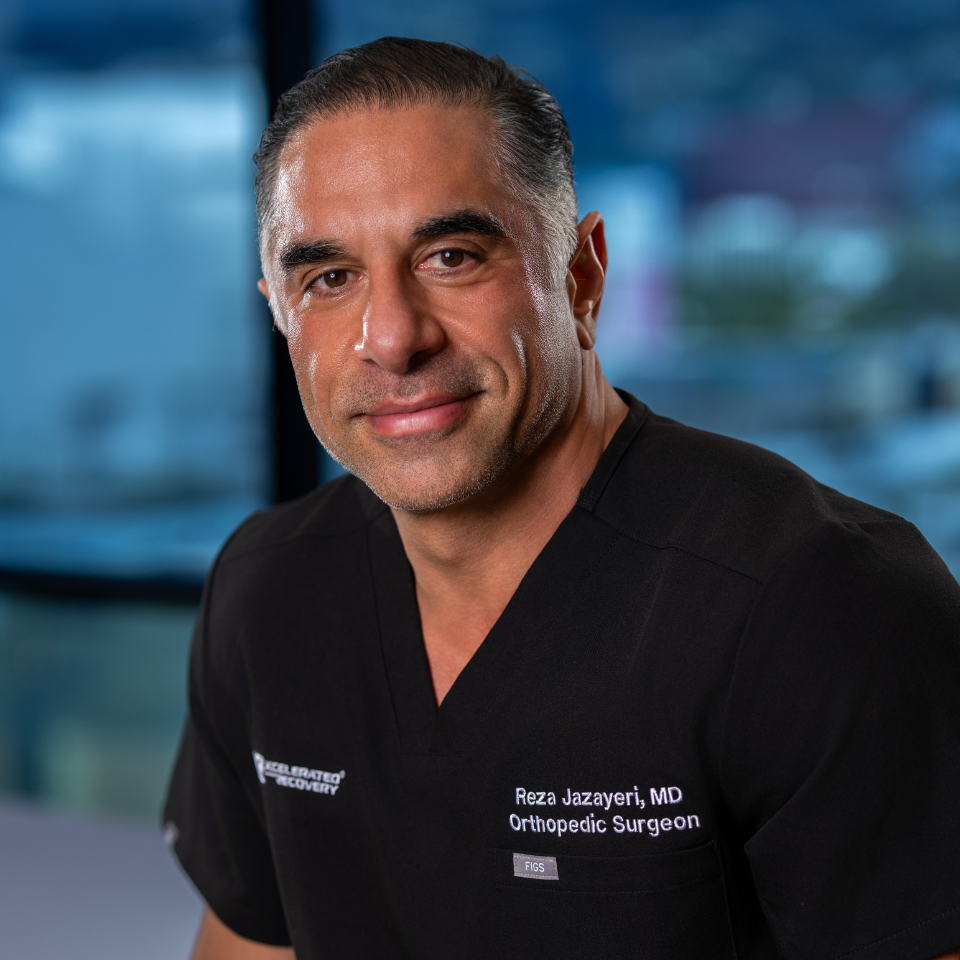
Dr. Reza Jazayeri is a double board-certified orthopedic surgeon specializing in sports medicine. He has over 15 years of experience treating athletes and active adults across the Greater Los Angeles area.
His practice focuses on sports medicine for the shoulder, knee, and elbow. He uses advanced fixation methods combined with biologic support to help restore strength and durability.
Patients know him as Dr. Jaz, and he sees them at his Beverly Hills, Westlake Village, and Orange offices. If a distal biceps injury has you concerned, getting a prompt evaluation matters – early treatment can improve recovery outcomes.
Anatomy of the Distal Biceps
The biceps brachii muscle has two proximal tendons (long and short heads) and a single distal tendon that inserts onto the radial tuberosity in the forearm. This tendon is responsible for two critical movements:
- Elbow flexion (bending the arm)
- Forearm supination (rotating the palm upward)
A distal biceps tear disrupts these functions and often occurs during a sudden, forceful extension of the elbow under load, commonly while lifting or pulling.
Signs and Symptoms:
Patients with a distal biceps tendon rupture typically report:
- A sudden “pop” or tearing sensation in the front of the elbow
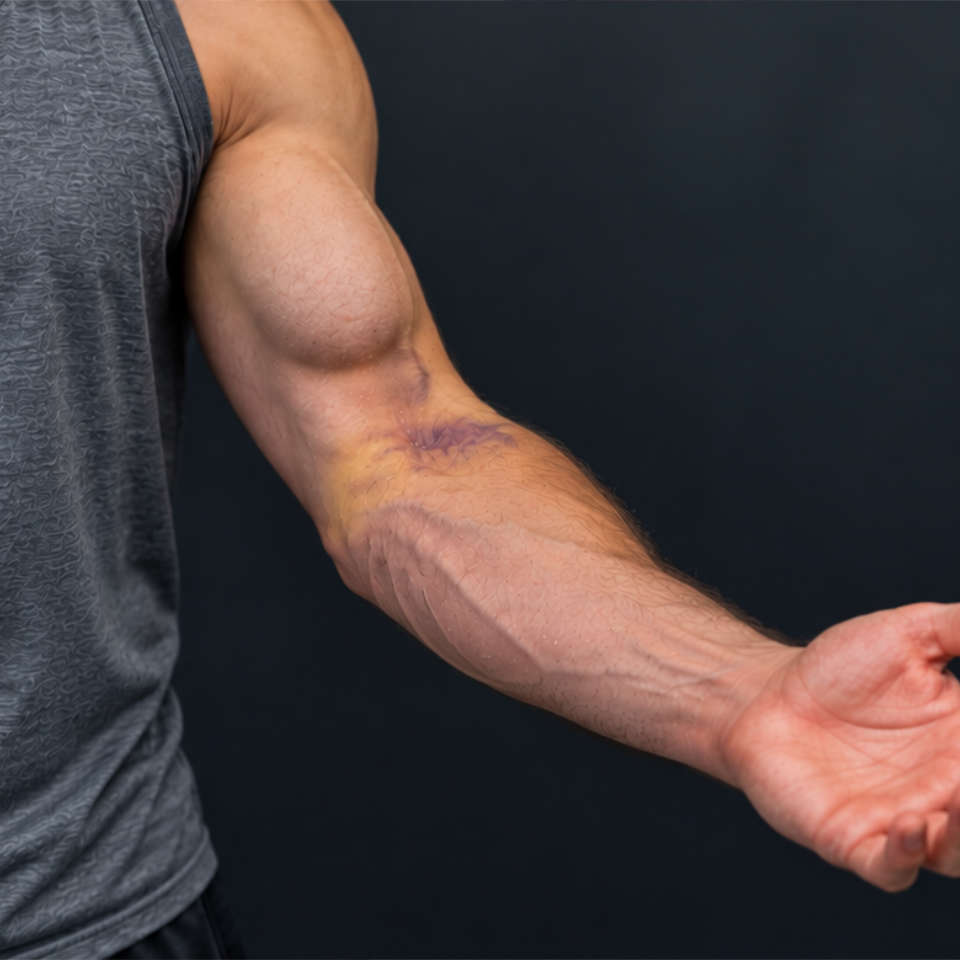
- Sharp pain, followed by bruising and swelling
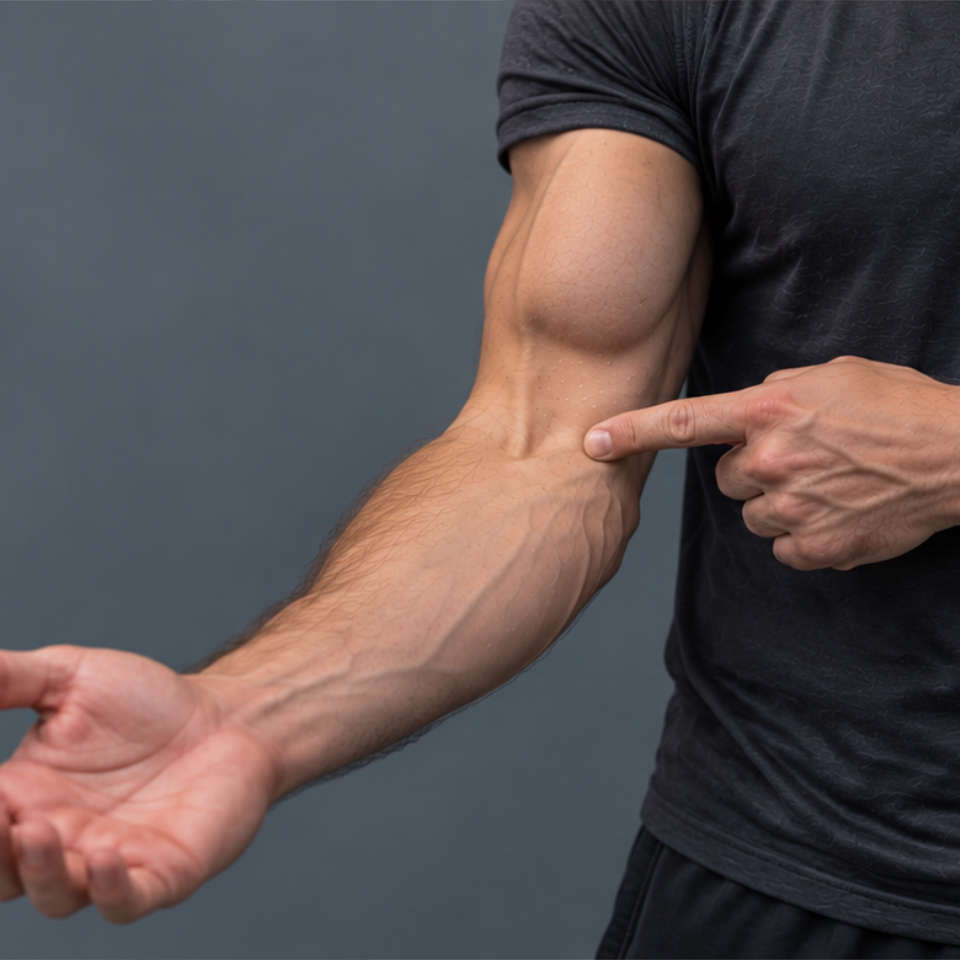
- A visible change in arm contour (“Popeye” deformity)
- Weakness in elbow flexion and forearm rotation
- Difficulty lifting or rotating objects (e.g., turning a doorknob or using a screwdriver)
The Diagnostic Workup Evaluation includes:
- Physical examination (Hook test, supination resistance)
- MRI to confirm the presence of a partial or complete tear, and determine the degree of retraction or tendon degeneration
Nonoperative Management
Non-surgical treatment may be appropriate for:
- Low-demand patients
- Partial or low-grade tears
- Medically complex patients for whom surgery carries excessive risk
However, studies show that nonoperative management of complete tears leads to permanent strength deficits:
- 30–50% loss of supination strength
- 20–30% reduction in elbow flexion strength
- Impaired endurance, especially during repetitive tasks
For active individuals, these deficits can significantly impact function, particularly in lifting, rotation, or manual labor.
In Partial Tears:
Especially with ongoing pain or functional limitation, ultrasound-guided orthobiologic injections—such as PRP (Platelet-Rich Plasma) or BMAC (Bone Marrow Aspirate Concentrate)—may aid healing and reduce inflammation. These biologic therapies are designed to enhance tissue regeneration and are often used alongside physical therapy.
Surgical Repair
Surgical reattachment is the standard of care for complete distal biceps tendon tears, particularly in patients who wish to return to high-demand activities or occupations.
Dr. Jazayeri’s Advanced Surgical Approach
Dr. Reza Jazayeri, a double board-certified orthopedic surgeon, specializes in treating complex distal biceps tendon injuries using a comprehensive and modern approach that combines mechanical strength with biologic healing support. His technique is designed to restore full arm strength and function—especially for athletes, active individuals, and those requiring revision surgery.
BIO-enhanced Distal Biceps Reconstruction
This advanced reconstruction method blends the strongest available fixation techniques with biologic tissue reinforcement and regenerative medicine to optimize healing and long-term success.
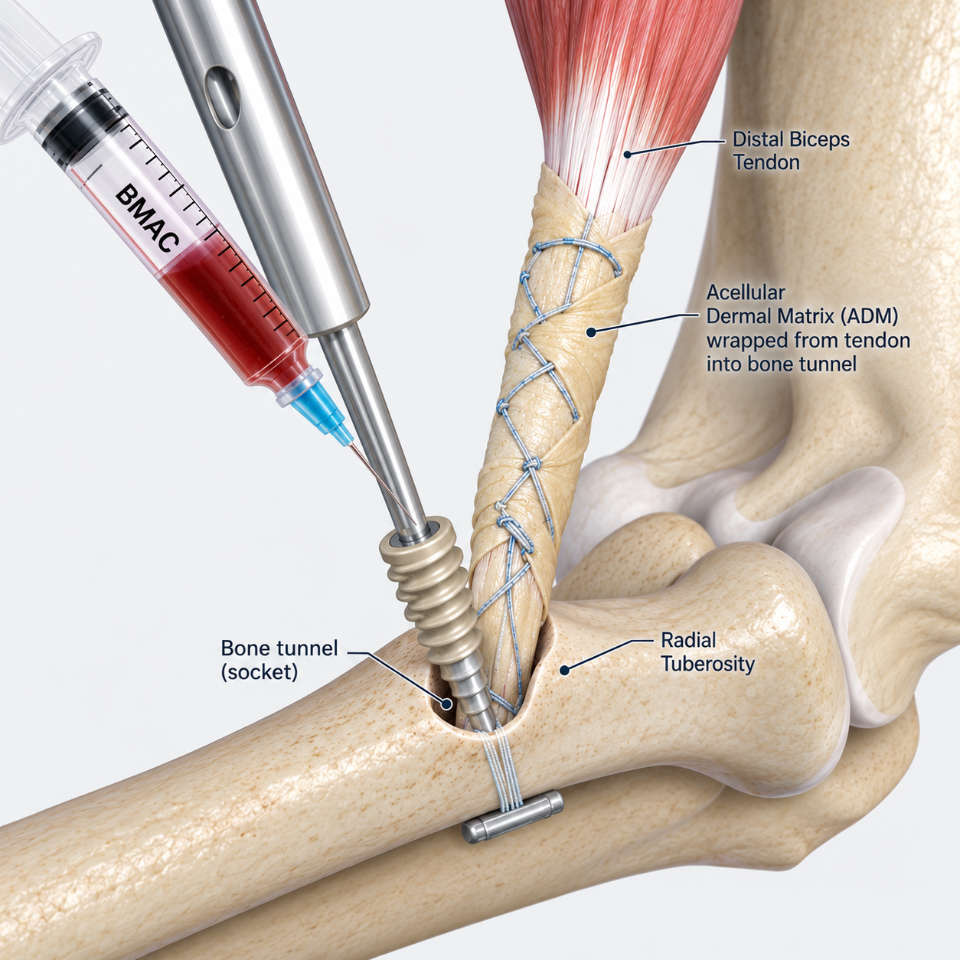
- Strongest Fixation for Tendon Repair Dr. Jazayeri uses a dual-fixation system:
- 3 times stronger than the bone bridge and 2 times stronger than the anchor fixation
Cortical button and interference screw:
These low-profile implants securely anchor the tendon to the bone, offering exceptional strength—especially important during early rehab when stress is placed on the repair.
Watch: Distal Biceps Repair with Arthrex® Tension Slide

High-Strength Sutures:
Used to reduce the risk of early failure and support safe movement during recovery.
Acellular Dermal Matrix (ADM)
Reinforcement in cases where the tendon is worn down, retracted, or weakened (such as chronic tears or revision surgeries), Dr. Jazayeri may add an ADM graft to reinforce the repair. ADMs are biologic scaffolds made from donor tissue, processed to remove cells but retain a strong collagen structure. Their benefits include:
- Thickening and strengthening the repair site
- High suture pullout strength for added security
- Support for healing by allowing blood vessels and the patient’s own cells to grow into the graft
Research shows that ADM augmentation:
- Increases the repair’s load to failure and stiffness
- Decreases gap formation
- Helps restore the native biomechanics of the tendon
This makes ADM particularly valuable for athletes or weightlifters returning to high-intensity activity.
Orthobiologic Injections: PRP or BMAC To further support healing
Dr. Jazayeri often adds regenerative cell-based therapy at the time of surgery:
- Platelet-Rich Plasma (PRP) delivers concentrated growth factors that reduce inflammation and promote tissue repair
- Bone Marrow Aspirate Concentrate (BMAC) contains mesenchymal stem cells that support tendon regeneration
These biologic enhancements are designed to:
- Accelerate recovery timelines
- Reduce postoperative pain
- Improve tendon healing and remodeling
Why This Matters:
This combination of cutting-edge surgical fixation, biologic scaffolding, and regenerative support provides a comprehensive solution for patients with distal biceps tendon injuries. This comprehensive strategy enables Dr. Jazayeri to restore the strength and durability of the distal biceps tendon, allowing patients to confidently return to lifting, training, and performing at their highest level.
Dr. Jazayeri’s approach is designed to:
- Maximize repair strength and durability
- Speed up healing and return-to-activity
- Reduce the risk of re-tear or long-term weakness
With this advanced strategy, patients can regain the confidence and strength needed to safely return to training, competition, or demanding work—often stronger than before.
Postoperative Recovery
Dr. Jazayeri’s recovery protocol is carefully structured and includes:
- Early protection with controlled motion
- Structured physical therapy, both in-person and digitally guided, with progressive loading
- Nutritional optimization, including targeted amino acid supplementation to reduce catabolic stress, preserve muscle mass, and promote collagen synthesis
Recovery timelines vary, but most patients regain full function and return to activity within 3–6 months, depending on the severity of the tear and the demands of their lifestyle.
A Surgeon Who’s Been on the Other Side of the Table
Dr. Jaz knows this injury personally, not just from the operating room.
While playing on the gymnastic rings with his daughter, he felt the sudden pop that many of his patients describe. He had torn his own distal biceps tendon, in his operating arm, the arm his career depends on. He needed surgery.
That experience gave him a patient’s view of everything you may be feeling right now: the worry about losing strength, the questions about recovery, and the uncertainty about getting back to work, sport, and family life.
When it came time for his own repair, he chose the same fixation technique he uses for his high-level athletes. That same option is available to you. Depending on your tear, Dr. Jazayeri may also use:
- Biologic augmentation to support the tendon-to-bone healing environment
- Allograft (donor tissue) augmentation for chronic or retracted tears where the tendon can no longer reach its attachment
Dr. Jazayeri has performed hundreds of distal biceps repairs, including on fellow surgeons, medical colleagues, and competitive athletes. These are people who know what to look for in a surgeon, and they trusted him with their arms.
“I’ve been the patient. I know what it means to worry whether your arm will ever feel the same. I treat every patient’s repair the way I wanted mine done.”
Frequently Asked Questions
-
Distal biceps tendon repair is a surgical procedure that reconnects a torn tendon to the bone in your forearm. This surgery is often necessary for individuals who experience a complete tear, which can happen during heavy lifting or sudden movements.
-
Common symptoms include a sudden popping sensation in the elbow, sharp pain, and swelling. You might also notice weakness when bending your elbow or rotating your forearm, making everyday tasks difficult.
-
Recovery typically takes three to six months, but this can vary based on the severity of the tear and your personal goals. Initial weeks focus on protection and gentle motion, with strengthening exercises introduced as you heal.
-
After surgery, you will wear a splint or brace for several weeks to protect the repair. Physical therapy will start with gentle range-of-motion exercises and gradually progress to strengthening as you recover.
-
Early treatment can lead to better recovery outcomes. Delaying evaluation may limit your surgical options and can affect your overall arm function in the long run.
Why Choose Us For Distal Biceps Repair
When it comes to distal biceps repair, experience matters. Dr. Reza Jazayeri is a double board-certified orthopedic surgeon specializing in sports medicine and has a strong focus on elbow care. His training at NYU Hospital for Joint Diseases and the Kerlan-Jobe Orthopaedic Clinic ensures you receive quality care.
At our practice, we prioritize your recovery. Dr. Jazayeri uses advanced techniques like the single-incision approach with strong fixation methods. This is designed to support recovery and return to daily activities as you heal.
We also incorporate biologic support to enhance healing. Our goal is to provide personalized care that meets your needs.
We understand that every patient is unique, that’s why we offer virtual consultations for those in the Greater Los Angeles area and beyond. Wherever you’re located, we’re here to help you regain strength and function after your injury.
Meet Dr. Reza Jazayeri
Dr. Reza Jazayeri specializes in sports medicine with expertise in shoulder, knee, and elbow injuries. A Southern California native, Dr. Jazayeri combines an engineering background with elite surgical training, completing his orthopedic surgery residency at the nationally ranked NYU Hospital for Joint Diseases and a sports medicine fellowship at the renowned Kerlan-Jobe Orthopaedic Clinic.
After more than 15 years caring for patients within the Southern California Permanente Medical Group, Dr. Jazayeri joined DOCS Health to expand a practice focused on personalized orthopedic and sports medicine care and surgical excellence. As Director of Longevity at DOCS Health, he leads the development and implementation of optimization protocols and regenerative medicine strategies designed to improve long-term musculoskeletal health and extend healthspan.
His published work includes a 2026 coauthored review of nutritional optimization in spine surgery in the Journal of the American Academy of Orthopaedic Surgeons. View Dr. Jazayeri’s research publications and training.
Thank you so much Doctor Jazayeri! I tore my Bicep recently, I needed to have the surgery right away, Doctor Jazayeri made time to get me on schedule right away. While meeting with me before surgery he discovered the possibility of rotator cuff damage and asked if I would like him to fix any damage if he found it nessary. I agreed and he not only fixed my bicep but also my rotator cuff. I’m about 8 weeks into my recovery and I feel great. I can’t believe how fast I’ve recovered and I can’t say enough how much I appreciate Doctor Jazayeri. Thank you again for all you have done for me.
Schedule Your Consultation Today
If you have symptoms of a distal biceps tendon rupture, early evaluation can make a difference. Distal biceps repair with a strong fixation method and biologic support may help you return to the activities you need and enjoy.
His practice welcomes active adults, athletes, and anyone dealing with elbow injuries. With over 15 years of experience and double board certification in orthopedic surgery and sports medicine, he brings focused skill to every case. Contact the Beverly Hills, Westlake Village, or Orange office today to schedule your consultation and learn more about your treatment options.
Medically reviewed by Reza Jazayeri, M.D. on