Hamstring injuries can stop you in your tracks, whether you are a competitive athlete or someone who stays active on weekends. These strains and tears in the muscles at the back of your thigh need a clear, structured recovery plan.
Dr. Reza Jazayeri, a double board-certified orthopedic surgeon with a sports medicine fellowship from the Kerlan-Jobe Orthopaedic Clinic in Los Angeles, brings over 15 years of experience treating these injuries. His approach combines advanced surgical techniques with biologic augmentation and metabolic optimization. He sees patients at his Beverly Hills, Westlake Village, and Orange offices, offering non-surgical options whenever possible.
International Faculty on Hamstring Injury Care
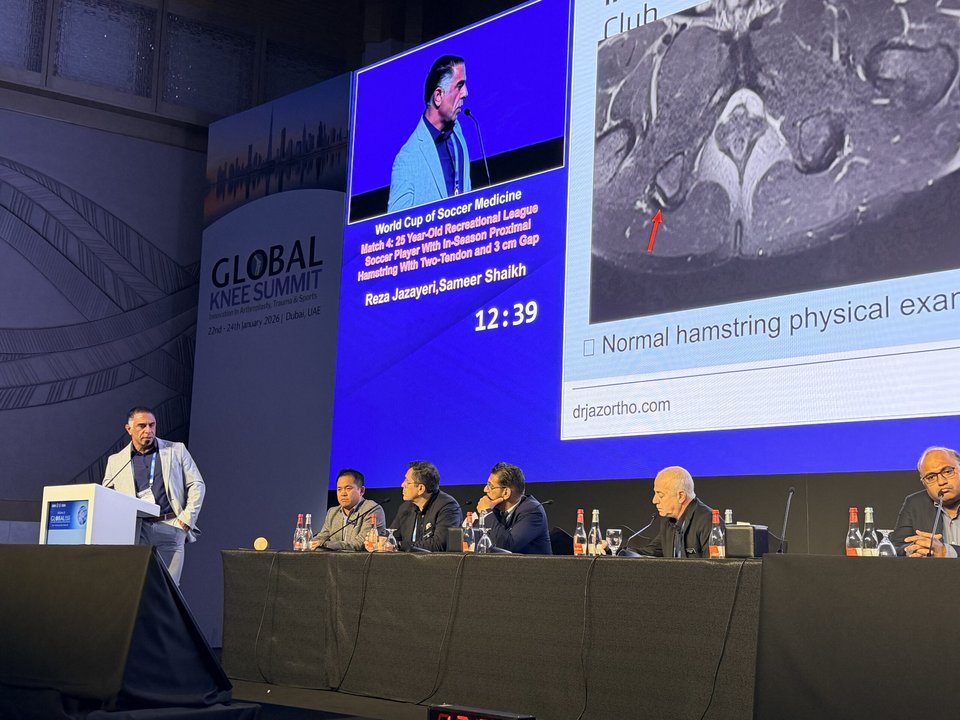
Dr. Reza Jazayeri served as faculty at the 2026 Global Knee Innovation Summit in Dubai, participating in its World Cup of Soccer Medicine session on proximal hamstring injuries. The case-based discussion explored treatment decisions for an in-season soccer injury, including nonsurgical care, rehabilitation, when surgery may be appropriate, repair versus reconstruction, and return to play.
That same decision-making framework guides his evaluation of athletes and active adults in Los Angeles. Treatment recommendations take into account the injury, the patient’s activity goals, and recovery needs.
Symptoms Of Hamstring Injuries To Recognize
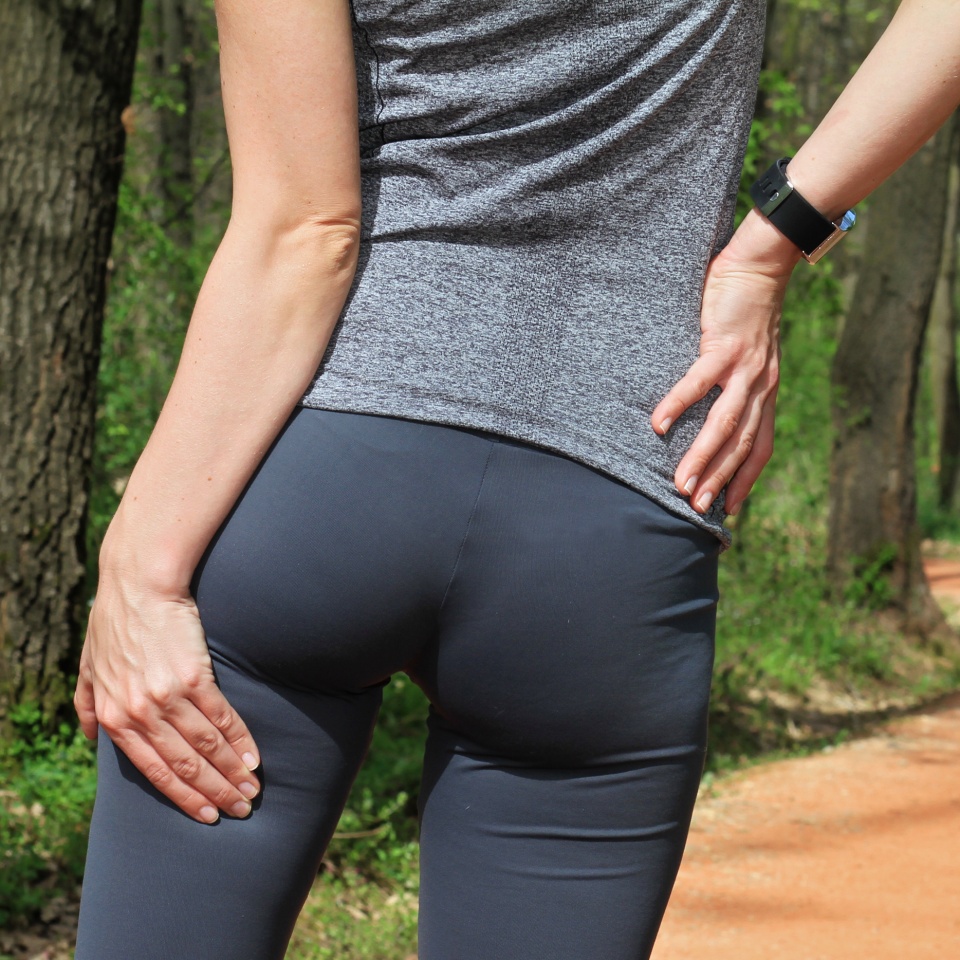
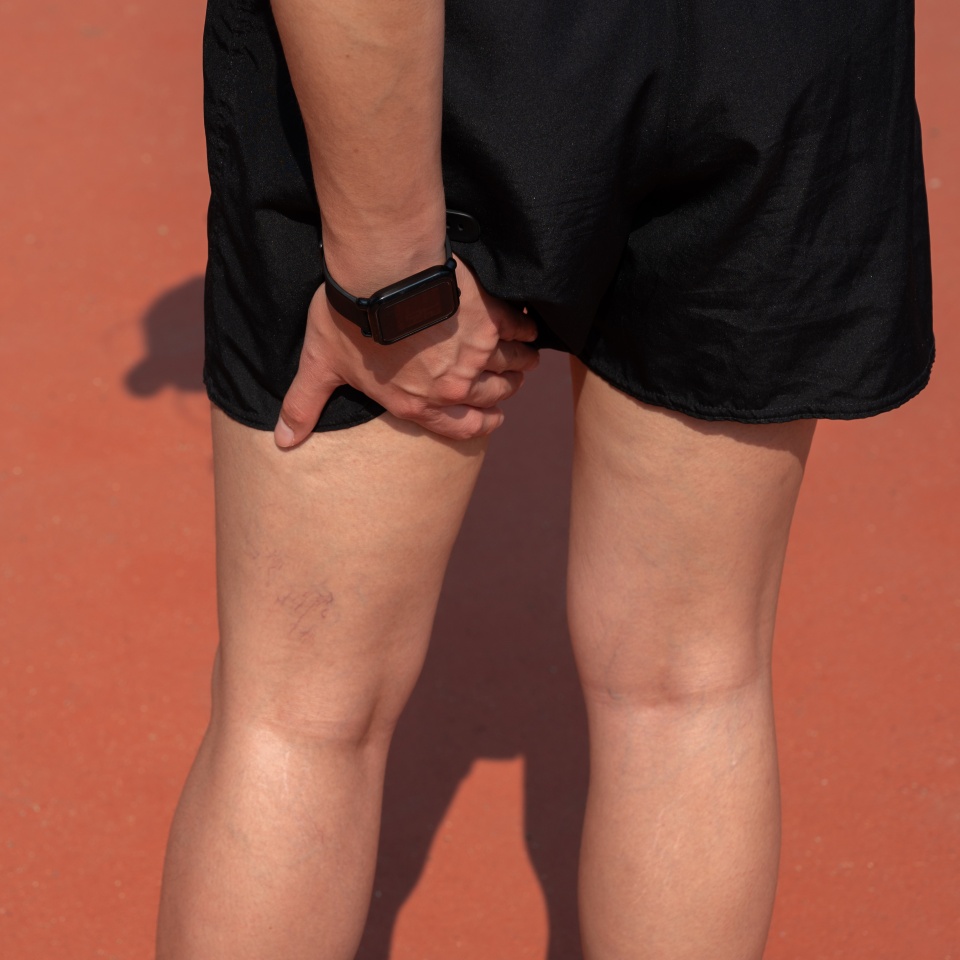
A sudden sharp pain in the back of your thigh during activity is the most common sign of a hamstring injury. You might feel a popping or tearing sensation at the moment of injury. Swelling and tenderness often develop within a few hours.
Bruising can appear below the injury site as blood tracks downward. Walking may become difficult, and straightening your leg fully can feel tight or painful.
The severity ranges from mild tightness to an inability to bear weight. Recognizing these symptoms early and getting a proper evaluation helps you avoid making the injury worse by pushing through the pain.
Initial Care Steps For Hamstring Injuries
Start with rest and protection right after a hamstring injury. Stop the activity that caused the pain and avoid stretching the muscle aggressively in the first 48 hours. Apply ice wrapped in a cloth for 15 to 20 minutes at a time, several times a day.
A compression wrap can help control swelling, and elevating the leg above heart level when sitting or lying down supports drainage. Over-the-counter anti-inflammatory medication may help with pain, but check with your doctor first. These early steps set the stage for healing, but they are not a substitute for a full evaluation if pain persists or walking remains difficult.
Role Of Physical Therapy In Recovery
Physical therapy is a central part of hamstring injury recovery. A structured program restores strength, flexibility, and normal movement patterns in a gradual, controlled way. Early sessions focus on gentle range-of-motion work and reducing muscle guarding.
As healing progresses, you move into eccentric strengthening exercises, which load the muscle as it lengthens. This phase is critical because weak eccentric control is a known risk factor for re-injury.
Your therapist also addresses any hip or core weaknesses that may have contributed to the strain. The goal is not just to heal but to return to your sport or daily activities with better mechanics than before.
Innovative Treatments For Hamstring Injuries
For patients who need more than standard rehabilitation, several advanced options are available. Platelet-rich plasma therapy uses a concentration of your own blood platelets to support the body’s natural healing signals in the injured tissue. Dr. Jaz incorporates orthobiologics, including PRP and stem cell augmentation, into treatment plans when appropriate.
His Bio-Fertilization Technique combines biologic augmentation with intraosseous modulation and metabolic optimization. This framework addresses healing at multiple levels.
Preoperative lab testing for vitamin D, inflammatory markers, and muscle status is a standard part of his protocol, backed by his own peer-reviewed research. These methods aim to create a better environment for tissue repair.
Preventive Measures For Hamstring Injuries
Preventing a repeat hamstring injury starts with grasp why the first one happened. A proper warm-up that includes dynamic movements like leg swings and walking lunges prepares the muscle for activity. Eccentric strengthening exercises, such as Nordic hamstring curls, have strong evidence for reducing injury risk.
Maintaining flexibility through regular stretching, especially after exercise, keeps the muscle from becoming overly tight. Do not ignore fatigue. Hamstring injuries often occur late in a workout or game when form breaks down.
Addressing muscle imbalances between the quadriceps and hamstrings also lowers your risk. Consistent, year-round conditioning matters more than a quick pre-season tune-up.
Benefits Of Aquatic Therapy For Recovery
Aquatic therapy offers a low-impact environment for early-stage hamstring rehabilitation. The buoyancy of water reduces the load on the healing muscle, allowing you to move with less pain and less risk of re-injury. Walking, gentle kicking, and range-of-motion exercises in the pool help maintain cardiovascular fitness while the tissue repairs.
Hydrostatic pressure can also help control swelling. As you progress, the water’s resistance provides a safe way to begin strengthening without the full stress of land-based exercises. For patients in Los Angeles who want to stay active during recovery, aquatic therapy bridges the gap between rest and a full return to training.

Importance Of Strengthening Exercises For Hamstrings
Strengthening the hamstrings is about more than just the muscle itself. A complete program includes the glutes, core, because these muscle groups work together during running, jumping, and cutting movements. Eccentric exercises like the Nordic hamstring curl specifically target the phase of muscle action where strains most often occur.
Progressive loading, where resistance increases gradually over weeks, rebuilds the muscle’s capacity to handle force. Single-leg exercises such as Romanian deadlifts also improve balance and control.
Dr. Jazayeri’s prehabilitation approach includes structured pre-surgical conditioning, and the same principle applies to non-surgical recovery. Building strength before returning to full activity reduces the chance of setbacks.
Frequently Asked Questions About Hamstring Injuries
-
The most common symptom is a sudden sharp pain in the back of your thigh during activity. You may also experience swelling, bruising, and difficulty walking or straightening your leg.
-
Start with rest and avoid activities that cause pain. Applying ice for 15 to 20 minutes several times a day can help reduce swelling, and using a compression wrap may also be beneficial.
-
Physical therapy is crucial for restoring strength and flexibility after a hamstring injury. A therapist will guide you through exercises that help regain normal movement patterns and prevent re-injury.
-
Yes, treatments like platelet-rich plasma (PRP) therapy and biologic augmentation can support healing. These methods are designed to enhance recovery and may be considered if standard rehabilitation is not enough.
-
Proper warm-up routines and eccentric strengthening exercises are key to preventing injuries. Maintaining flexibility and addressing muscle imbalances can also significantly reduce your risk of future hamstring strains.

Why Choose Us For Hamstring Injury Treatment?
We understand how frustrating hamstring injuries can be. Dr. Reza Jazayeri is a double board-certified orthopedic surgeon with over 15 years of experience in sports medicine. He specializes in treating athletes and active adults, focusing on effective recovery strategies based on each patient’s needs.
Our approach starts with non-surgical options whenever possible. Dr. Jaz uses advanced techniques like platelet-rich plasma therapy and his unique Bio-Fertilization Technique to promote healing. We also emphasize the importance of physical therapy and prehabilitation to ensure a safe return to your activities.
With offices in Beverly Hills, Westlake Village, and Orange, we are easily accessible for patients throughout Southern California. Whether you need a thorough evaluation or a personalized treatment plan, we are here to help you get back on track.
Meet Dr. Reza Jazayeri
Dr. Reza Jazayeri specializes in sports medicine with expertise in shoulder, knee, and elbow injuries. A Southern California native, Dr. Jazayeri combines an engineering background with elite surgical training, completing his orthopedic surgery residency at the nationally ranked NYU Hospital for Joint Diseases and a sports medicine fellowship at the renowned Kerlan-Jobe Orthopaedic Clinic.
After more than 15 years caring for patients within the Southern California Permanente Medical Group, Dr. Jazayeri joined DOCS Health to expand a practice focused on personalized orthopedic and sports medicine care and surgical excellence. As Director of Longevity at DOCS Health, he leads the development and implementation of optimization protocols and regenerative medicine strategies designed to improve long-term musculoskeletal health and extend healthspan.
His published work includes a 2026 coauthored review of nutritional optimization in spine surgery in the Journal of the American Academy of Orthopaedic Surgeons. View Dr. Jazayeri’s research publications and training.
Both of my shoulders were well past the sell-by date! I’d been getting injections in each one for the past ten years. Finally, I realized that it was pointless to continue, diminishing returns. The injections were hardly making a difference anymore. I was referred to Dr. Jazayeri as the shoulder guy for Kaiser, which was and still is my health care provider. He took a look at the Xrays and could tell right away that mine was a severe case that would require complex and customized prosthetic shoulder joints. He explained that each one would be a reverse shoulder joint construction, which at first gave me pause. But after he explained what was entailed and that I would really feel no difference after the recovery, I agreed to the procedure. He operated on both shoulders about nine months apart and the process was a breeze. I was blown away. My recovery in each case was difficult but not overly long. By six months had about 80% range of motion with little to no pain. After nine months, I was feeling positively bionic. I heartily recommend Dr. Jazayeri. He knows his stuff and has an infectious positive attitude to boot.
Schedule Your Consultation For Hamstring Injury Treatment
If a hamstring injury is keeping you from the activities you enjoy, a clear plan makes all the difference. Virtual consultations are also available for patients across California and beyond.
His practice focuses on finding the right path for each person, from non-surgical care and orthobiologics to minimally invasive surgical techniques when needed. Request a consultation today to discuss your hamstring injury and take the first step toward a structured, evidence-based recovery.
Medically reviewed by Reza Jazayeri, M.D. on