Strength athletes put their tendons and joints under loads few other people ever experience. A torn pec on the bench, a biceps that lets go on a heavy row, or a shoulder worn down by years of pressing can stop a training career in a single rep. For bodybuilders, powerlifters and elite athletes in Los Angeles, the right care protects more than the injured tendon. It protects the progress you have spent years building.
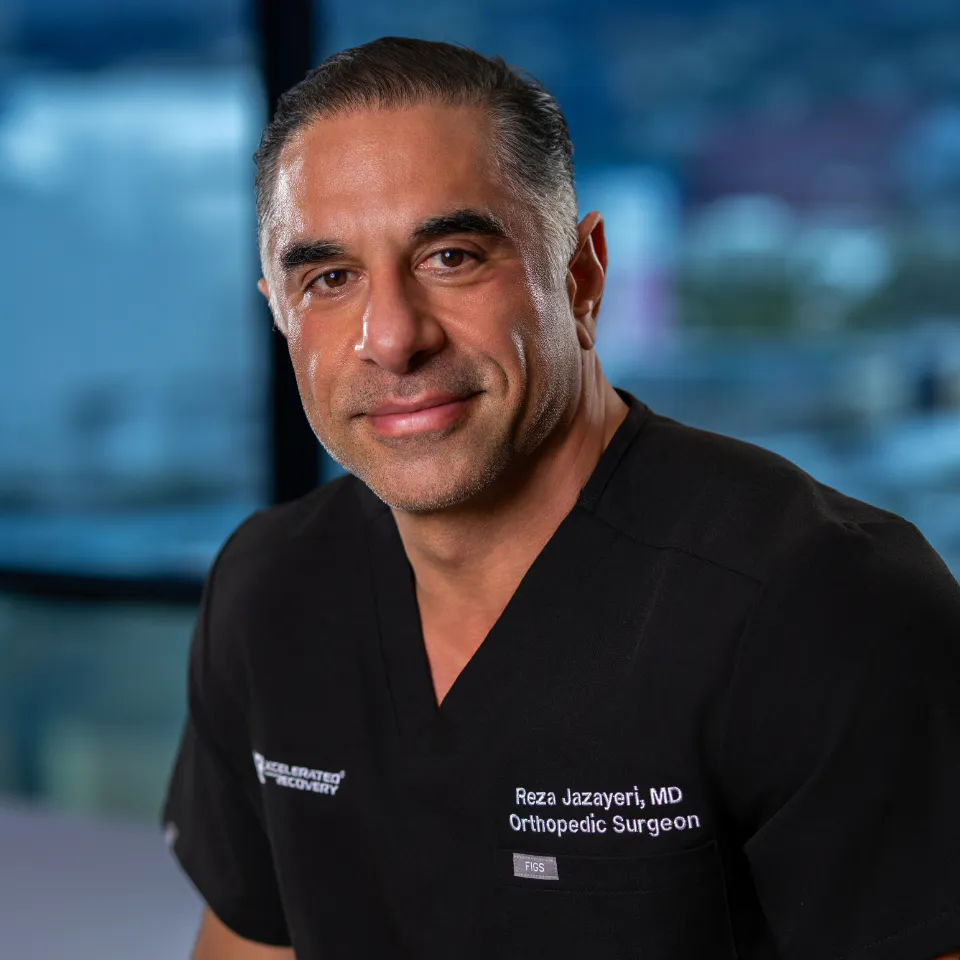
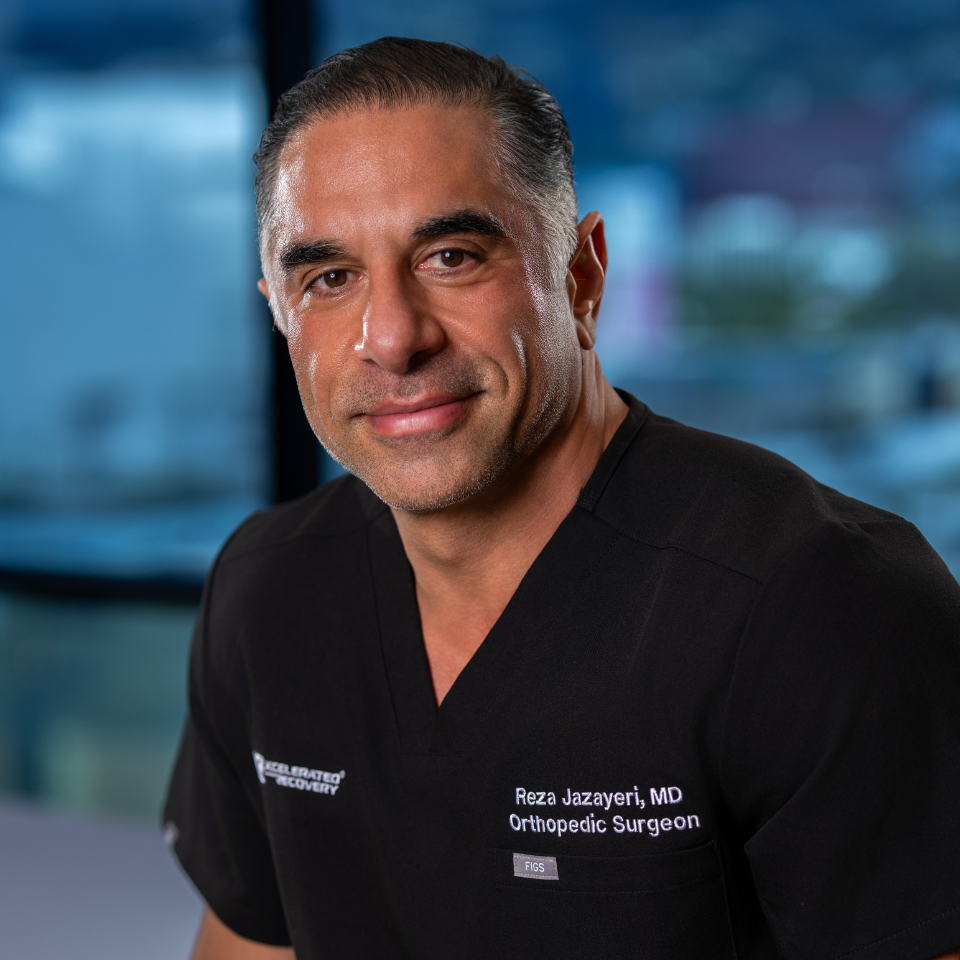
Reza Jazayeri, MD, known to his patients as Dr. Jaz, is a double board-certified orthopedic surgeon and sports medicine specialist who completed his sports medicine fellowship at the Kerlan-Jobe Orthopaedic Clinic, a Cedars-Sinai affiliated institution in Los Angeles. He trained in orthopedic surgery at the nationally ranked NYU Hospital for Joint Diseases and spent more than 15 years caring for patients with the Southern California Permanente Medical Group before joining DOCS Health as Director of Longevity. His published work includes a case report on a traumatic posterior deltoid tendon rupture during weightlifting and a Journal of the American Academy of Orthopaedic Surgeons review on amino acid supplementation in orthopaedic surgery. He also lifts himself, so he understands that training is not just a hobby. It is a core part of a healthy life, and his goal is to keep you lifting.
“Most lifters who come to me don’t want to hear ‘stop training.’ My job is to find the safest way back under the bar, and to be honest with you about which injuries can’t wait.”
Non-Operative First, Whenever Appropriate
Surgery is never the starting point by default. Every evaluation begins with one question: can you get back to training without an operation? Many partial tears, tendon irritations and early joint changes respond well to program modification, targeted rehab and, in selected cases, orthobiologic treatments.
Some injuries, however, are time-sensitive. A complete tendon rupture can retract and scar within weeks, which makes a later repair more complex. For these injuries, early surgical repair gives the best chance of a full return to lifting. Dr. Jaz will tell you clearly which category your injury falls into, and why.
How Dr. Jaz Evaluates Bodybuilding Injuries
A strength athlete’s evaluation looks different from a standard orthopedic visit. Dr. Jaz starts with how the injury happened: the lift, the load, the phase of the rep and what you felt. A sudden pop during the lowering phase of a heavy bench press tells a very different story than an ache that has built over months of pressing.
Your visit typically includes:
- Mechanism and training history: The movement, load and training volume at the time of injury, plus your competition schedule and goals
- Hands-on examination: Strength testing, tendon palpation and contour assessment compared with the uninjured side
- Advanced imaging: MRI or ultrasound to confirm whether a tear is partial or complete, where it occurred and how far the tendon has retracted, as outlined on our imaging and diagnosis page
- Healing profile: A review of nutrition, metabolic health, hormonal factors and any supplements or medications that may affect tissue healing
Patients traveling from outside Southern California can begin with a virtual consultation, and those coming from farther away can find planning help on our out-of-town patients page.
Common Tendon and Joint Injuries in Strength Athletes
Heavy eccentric loading, where a muscle lengthens under tension, is the common thread in most lifting ruptures. The tendon fails while it is resisting a load rather than lifting it.
- Pectoralis major tendon ruptures: Often happen during the lowering phase of a bench press, or during dips and flys. Learn more about pec major tendon repair.
- Distal biceps tendon ruptures: Often happen during heavy pulling, rows or the underhand side of a mixed-grip deadlift. See distal biceps repair.
- Triceps tendon ruptures: Often happen during heavy pressing or a fall onto an outstretched arm. See distal triceps repair.
- Quadriceps tendon ruptures: Often happen during heavy squats or explosive lower-body loading, and more commonly affect lifters over 40.
- Shoulder arthritis from years of heavy loading: Repetitive pressing and overhead work can lead to early joint wear, covered in more detail on our shoulder replacement page.
Warning signs of a tendon rupture include a pop or tearing sensation, sudden weakness, bruising that spreads down the arm or chest, and a visible change in muscle shape. If you cannot straighten your knee or bear weight after a heavy squat, or you have severe pain, numbness or a cold, pale limb, seek urgent medical care or go to the nearest emergency room.
Care at Every Stage of Your Training Career
Acute ruptures. Complete pec, biceps, triceps and quadriceps tendon ruptures are repaired promptly. Early repair restores the tendon’s normal length and tension while the tissue is still in the best condition to hold sutures and heal.
Chronic tears and failed repairs. Some tears have retracted over time, and some earlier repairs have failed. These may need reconstruction or revision surgery with an augmentation graft. Planning accounts for tendon quality, bone quality and your goals, and a second opinion is often where this conversation begins.
Early arthritis from years of heavy loading. Repetitive heavy lifting can cause early joint wear, especially in the shoulder. This stage is managed without surgery whenever possible, with options that include:
- Activity and program modification
- Targeted rehab
- Orthobiologic treatments such as PRP, BMAC and A2M, which may help manage symptoms and support joint function
Shoulder replacement for the seasoned lifter. Advanced arthritis may no longer respond to conservative care. For these patients, shoulder replacement can relieve pain and restore function for athletes who want to stay active. Dr. Jaz gives individualized guidance on returning to the gym afterward, including how to adapt your training to protect the implant over the long term.
Building a Stronger Tendon Repair
Strength athletes need more than a standard repair. Where it is appropriate, Dr. Jaz adds two layers of support:
- Augmentation grafts: Reinforce the repair mechanically while the tendon heals
- Orthobiologics: PRP and bone marrow aspirate concentrate (BMAC), used to support the biological healing environment at the repair site
These approaches build on his Bio-Fertilization™ Protocol. Each plan is tailored to the specific injury, the quality of the tissue and your goals for returning to sport.
Metabolic Optimization: The Surgical Athlete Approach
How well a tendon heals depends on more than the surgery itself. Before and after surgery, every patient receives a full evaluation of the factors that influence healing:
- Nutrition: Protein intake, micronutrients and a perioperative nutrition strategy, described further in our nutrition before and after surgery guide
- Metabolic health: Reviewed through a Metabolic Report Card assessment
- Hormonal factors: Reviewed because they can affect how tissue heals
Strength athletes may use supplements, performance-enhancing substances or hormone therapy. Anabolic steroid use has been associated with a higher risk of tendon rupture, and these substances can also affect healing and surgical risk. Dr. Jaz discusses them openly, confidentially and without judgment, so your plan reflects the full picture. Patients who want a deeper look at these factors can explore Performance & Longevity Medicine.
“Before my surgery, I believed I could handle anything, and I relied on my surgeon’s recommendations. After surgery, my range of motion improved faster than I expected. Every week there were noticeable improvements, even by my PT. Compared to others I know who’ve had the same surgery, my recovery was much faster and easier.”
What to Expect From Rehab and Returning to Lifting
Rehab for a bodybuilder or powerlifter is very different from rehab for the general population. Your recovery plan includes:
- Protecting the repair at each stage of healing
- Keeping conditioning and muscle mass up in the areas that are not injured, with lower-body and cardio work often resuming within the first few weeks after an upper-body repair
- Reintroducing load gradually, from early range of motion all the way to heavy, sport-specific lifting
- Coordinating with your coach or trainer
- Making return-to-training decisions based on healing milestones, not just the number of weeks since surgery
Recovery timelines vary by tendon, tear severity, timing of repair and how your body heals. Our recovery resources walk through each phase in more detail.
Frequently Asked Questions About Bodybuilder Injuries
-
Complete ruptures in active athletes usually do best with prompt surgical repair, while partial tears may be treated without surgery. An early evaluation, often with MRI, determines which approach is right for you, and timing matters because retracted tendons become harder to repair.
-
Most athletes start light pressing around three to four months after surgery and work back toward a normal bench press over the following weeks. Heavy and max-effort benching usually resumes around six months, based on strength testing and healing milestones rather than the calendar alone. Details are on the pec major tendon repair page.
-
Chronic tears and failed repairs can often still be treated with reconstruction or revision using an augmentation graft. A second opinion with Dr. Jaz can clarify your options.
-
Restoring normal contour is a priority for bodybuilders and is factored into the surgical plan. Results vary with the timing of repair and the quality of the tissue, and no surgeon can guarantee perfect symmetry.
-
Usually, yes. Treatment starts without surgery using program modification, rehab and orthobiologics, and even after shoulder replacement, many lifters stay active with an adapted training program.
-
It can, which is why it is important for Dr. Jaz to know. These conversations are confidential and judgment-free, and they help shape a safer surgical and recovery plan.
Why Strength Athletes Choose Dr. Jaz
- Double Board-Certified Expertise: Certified in orthopedic surgery and sports medicine, with fellowship training at the Kerlan-Jobe Orthopaedic Clinic in Los Angeles.
- A Surgeon Who Trains: Dr. Jaz strength trains himself and understands what it means to protect years of progress.
- Published in Healing and Lifting Injuries: His research includes a weightlifting tendon rupture case report and peer-reviewed work on amino acid supplementation and nutritional optimization in orthopaedic surgery.
- Care for the Whole Training Career: From acute ruptures to failed repairs, early arthritis and shoulder replacement, your care evolves as your training does.
- Judgment-Free Conversations: Supplements, performance-enhancing substances and hormone therapy are discussed openly so your plan is built on accurate information.
- Three Southern California Offices: Patients are seen in Los Angeles near Beverly Hills, Westlake Village and Orange, with telehealth available by appointment.
Meet Dr. Reza Jazayeri
Dr. Reza Jazayeri specializes in sports medicine with expertise in shoulder, knee, and elbow injuries. A Southern California native, Dr. Jazayeri combines an engineering background with elite surgical training, completing his orthopedic surgery residency at the nationally ranked NYU Hospital for Joint Diseases and a sports medicine fellowship at the renowned Kerlan-Jobe Orthopaedic Clinic.
After more than 15 years caring for patients within the Southern California Permanente Medical Group, Dr. Jazayeri joined DOCS Health to expand a practice focused on personalized orthopedic and sports medicine care and surgical excellence. As Director of Longevity at DOCS Health, he leads the development and implementation of optimization protocols and regenerative medicine strategies designed to improve long-term musculoskeletal health and extend healthspan.
His published work includes a 2026 coauthored review of nutritional optimization in spine surgery in the Journal of the American Academy of Orthopaedic Surgeons. View Dr. Jazayeri’s research publications and training.
i’m a physician in the LA area about 10 years out of school. I tore my right pec muscle in the gym and immediately called my ortho friends in the area for a recommendation (none of them did pec/shoulder). Dr Jax came highly recommended and I was not disappointed. his urgency and communication was excellent , got me scheduled right away and was checking on me the whole way. really felt like he went above and beyond during the surgery adding a bone marrow aspirate to help it heal. 9 months out and strength and mobility are great
Schedule a Bodybuilder Injury Consultation in Los Angeles
Tendon ruptures are often time-sensitive, and early evaluation can widen your treatment options. Dr. Jaz sees bodybuilders, powerlifters and elite athletes at his Los Angeles office near Beverly Hills, as well as in Westlake Village and Orange, with virtual visits for athletes across California and beyond. Schedule a consultation to get a clear plan for getting back under the bar.
This page is for general educational purposes and does not replace an individual medical evaluation. Orthobiologic treatments such as PRP, BMAC and A2M are considered investigational for many uses, are not FDA approved for treating arthritis or tendon injuries, and may not be covered by insurance. Individual results vary.
Medically reviewed by Reza Jazayeri, M.D. on