Broke your collarbone? Let’s get you back on the field. A clavicle fracture is one of the most common broken bones in sports, and for athletes and active adults the right plan depends on more than the X-ray. It depends on your sport, your season and how soon you want to train again. Prompt fracture appointments are available at Dr. Jaz’s offices in Los Angeles near Beverly Hills, Westlake Village and Orange. Request a fracture consultation for a clear plan built around your body and your goals.
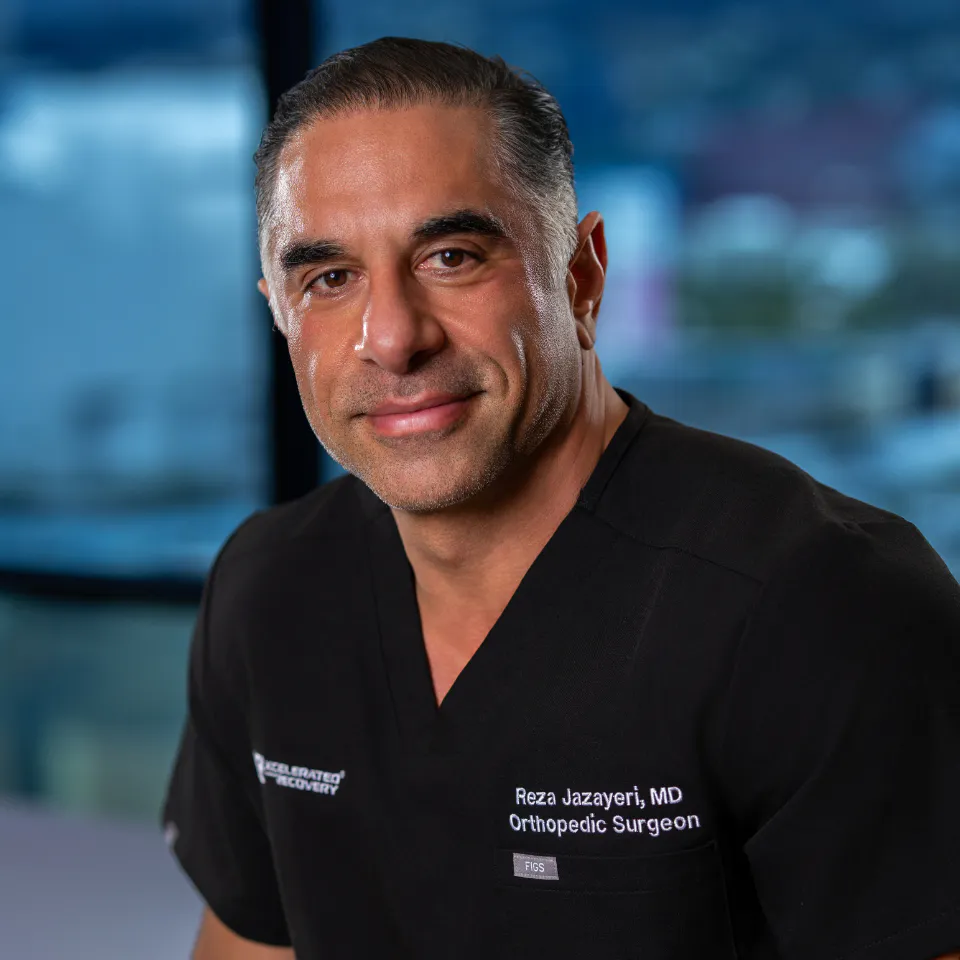
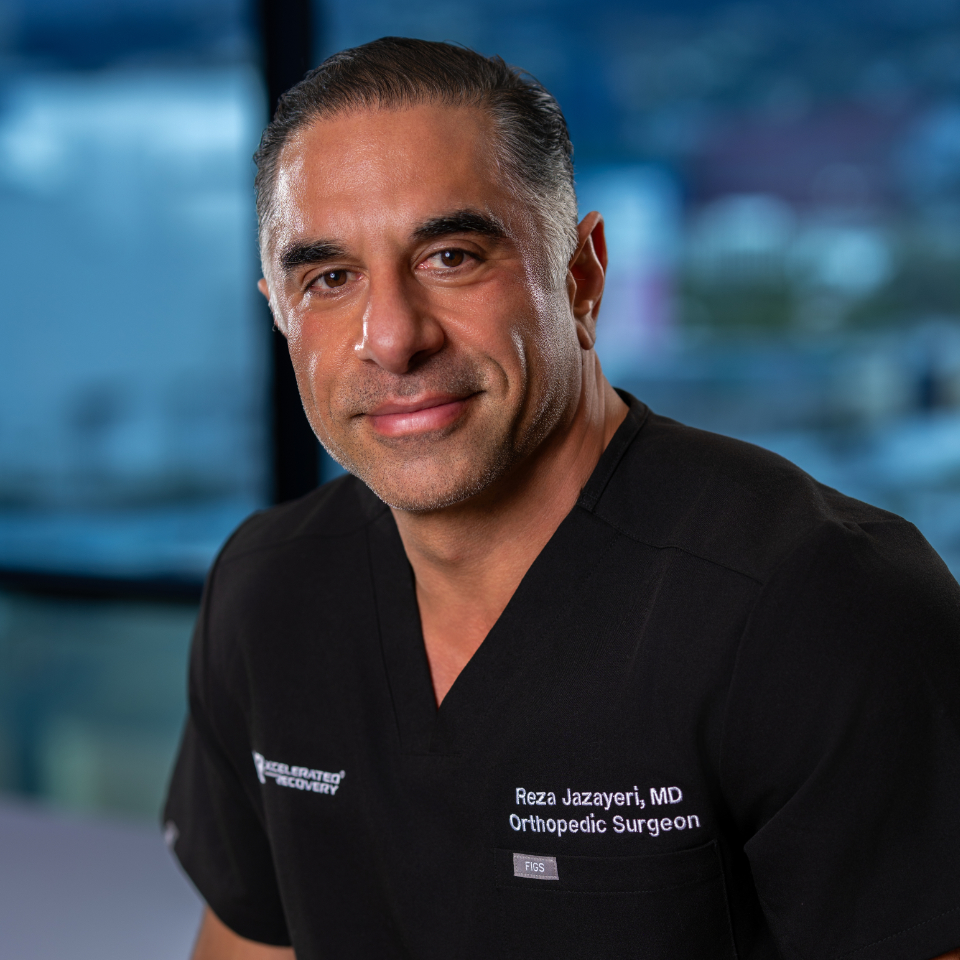
Reza Jazayeri, MD, known to his patients as Dr. Jaz, spent more than 15 years with the Southern California Permanente Medical Group treating a high volume of shoulder trauma, including collarbone fractures, before joining DOCS Health. For more than 10 years he has also taught orthopedic surgery residents fracture care and shoulder surgery. He is double board-certified in orthopedic surgery and sports medicine, completed his orthopedic surgery residency at NYU Hospital for Joint Diseases and trained in sports medicine at the Kerlan-Jobe Orthopaedic Clinic in Los Angeles. Today he treats everything from straightforward collarbone breaks to multi-fragment fractures and failed prior repairs.
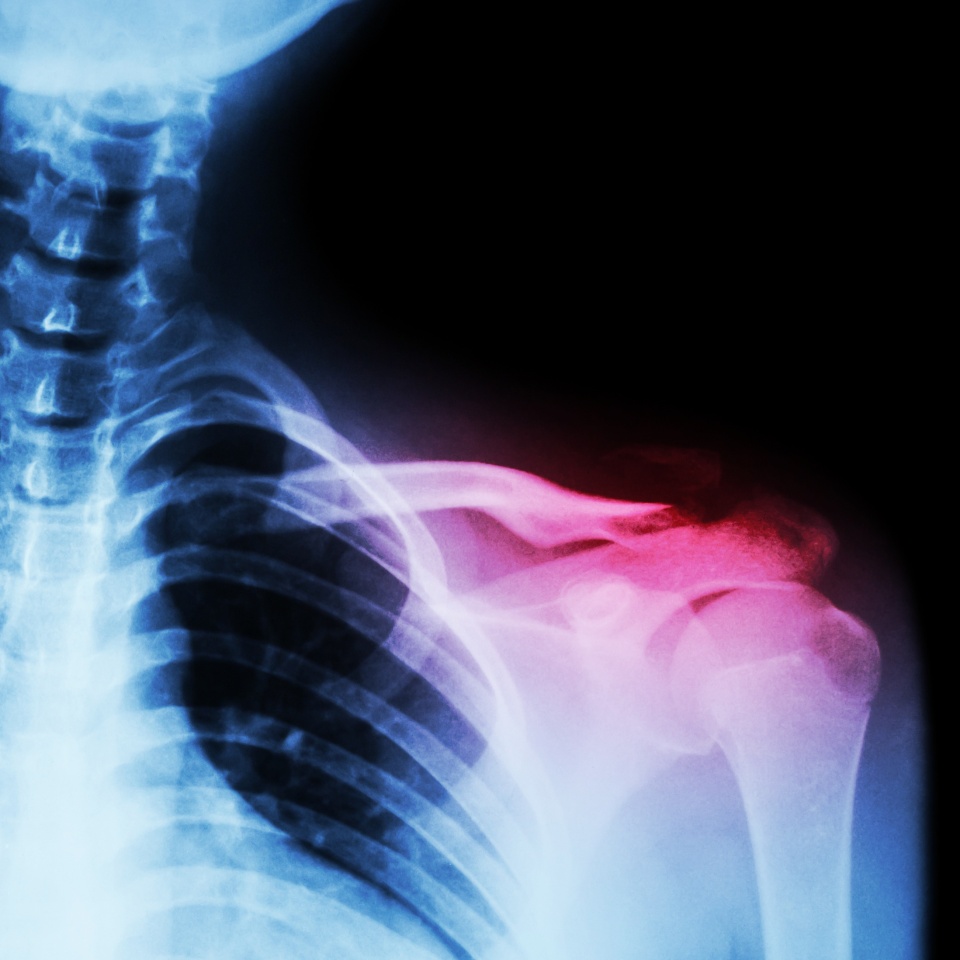
What Is a Clavicle Fracture?
The clavicle, or collarbone, is the long, S-shaped bone that connects your arm to your chest. It works like a strut that holds the shoulder out to the side, so a break changes how the whole shoulder moves. Most fractures happen in the middle third of the bone and are called midshaft fractures. Breaks near the outer end, close to the AC joint, are called distal clavicle fractures and can behave differently because of the ligaments attached there. Fractures near the breastbone are uncommon.
Common signs include sudden pain over the collarbone after a fall or hit, swelling or bruising, a visible bump or a sagging shoulder, and pain or grinding when you try to lift your arm. A separated shoulder can look and feel similar, so an exam and X-rays are needed to tell them apart. Learn more about AC joint separation.
Who Dr. Jazayeri Treats
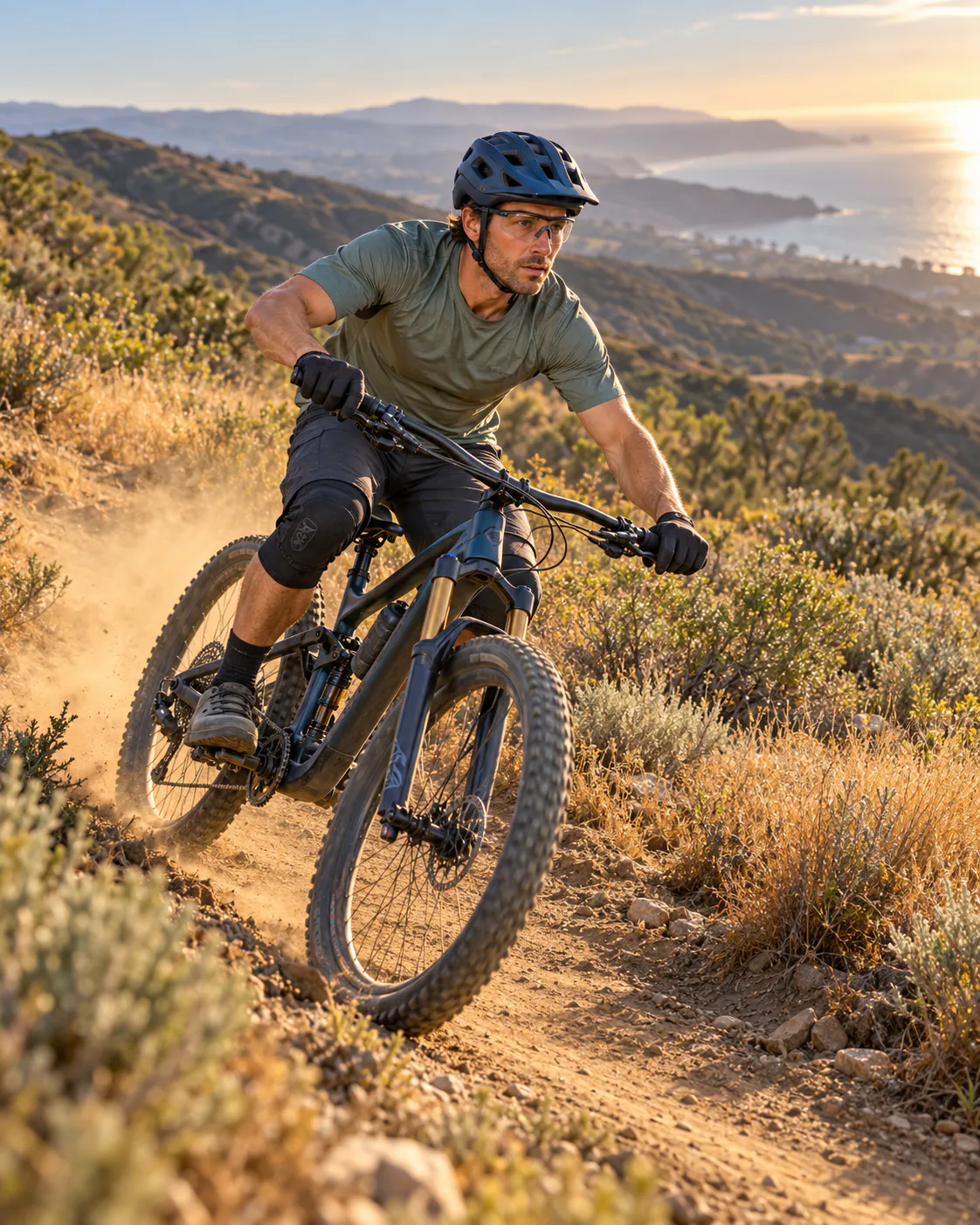
The clavicle takes the impact in a fall over the handlebars, a hard tackle or a crash on the slopes, and if staying active matters to you, your treatment plan should reflect that. His patients include:
- Mountain Bikers and Road Cyclists: Over-the-handlebars falls are the classic way the collarbone breaks.
- Contact and Combat Athletes: Football, rugby, hockey, MMA and jiu-jitsu athletes, learn more about combat sports and fighter medicine.
- Motocross, Ski and Snowboard Athletes: High-speed falls onto the shoulder are a frequent cause.
- Dancers and Performers: Full shoulder motion and strength are essential, see performing arts injuries.
- Active Adults: People who want to get back to the gym, the trail or the court, not just “heal.”
Surgery or a Sling? Choosing the Right Clavicle Fracture Treatment
Not every clavicle fracture needs surgery. Many heal well in a sling, and Dr. Jazayeri always starts by asking whether non-operative care can get you where you want to go. Surgery may be the better option when a fracture is:
- Significantly Displaced: The bone ends are no longer touching.
- Shortened: The collarbone has collapsed and lost length.
- Comminuted: The bone is broken into multiple pieces.
- Threatening the Skin: A bone fragment presses against the skin, or there is a nerve or blood vessel injury.
- Part of a Complex Injury: Multiple fractures or a “floating shoulder,” where the clavicle and the shoulder blade are both broken.
- Not Healing or Healed Poorly: A nonunion, or a malunion that limits strength or motion.
For athletes, timing and predictability matter too. Plate fixation restores length and alignment and gives a stable base for early motion. Clinical trials of displaced midshaft fractures in adults have found lower nonunion rates with plate fixation than with sling treatment. Surgery carries its own risks, including infection, numbness below the incision and hardware irritation that may require later removal, so Dr. Jazayeri weighs these trade-offs with each patient.
Surgery is typically an outpatient procedure. A low-profile plate and screws hold the bone in its anatomic position while it heals. You can read how the procedure is performed on the clavicle ORIF page.
“Many collarbone fractures heal well in a sling. My job is to tell you honestly whether yours is one of them, and if it isn’t, to fix it in a way that gets you training again as soon as it’s safe.” — Dr. Reza Jazayeri
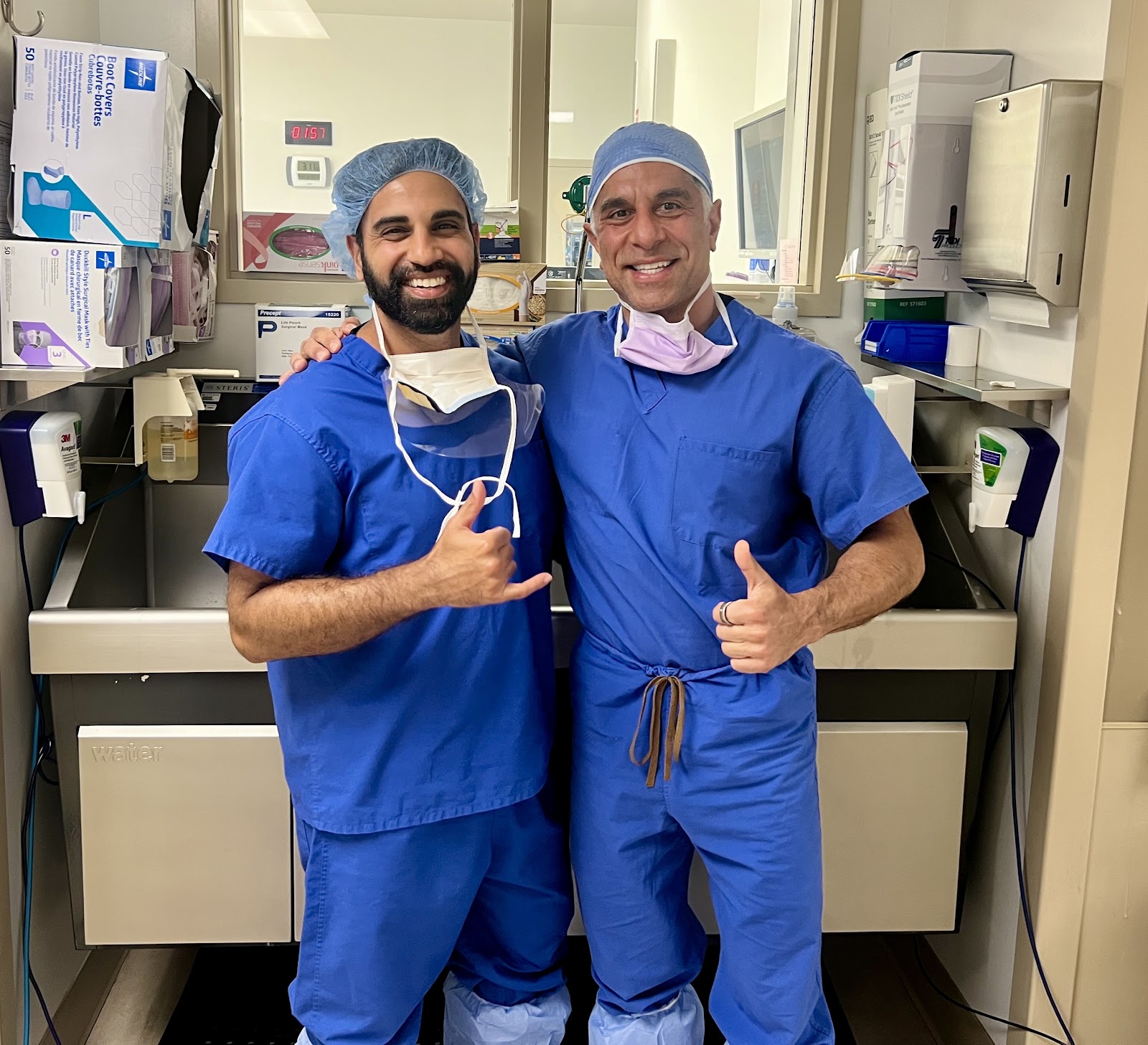
Clavicle Fracture Experience You Can Trust
For more than 17 years, Dr. Jazayeri has treated complex shoulder injuries and fractures, from straightforward collarbone breaks to multi-fragment fractures and failed prior repairs.
- Double Board Certification: Certified in orthopedic surgery and sports medicine.
- Elite Training: Residency at NYU Hospital for Joint Diseases and sports medicine fellowship at the Kerlan-Jobe Orthopaedic Clinic.
- Surgical Educator: More than 10 years teaching and training orthopedic surgery residents in fracture care and shoulder surgery.
- High-Volume Trauma Experience: More than 15 years at Southern California Permanente Medical Group treating shoulder trauma before moving to private practice.
- Combat Sports Faculty: Faculty for the UFC Combat Sports Medicine Course and member of the Association of Ringside Physicians.
- National Speaker: Three consecutive years presenting at the American Academy of Orthopaedic Surgeons (AAOS) on perioperative nutritional optimization.
Teaching surgeons how to fix fractures means every step of his own technique has been examined, explained and refined.
Beyond the Plate: The Surgical Athlete Optimization Protocol
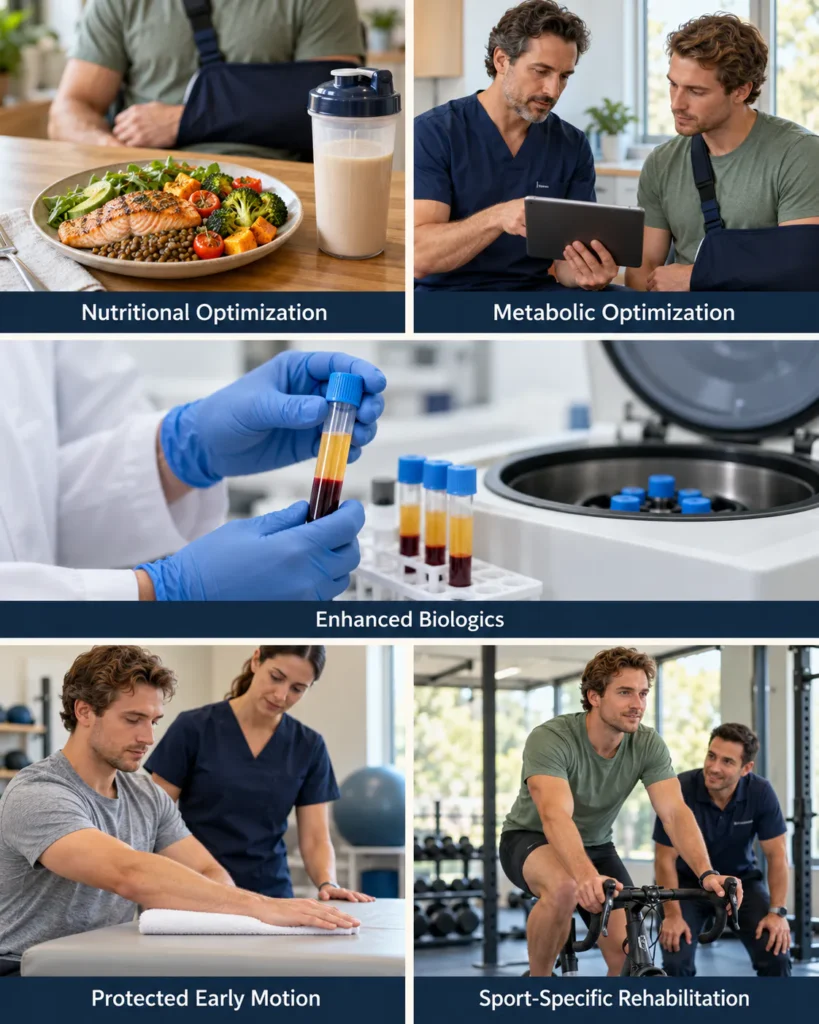
Fixing the bone is only part of recovery. A fracture and surgery put your body under metabolic stress, and athletes lose muscle quickly when an arm sits in a sling. Dr. Jazayeri’s Surgical Athlete approach treats you like an athlete preparing for competition, before and after surgery.
- Nutritional Optimization: Bone and soft-tissue healing demand protein, micronutrients and energy. Starting from the day of injury, healing is supported with targeted perioperative nutrition, including XR Xcelerated Recovery® protocols.
- Metabolic Optimization: Using his Metabolic Report Card, Dr. Jazayeri looks at factors that can slow healing, such as vitamin D status, blood sugar control, body composition and muscle mass, and addresses what can be improved.
- Enhanced Biologics: When appropriate, he may use orthobiologics such as platelet-rich plasma (PRP) or bone marrow aspirate concentrate (BMAC) at the fracture site to deliver concentrated growth factors and cells to the healing environment. Research on biologics for fracture healing is still evolving, so they are used alongside stable fixation, never in place of it.
- Early Mobilization: Stable fixation allows protected motion to begin early. Moving sooner helps limit stiffness and muscle loss, and the rest of your body keeps training safely from the start.
- Sport-Specific Rehabilitation: Strength, power and sport-specific work progress step by step, including blood flow restriction (BFR) training when appropriate, with clear milestones toward return to play.
What to Expect: Recovery and Return to Sport After Clavicle Surgery
“When can I get back to my sport?” is usually the first question. Every fracture and every athlete is different, but a typical recovery after fixation looks like this:
| Phase | Typical timing | Focus |
|---|---|---|
| Protect | Weeks 0 to 2 | Sling for comfort, gentle motion, lower-body and core training, nutrition |
| Restore motion | Weeks 2 to 6 | Progressive range of motion, light activation, stationary cardio |
| Rebuild strength | Weeks 6 to 12 | Strengthening once healing is confirmed on X-ray, BFR when appropriate |
| Return to sport | Around 3 months for many non-contact sports, often 4 to 6 months for contact and high-crash sports | Sport-specific drills, then full return when cleared |
Return is based on healing on X-ray, strength and confidence, not just the calendar. Between visits, your progress is tracked through Dr. Jazayeri’s recovery program, so your plan can be adjusted as you heal.
When to Seek Urgent Care for a Broken Collarbone
Most clavicle fractures can be evaluated in the office within a few days. Go to the nearest emergency department or call 911 if bone has broken through the skin, your arm or hand becomes numb, cold, pale or weak, you have shortness of breath or chest pain, or the injury came from a high-speed crash with other injuries. These signs can point to an open fracture, a nerve or blood vessel injury, or a lung injury that needs immediate care.
Frequently Asked Questions About Clavicle Fractures
-
Ideally within the first week. Early evaluation keeps all options open, and when surgery is needed, it is usually easier in the first couple of weeks.
-
Often, yes. Many clavicle fractures heal well without surgery. Dr. Jazayeri will review your X-rays, your sport and your goals and tell you honestly which path makes sense.
-
Usually. Some patients notice the hardware under the skin, especially with backpacks or bike straps. If it bothers you after the bone has healed, it can be removed. Learn more about clavicle ORIF.
-
Less than you might think. Lower-body, core and cardio training can usually continue soon after surgery, and early shoulder motion helps protect muscle in the injured arm.
-
Yes. Dr. Jazayeri treats nonunions, malunions and failed fixations, including revision surgery with biologic support when appropriate. He also offers second opinions for patients weighing their next step.
-
Yes. If you live outside the area or are traveling, Dr. Jazayeri can review your X-rays and discuss options during a virtual consultation, then arrange in-person care when needed.
Why Athletes Choose Dr. Jaz for Clavicle Fracture Care
- Honest Surgery-or-Sling Guidance: Every fracture is assessed for non-operative care first, and surgery is recommended only when it offers a real advantage.
- Sports Medicine Training: Kerlan-Jobe fellowship training and double board certification focused on athletes and active adults.
- Whole-Athlete Recovery: Nutritional and metabolic optimization, biologics when appropriate and sport-specific rehab are built into the plan.
- Revision Experience: Care for nonunions, malunions and failed prior fixations.
- Three Southern California Offices: Appointments in Los Angeles, Westlake Village and Orange, plus telehealth visits.
Meet Dr. Reza Jazayeri
Dr. Reza Jazayeri specializes in sports medicine with expertise in shoulder, knee, and elbow injuries. A Southern California native, Dr. Jazayeri combines an engineering background with elite surgical training, completing his orthopedic surgery residency at the nationally ranked NYU Hospital for Joint Diseases and a sports medicine fellowship at the renowned Kerlan-Jobe Orthopaedic Clinic.
After more than 15 years caring for patients within the Southern California Permanente Medical Group, Dr. Jazayeri joined DOCS Health to expand a practice focused on personalized orthopedic and sports medicine care and surgical excellence. As Director of Longevity at DOCS Health, he leads the development and implementation of optimization protocols and regenerative medicine strategies designed to improve long-term musculoskeletal health and extend healthspan.
His published work includes a 2026 coauthored review of nutritional optimization in spine surgery in the Journal of the American Academy of Orthopaedic Surgeons. View Dr. Jazayeri’s research publications and training.
I shattered my collarbone playing hockey and Dr. Jazayeri was my surgeon. Throughout the entire process he did a great job of explaining what he would be doing, making me feel comfortable and he did a masterful job of putting the plate and screws into my collarbone. I’m 3 months out and I’m already back in the gym 5 days a week, I have a full range of motion, and Dr. Jazayeri continues to check in on my progress and make sure I’m doing well. I couldn’t have asked for a better surgeon. I don’t think anyone hopes to have to see an orthopedic surgeon again, but if I ever do have another injury that requires surgery, I hope Dr. Jazayeri is my surgeon again. Thanks again for everything, and for anyone doubting whether or not they should get the surgery or not…get it. Dr. Jazayeri is a true master of his craft.
Schedule Clavicle Fracture Care in Los Angeles
Whether you just broke your collarbone or you are dealing with a fracture that isn’t healing, Dr. Jazayeri will give you a clear plan built around your body and your goals. He sees patients at DOCS Health in Los Angeles, just minutes from Beverly Hills, as well as in Westlake Village and Orange, with virtual visits available. Request a fracture consultation to get started.
This page is for general educational purposes and does not replace an individual medical evaluation. Outcomes vary by patient and injury.
Medically reviewed by Reza Jazayeri, M.D. on