A torn quadriceps tendon takes away the one thing your knee needs most to function: the ability to straighten it. Many people describe a sudden pop above the kneecap, followed by a leg that buckles and will not lift. A complete tear does not heal back to the bone on its own, and the best results come from repair within the first few weeks. Dr. Jaz sees patients with quad tendon injuries at his offices in Los Angeles near Beverly Hills, Westlake Village and Orange, with virtual visits available for an early review of your imaging.
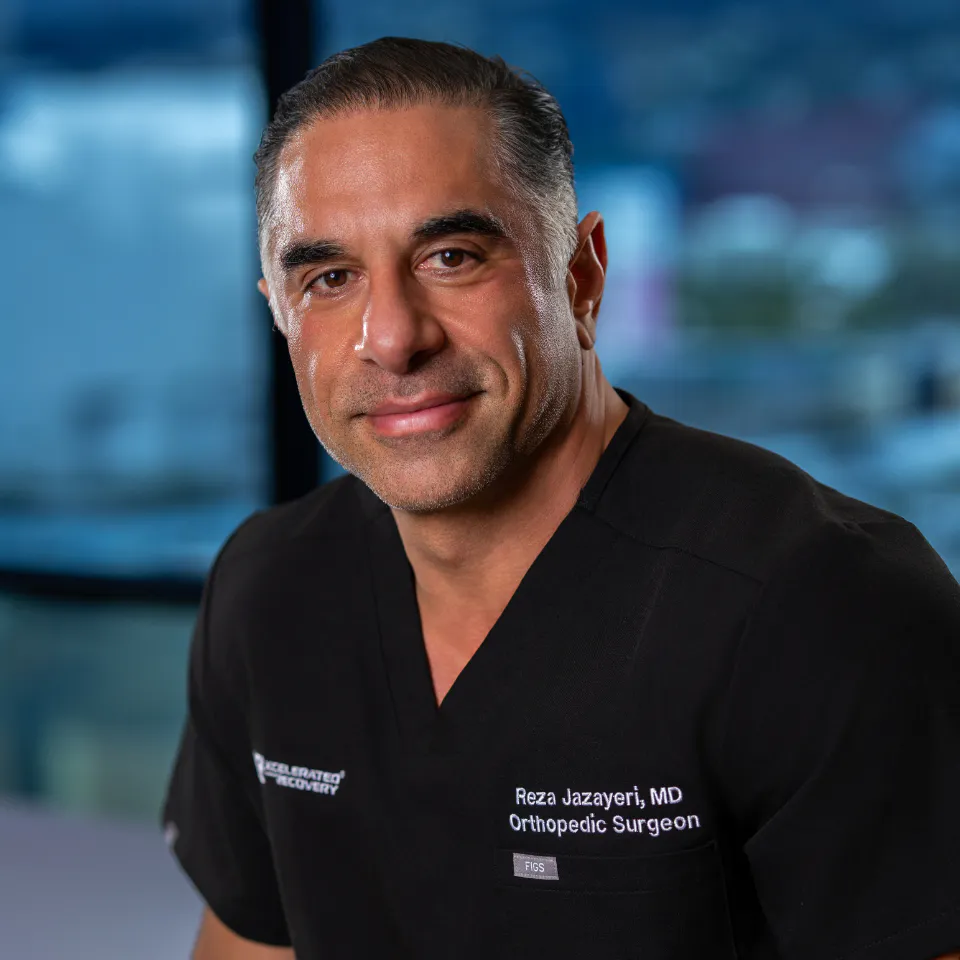
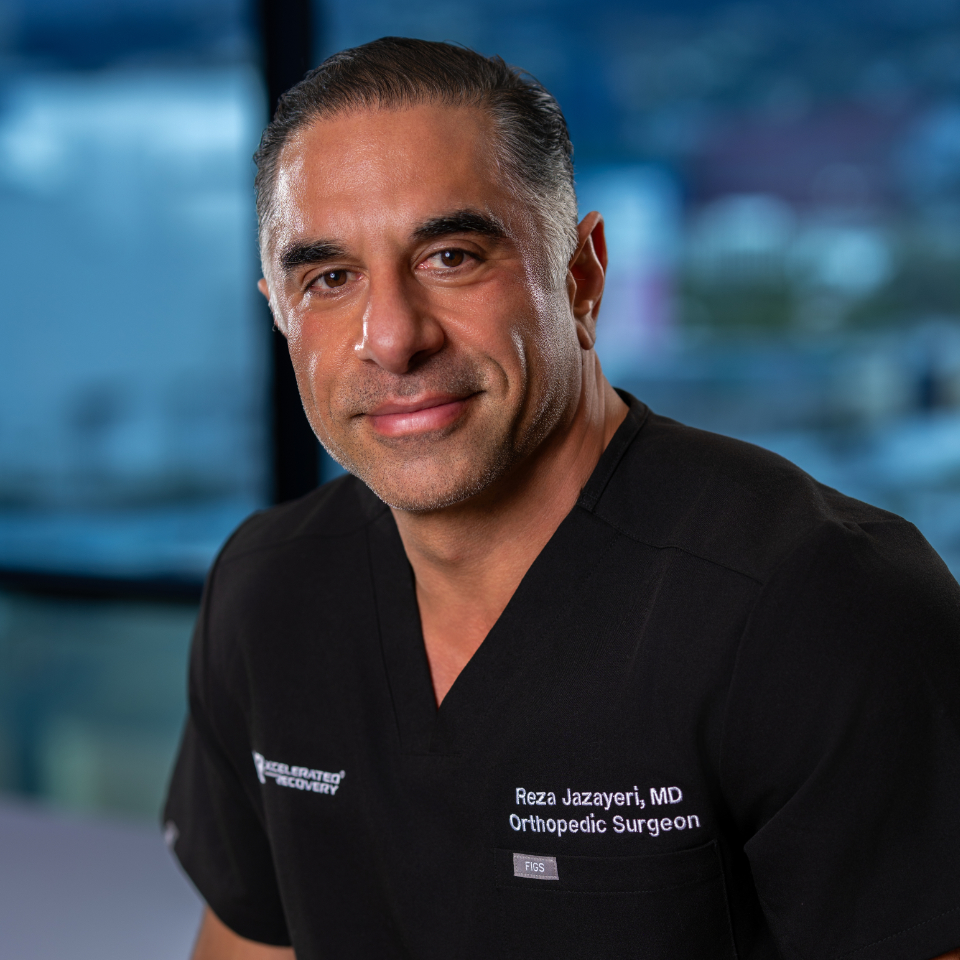
Reza Jazayeri, MD, is a double board-certified orthopedic surgeon and sports medicine physician whose published research focuses on one of the biggest challenges after a quad tendon injury, which is protecting muscle while the leg recovers. He is the lead author of a review on amino acid supplementation in orthopaedic surgery in the Journal of the American Academy of Orthopaedic Surgeons and coauthored a chapter on nutritional strategies to improve surgical outcomes in Instructional Course Lectures. He earned his medical degree at Albert Einstein College of Medicine, completed his orthopedic surgery residency at NYU Hospital for Joint Diseases and trained in sports medicine at the Kerlan-Jobe Orthopaedic Clinic. He brings that training together with more than 17 years of experience caring for athletes, lifters and active adults.
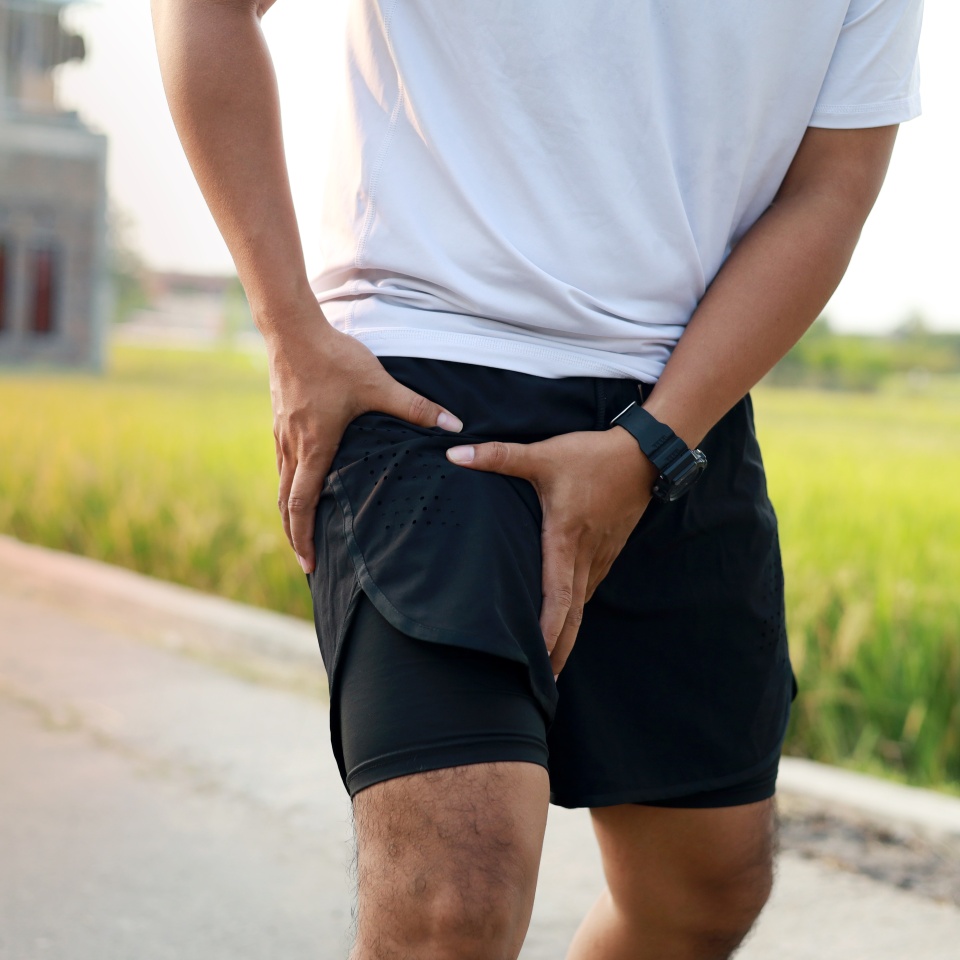
What Is a Quadriceps Tendon Tear?
The quadriceps tendon connects the large muscles on the front of your thigh to the top of your kneecap. Together with the kneecap and the patellar tendon below it, it forms the extensor mechanism, the system that straightens your knee, lets you climb stairs and stops your knee from collapsing when you land.
Quad tendon tears are most common in adults over 40 and often happen when the knee is bent and the thigh muscle contracts hard at the same time, such as catching yourself during a fall, landing from a jump or missing a heavy squat. Tears can be partial or complete. Certain factors can weaken the tendon and raise the risk, including diabetes, kidney disease, gout, long-term steroid use and some antibiotics in the fluoroquinolone family.
Signs of a Quad Tendon Rupture
Most patients know something serious has happened right away. Common signs include:
- A pop or tearing sensation just above the kneecap
- Swelling, bruising and tenderness at the front of the knee
- A dent or soft gap above the kneecap where the tendon used to be
- A kneecap that sits lower than normal
- Trouble straightening the knee or lifting the leg straight off the bed
- A knee that gives way when you try to walk
An exam that tests whether you can straighten your knee against gravity is the key first step. X-rays check the position of the kneecap and rule out a fracture, and imaging such as MRI or ultrasound confirms whether the tear is partial or complete. Because a quad tendon tear can be mistaken for a simple sprain, a missed diagnosis is one of the most common reasons repairs are delayed.
Common Concerns: Do I Need Surgery for a Torn Quad Tendon?
Dr. Jazayeri starts every evaluation by asking whether non-surgical care can restore the function you need. Treatment depends on how much of the tendon is torn and whether your extensor mechanism still works.
- Partial Tears: If you can still straighten your knee fully against gravity, many partial tears heal with a period in a brace locked straight, followed by structured physical therapy.
- Complete Tears: When the tendon has pulled off the kneecap and you cannot straighten your leg, surgical repair is the standard of care. Without it, the knee usually stays weak and unstable.
- Delayed or Chronic Tears: After several weeks, the tendon pulls back and scars down. These injuries can still be treated, but they may need lengthening techniques or graft reinforcement rather than a direct repair.
Timing matters. Repairs performed in the first two to three weeks are generally simpler and more reliable than repairs done after the tendon has retracted, so an early visit keeps all of your options open.
How Quadriceps Tendon Repair Is Performed
Quad tendon repair is usually an outpatient or short-stay procedure. Through an incision over the front of the knee, Dr. Jazayeri reattaches the torn tendon to the top of the kneecap using strong sutures passed through small tunnels in the bone or secured with suture anchors. The repair is tensioned so the kneecap sits at its normal height, which protects how the knee moves and bends later on.
For chronic tears or poor-quality tissue, he may add graft reinforcement to strengthen the repair. When appropriate, orthobiologics such as platelet-rich plasma (PRP) or bone marrow aspirate concentrate (BMAC) may be used at the repair site as part of his Bio-Fertilization™ Protocol. Research on biologics for tendon healing is still evolving, so they are used alongside a strong surgical repair, never in place of it. Like any surgery, quad tendon repair carries risks, including infection, stiffness, blood clots and re-tear, which Dr. Jazayeri reviews with you before surgery.
“The thigh muscle can shrink fast after a quad tendon injury. The repair holds the tendon, but nutrition and early, protected loading are what bring the muscle back.” — Dr. Reza Jazayeri
What to Expect During Recovery
Recovery from quad tendon repair is gradual, and every timeline is adjusted to your healing and goals. A typical progression looks like this:
- Protect the Repair: For about the first six weeks, you wear a brace that limits bending. Most patients can walk with weight on the leg in the brace, often with crutches at first.
- Restore Motion: Knee bending is increased step by step under the guidance of your physical therapist, usually reaching full motion by around three months.
- Rebuild Strength: Strengthening the quadriceps, hips and core becomes the focus once motion is restored, including blood flow restriction (BFR) training when appropriate.
- Return to Activity: Running and sport-specific work typically begin around four to six months, with full strength often taking six months to a year.
Muscle preservation is a central part of Dr. Jazayeri’s plan. His perioperative nutrition protocol uses targeted protein and amino acid support to limit muscle loss, and his Metabolic Report Card looks at factors such as vitamin D status and blood sugar control that can affect healing. Progress between visits is supported through his recovery program, and return to sport is based on strength testing, not just the calendar. Lifters can learn more about related injuries on the bodybuilder injuries page.
When to Seek Urgent Care
If you cannot straighten your knee or lift your leg after an injury, schedule an evaluation within a few days rather than waiting to see if it improves. Seek emergency care if you develop calf pain or swelling, chest pain or shortness of breath after a knee injury or surgery, since these can be signs of a blood clot.
Frequently Asked Questions About Quadriceps Tendon Repair
-
Ideally within the first two to three weeks. Early repair is usually simpler, and the tendon is less likely to have retracted or scarred.
-
Some partial tears can, if you are still able to straighten your knee against gravity. Complete tears generally need surgery to restore strength and stability.
-
Most patients can put weight on the leg right away while wearing a brace locked straight, often using crutches for balance at first.
-
Light strengthening starts once motion returns, but heavy squatting and lifting usually take six months or more, guided by strength testing. Learn more about return to sport planning.
-
Re-tears are uncommon after a well-protected recovery. Following your bracing and rehab plan and addressing risk factors like blood sugar control lowers that risk further.
-
Chronic tears can still be treated, though they may need graft reinforcement. Dr. Jazayeri offers second opinions for delayed or previously treated injuries.
Why Choose Dr. Jaz for Quadriceps Tendon Repair
- Published Muscle-Preservation Research: His peer-reviewed work on amino acid supplementation and surgical nutrition shapes every recovery plan.
- Sports Medicine Training: Fellowship training at the Kerlan-Jobe Orthopaedic Clinic and double board certification in orthopedic surgery and sports medicine.
- Acute and Chronic Tear Experience: Direct repair for fresh tears and graft-reinforced reconstruction for delayed ones.
- Whole-Athlete Recovery: Metabolic optimization, biologics when appropriate and sport-specific rehab built into one plan.
- Three Southern California Offices: Appointments in Los Angeles, Westlake Village and Orange, plus virtual visits.
Meet Dr. Reza Jazayeri
Dr. Reza Jazayeri specializes in sports medicine with expertise in shoulder, knee, and elbow injuries. A Southern California native, Dr. Jazayeri combines an engineering background with elite surgical training, completing his orthopedic surgery residency at the nationally ranked NYU Hospital for Joint Diseases and a sports medicine fellowship at the renowned Kerlan-Jobe Orthopaedic Clinic.
After more than 15 years caring for patients within the Southern California Permanente Medical Group, Dr. Jazayeri joined DOCS Health to expand a practice focused on personalized orthopedic and sports medicine care and surgical excellence. As Director of Longevity at DOCS Health, he leads the development and implementation of optimization protocols and regenerative medicine strategies designed to improve long-term musculoskeletal health and extend healthspan.
His published work includes a 2026 coauthored review of nutritional optimization in spine surgery in the Journal of the American Academy of Orthopaedic Surgeons. View Dr. Jazayeri’s research publications and training.
Schedule Quadriceps Tendon Repair in Los Angeles
A quad tendon injury is time-sensitive, and a clear plan in the first days after the injury can make the repair simpler and the recovery smoother. Dr. Jazayeri sees patients at DOCS Health in Los Angeles, just minutes from Beverly Hills, as well as in Westlake Village and Orange, and can review your imaging during a virtual consultation. Schedule a consultation to get started.
This page is for general educational purposes and does not replace an individual medical evaluation. Outcomes vary by patient and injury.
Medically reviewed by Reza Jazayeri, M.D. on