A ruptured patellar tendon stops an athlete in an instant. One hard landing or explosive push-off, and the knee can no longer straighten or hold your weight. A complete tear needs prompt surgical repair to restore the knee’s power, and the sooner it is evaluated, the more predictable the repair tends to be. Dr. Jaz treats patellar tendon injuries at his offices in Los Angeles near Beverly Hills, Westlake Village and Orange, with virtual visits available for an early look at your imaging.
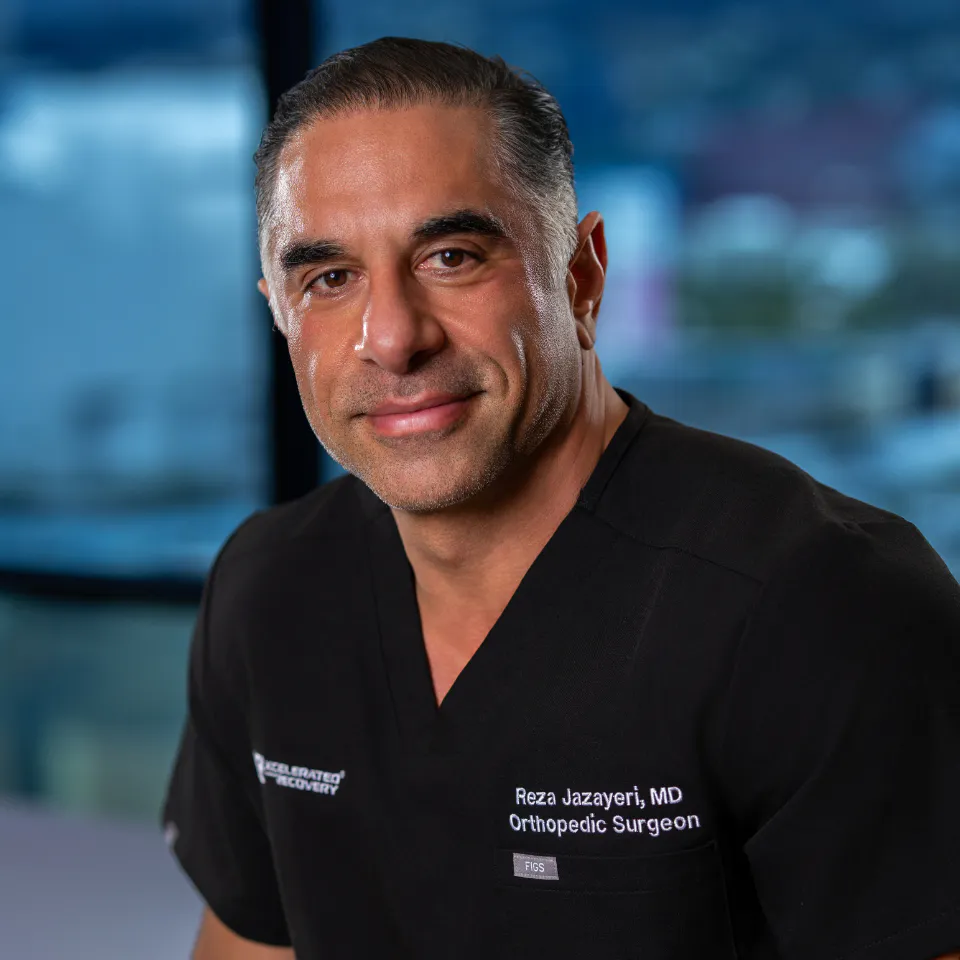
Reza Jazayeri, MD, is a double board-certified orthopedic surgeon and sports medicine physician who presented on optimizing surgical success and return to sport during the knee session of a Cedars-Sinai soccer medicine conference ahead of the 2026 FIFA World Cup. His published knee work includes a primary repair technique for medial collateral ligament injuries in Arthroscopy Techniques. He completed his orthopedic surgery residency at the nationally ranked NYU Hospital for Joint Diseases and his sports medicine fellowship at the Kerlan-Jobe Orthopaedic Clinic in Los Angeles, and he has spent more than 17 years caring for athletes and active adults.
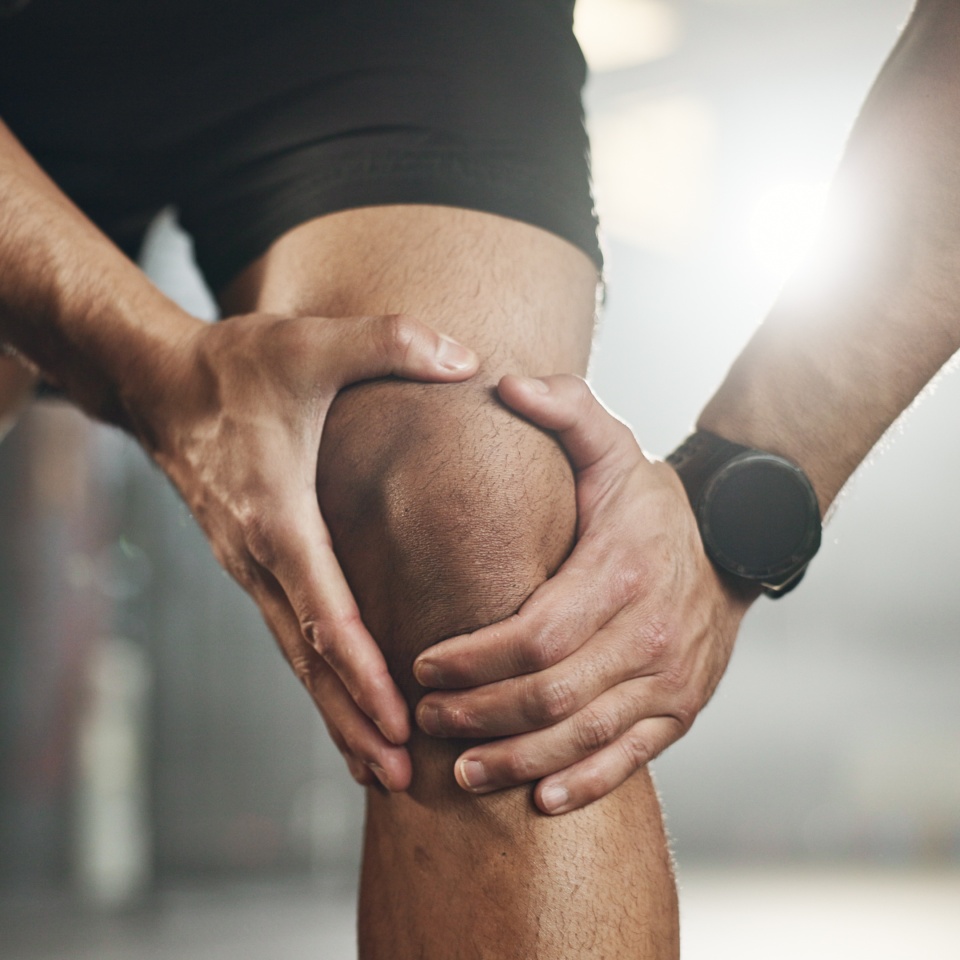
What Is a Patellar Tendon Tear?
The patellar tendon connects the bottom of your kneecap to the top of your shinbone. It is the final link in the extensor mechanism, the system of the quadriceps muscle, quad tendon, kneecap and patellar tendon that straightens your knee and absorbs force when you land, cut and decelerate.
Patellar tendon ruptures most often affect active people under 40, particularly in jumping and sprinting sports such as basketball, volleyball and football. The tendon usually fails when the thigh muscle contracts forcefully while the knee is bent, as in landing awkwardly from a jump. A history of patellar tendinitis, also called jumper’s knee, prior steroid injections near the tendon and certain medical conditions can weaken the tendon over time.
It helps to separate a rupture from tendinopathy. Jumper’s knee is an overuse condition that causes pain below the kneecap but leaves the tendon intact, and it is usually treated without surgery. A rupture is a structural tear that disconnects the kneecap from the shinbone. If your quad tendon is the problem instead, see quadriceps tendon repair.
Signs of a Patellar Tendon Rupture
Common signs after a patellar tendon tear include:
- A pop or tearing sensation below the kneecap
- Swelling and bruising at the front of the knee
- A soft gap below the kneecap
- A kneecap that rides higher than normal
- Inability to straighten the knee or lift the leg straight
- Difficulty walking or a knee that buckles
The exam checks whether you can extend your knee against gravity, and X-rays show the height of the kneecap and rule out a fracture. MRI or ultrasound through imaging and diagnosis confirms the location and extent of the tear and checks for other injuries, such as ligament damage, that can occur in the same moment.
Common Concerns: Surgery, Timing and Your Season
For partial tears with the extensor mechanism still working, a period of bracing and progressive physical therapy may be enough. For tendinopathy that has not responded to rehab, Dr. Jazayeri may discuss injection options, including platelet-rich plasma (PRP), with a clear explanation that research results for PRP in tendinopathy are mixed.
For complete ruptures, surgical repair is the standard of care. Athletes often ask how this affects their season, and the honest answer is that a patellar tendon repair is a significant injury with a long recovery. What can be controlled is the timing of the repair, the strength of the fixation and the quality of the rehab. Repair within the first couple of weeks avoids the tendon retracting and scarring, which can make later reconstruction more complex.
“Jumping athletes put enormous force through the patellar tendon. The repair has to be strong enough to start moving early, and the rehab has to rebuild that power step by step.” — Dr. Reza Jazayeri
How Patellar Tendon Repair Is Performed
Patellar tendon repair is typically an outpatient procedure. Through an incision over the front of the knee, the torn tendon is reattached to the kneecap using strong sutures passed through small bone tunnels or secured with suture anchors. Dr. Jazayeri carefully restores the normal height of the kneecap, which matters for how the knee bends and tracks.
In many cases, the repair is reinforced with high-strength suture tape that shares the load while the tendon heals. This added protection can allow earlier, controlled motion. When appropriate, orthobiologics may be applied at the repair site as part of the Bio-Fertilization™ Protocol, used alongside a strong repair and never as a substitute for one. Risks of surgery include infection, stiffness, knee pain, blood clots and re-rupture, which Dr. Jazayeri reviews with you in detail.
What to Expect During Recovery
Every recovery is tailored to the tear, the repair and your sport. A typical progression includes:
- Protect the Repair: A hinged brace protects the knee for about the first six weeks, and most patients walk with weight on the leg in the brace.
- Regain Motion: Bending is increased in controlled stages, with full motion often returning by around three months.
- Rebuild Strength: Quadriceps, hip and core strength are progressively loaded, including blood flow restriction (BFR) training when appropriate.
- Return to Running and Jumping: Running typically starts around four to six months, while full return to jumping and cutting sports often takes six to twelve months, based on strength and hop testing.
Dr. Jazayeri’s perioperative nutrition protocol supports tendon healing and helps limit muscle loss during the protected phase. Milestones are coordinated with your physical therapist and tracked through his recovery program, with a structured return to sport plan for athletes.
When to Seek Urgent Care
If you cannot straighten your knee after an injury, arrange an evaluation within a few days. Seek emergency care for a knee that is badly deformed, a cut or open wound over the injury, numbness or coldness in the foot, or calf swelling, chest pain or shortness of breath after an injury or surgery.
Frequently Asked Questions About Patellar Tendon Repair
-
Tendinitis, or jumper’s knee, is an overuse injury that causes pain but leaves the tendon intact. A rupture is a tear that disconnects the kneecap from the shinbone and usually needs surgery.
-
Ideally within the first one to two weeks, before the tendon retracts and scars. Early repair tends to be simpler and more predictable.
-
Most patients can bear weight in a brace soon after surgery, often with crutches for balance in the first weeks.
-
Many athletes return between six and twelve months after surgery, once strength, hop testing and confidence meet return-to-play criteria.
-
They are different injuries, though some ACL reconstructions use part of the patellar tendon as a graft. Learn more on the ACL reconstruction page.
-
Yes. Dr. Jazayeri reviews MRIs and treatment plans for patients considering surgery or recovering from a prior repair through second opinions.
Why Choose Dr. Jaz for Patellar Tendon Repair
- Return-to-Sport Expertise: A conference presenter on optimizing surgical success and return to sport for soccer and knee injuries.
- Knee-Focused Training: Residency at NYU Hospital for Joint Diseases and sports medicine fellowship at the Kerlan-Jobe Orthopaedic Clinic.
- Reinforced Repair Techniques: Strong fixation with suture tape reinforcement when appropriate to support earlier motion.
- Whole-Athlete Recovery: Nutritional and metabolic optimization, biologics when appropriate and sport-specific rehab in one plan.
- Three Southern California Offices: Appointments in Los Angeles, Westlake Village and Orange, plus virtual visits.
Meet Dr. Reza Jazayeri
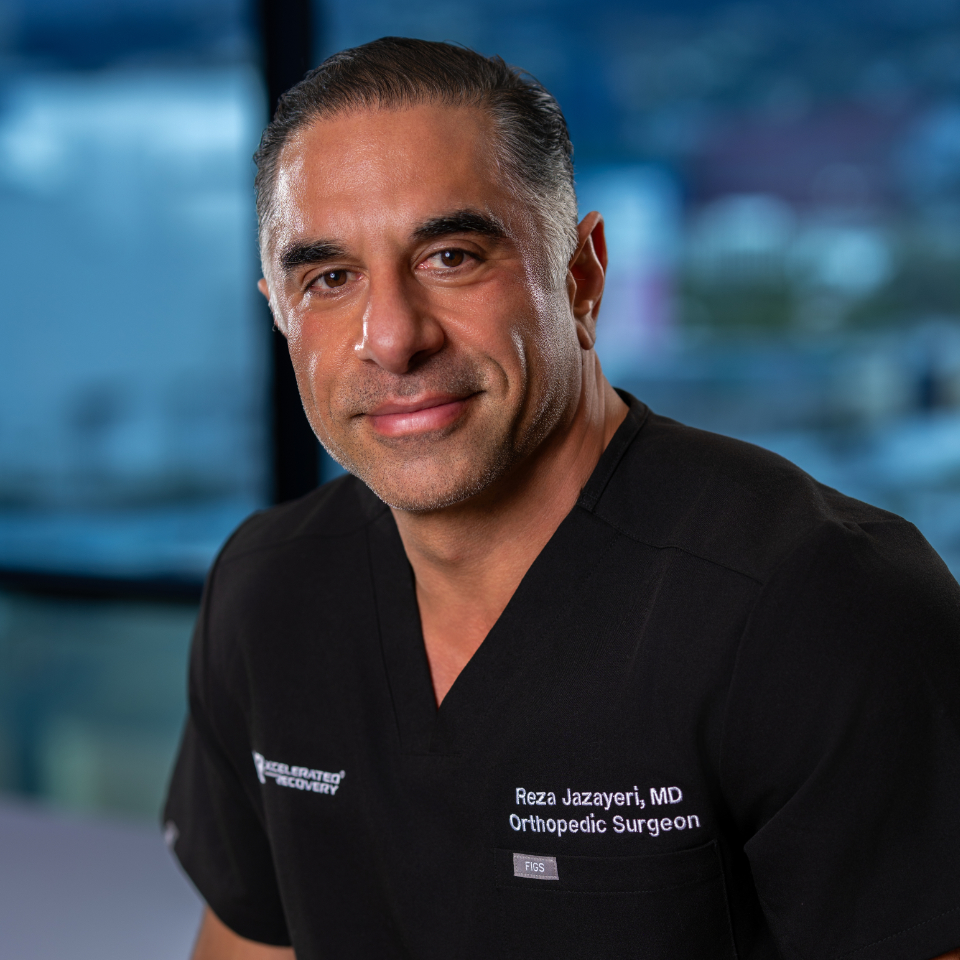
Dr. Reza Jazayeri specializes in sports medicine with expertise in shoulder, knee, and elbow injuries. A Southern California native, Dr. Jazayeri combines an engineering background with elite surgical training, completing his orthopedic surgery residency at the nationally ranked NYU Hospital for Joint Diseases and a sports medicine fellowship at the renowned Kerlan-Jobe Orthopaedic Clinic.
After more than 15 years caring for patients within the Southern California Permanente Medical Group, Dr. Jazayeri joined DOCS Health to expand a practice focused on personalized orthopedic and sports medicine care and surgical excellence. As Director of Longevity at DOCS Health, he leads the development and implementation of optimization protocols and regenerative medicine strategies designed to improve long-term musculoskeletal health and extend healthspan.
His published work includes a 2026 coauthored review of nutritional optimization in spine surgery in the Journal of the American Academy of Orthopaedic Surgeons. View Dr. Jazayeri’s research publications and training.
Schedule Patellar Tendon Repair in Los Angeles
A ruptured patellar tendon is time-sensitive, and a fast, accurate diagnosis keeps your best options available. Dr. Jazayeri sees patients at DOCS Health in Los Angeles, just minutes from Beverly Hills, as well as in Westlake Village and Orange, and can review your imaging during a virtual consultation. Schedule a consultation to build your plan back to the court or field.
This page is for general educational purposes and does not replace an individual medical evaluation. Outcomes vary by patient and injury.
Medically reviewed by Reza Jazayeri, M.D. on