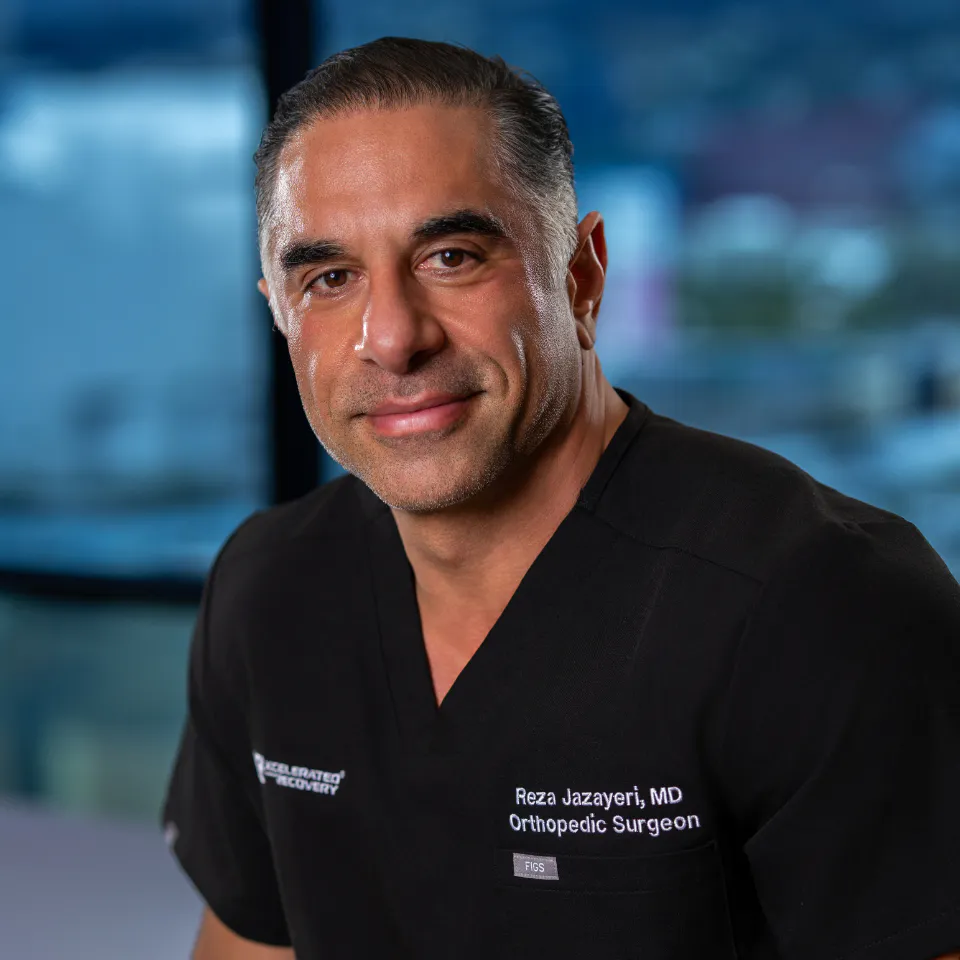
No two shoulders are the same. Your bone shape, the angle of your shoulder socket, the health of your rotator cuff and your muscle mass are different from anyone else’s, and so are your goals. That is why Dr. Jaz does not take a one-size-fits-all approach to shoulder replacement. Each surgery is planned around your anatomy, your metabolic health and the life you want to get back to, with one clear goal: returning you to an active, athletic lifestyle with your strength and muscle intact. Dr. Jaz sees patients in Los Angeles near Beverly Hills, Westlake Village and Orange.
Reza Jazayeri, MD, is a member of the Personalized Arthroplasty Society, an international group of surgeons and engineers working to move joint replacement away from standard techniques and toward personalized, physiological ones. At the society’s 2025 Annual Meeting in Rome, he spoke in the Personalized Perioperative Care session on “The Secret Powers of Amino Acids,” explaining how a patient’s nutritional status shapes healing, muscle preservation and recovery after joint replacement. He has also presented on perioperative nutritional optimization at the American Academy of Orthopaedic Surgeons (AAOS) Annual Meeting for three consecutive years. Dr. Jazayeri is double board-certified in orthopedic surgery and sports medicine, trained at NYU Hospital for Joint Diseases and the Kerlan-Jobe Orthopaedic Clinic, and brings more than 17 years of experience to every shoulder he treats.
Watch on Youtube: Anatomic Stemless Total Shoulder Arthroplasty with computer-assisted navigation by Reza Jazayeri, MD.
What Is Personalized Shoulder Replacement?
The shoulder is the most mobile joint in the body, so small differences in implant position can change how far you can reach, how strong you feel and how well the implant holds up over time. A personalized shoulder replacement is planned around your own anatomy using a 3D model, placed precisely with navigation and supported by a recovery plan based on your nutrition, muscle mass and goals. Patients differ in several key ways:
- Activity Goals: A golfer, a swimmer and a weightlifter each need a different plan.
- Socket (Glenoid) Shape and Wear: Arthritis often wears the socket unevenly, changing its angle and leaving areas of bone loss.
- Rotator Cuff Health: Whether your rotator cuff works, or is torn and cannot be repaired, decides which type of replacement makes sense.
- Bone Quality and Size: These affect implant choice and how the implant is fixed to the bone.
- Muscle Mass and Metabolic Health: These affect healing, strength and how quickly you recover.
Anatomic vs. Reverse Shoulder Replacement
| Anatomic Total Shoulder | Reverse Total Shoulder | |
|---|---|---|
| How It Works | Recreates the natural ball-and-socket joint | Switches the ball and socket so the deltoid muscle powers the arm |
| Best For | Arthritis with a healthy rotator cuff | Rotator cuff tear arthropathy, massive irreparable cuff tears, complex fractures and some revisions |
| Planning Focus | Restoring your native joint angles and socket version | Implant position that balances motion, stability and deltoid tension |
Dr. Jazayeri explains which option fits your shoulder, and why, using your own imaging. You can learn more about each procedure on the anatomic total shoulder replacement and reverse total shoulder replacement pages.

Common Concerns: Is Shoulder Replacement Right for You?
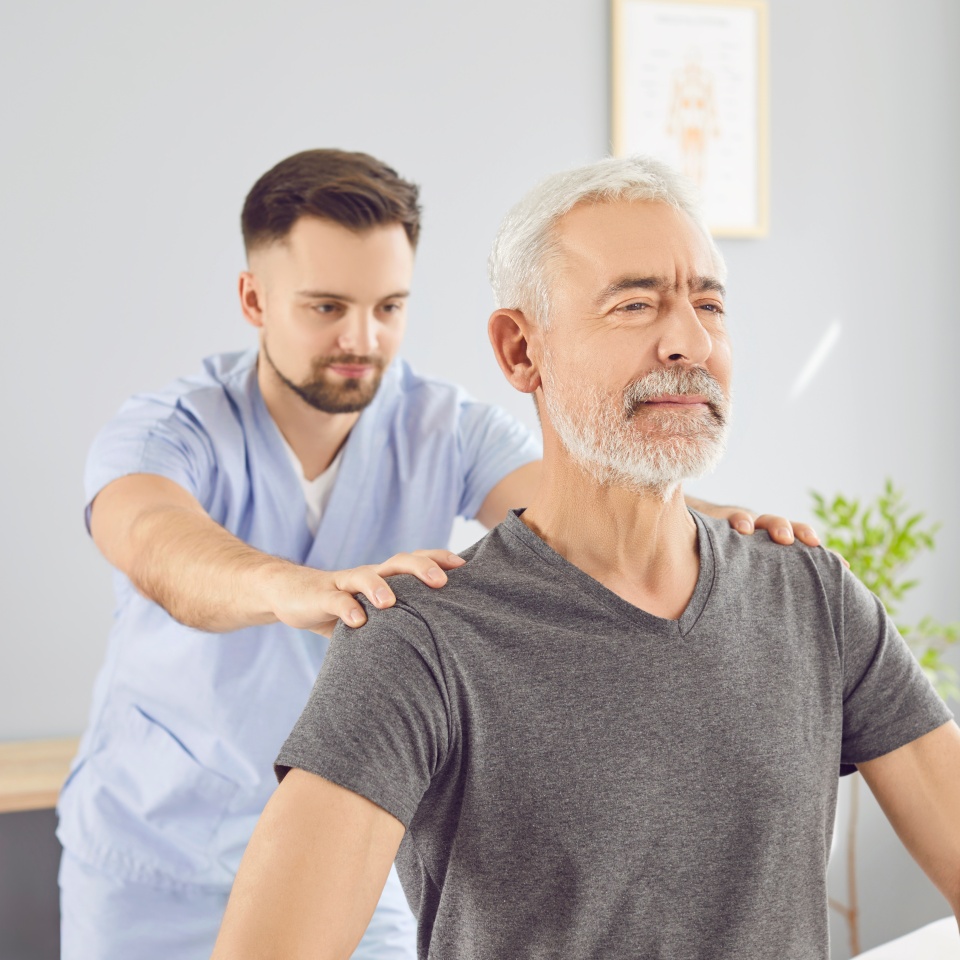
Shoulder replacement is a big decision, and it is never the first step. If orthobiologics, rehab or activity changes can keep you active without surgery, that is where Dr. Jazayeri starts. Replacement is usually considered when shoulder arthritis or a rotator cuff problem causes pain and weakness that limit daily life, sleep or the activities you care about, and imaging shows joint damage that conservative care cannot address.
Like any major surgery, shoulder replacement carries risks, including infection, stiffness, nerve injury, instability, blood clots and implant loosening or wear over time. Dr. Jazayeri reviews these with you and explains how your individual plan is designed to reduce them.
“No two shoulders are the same, and no two patients have the same goals. My job is to understand both, and build a plan that gets you back to the life you want.” — Dr. Reza Jazayeri
Step 1: Understanding the Whole Patient
Before planning the implant, Dr. Jazayeri evaluates the person it goes into. Surgery is a major physical stress, and patients who start strong tend to recover faster.
- Metabolic Report Card: A structured assessment of factors that influence healing, including blood sugar control, inflammation, iron, vitamin D and protein status. Issues are addressed before surgery or coordinated with your other physicians.
- Nutritional Optimization: A perioperative nutrition plan with targeted amino acid supplementation helps limit muscle loss and support healing, so you are not sent into surgery depleted.
- Muscle-Centric Calculator: Your protein and amino acid targets are calculated from your body composition and muscle mass rather than a generic chart, because muscle is treated as a vital sign.
- The Surgical Athlete Approach: Every patient is prepared like an athlete getting ready for a big event, priming the body before surgery and recovering with a structured plan. Learn more about the Surgical Athlete approach.
Step 2: 3D Preoperative Planning for Shoulder Replacement
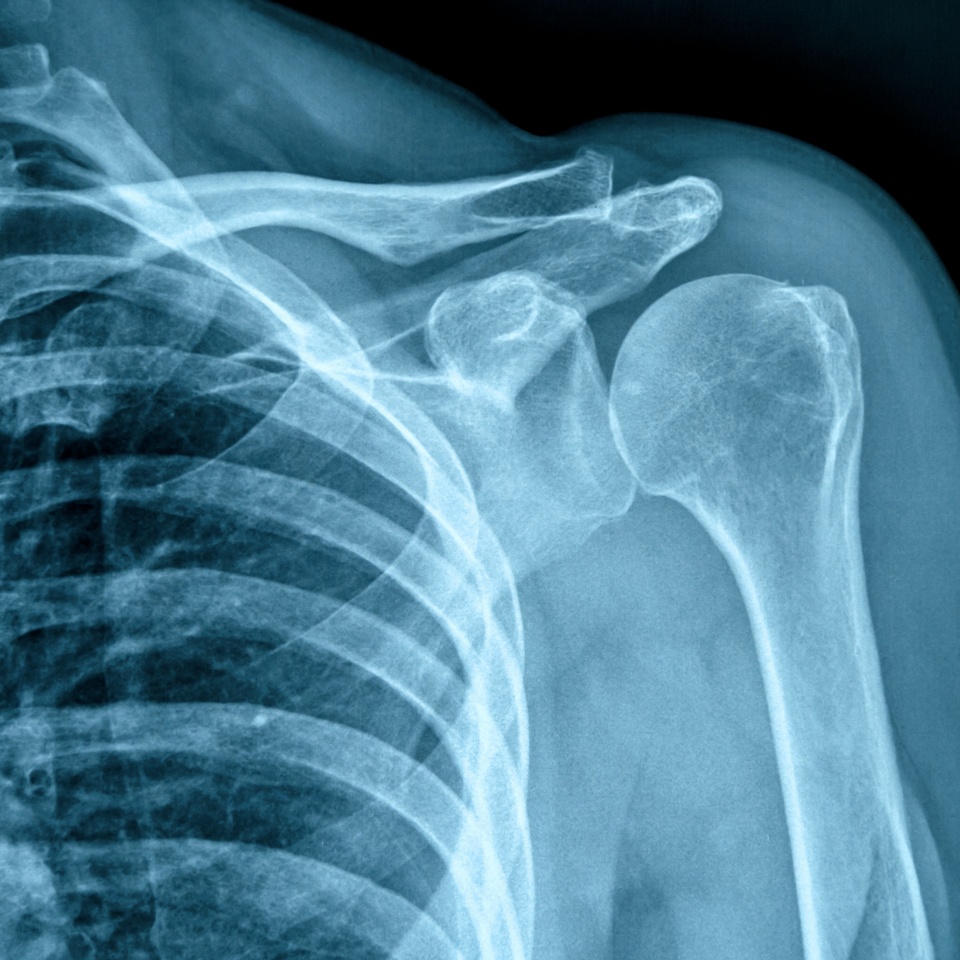
Every shoulder replacement starts with a CT scan of your shoulder. Planning software turns that scan into a 3D model of your bones, which allows Dr. Jazayeri to:
- Measure the exact angle and wear pattern of your socket
- Map any bone loss before surgery rather than during it
- Choose implant type, size and position for your anatomy
- Simulate range of motion before the first incision
The result is a surgical plan built for your shoulder, which Dr. Jazayeri reviews with you so you understand exactly what will be done.
Step 3: Intraoperative Navigation and Robotics
A plan only matters if it is carried out precisely. In the operating room, Dr. Jazayeri uses computer navigation, and robotic-assisted technology where available, to guide implant placement in real time. The system tracks your shoulder’s position during surgery, confirms that the socket component matches the 3D plan for angle and depth, and helps preserve healthy bone, especially in shoulders with uneven wear. Precise placement is designed to support stability, motion and implant longevity.

Step 4: Preserving Muscle and Preventing Deconditioning
Muscle loss is one of the biggest hidden risks of surgery. A few weeks of reduced activity can cost significant strength, especially in older adults, and that muscle is hard to win back. Dr. Jazayeri’s plan is built to protect it:
- Digital Prehab Before Surgery: A guided, app-based digital rehab program you follow at home in the weeks before surgery builds strength and mobility.
- Keeping the Rest of You Moving: Walking, lower-body training and core work continue through recovery, so the whole body does not decondition while the shoulder heals.
- Nutrition Through Recovery: Amino acid and protein targets continue after surgery, when muscle breakdown is highest.
- Hand and Elbow Motion From Day One: Early motion keeps the arm from stiffening and weakening.
What to Expect During Shoulder Replacement Recovery
You will usually wear a sling for four to six weeks to protect the shoulder while it heals, but being in a sling does not mean being inactive. From day one, Dr. Jazayeri encourages you to use your hand for light daily tasks like eating, typing and writing, move your elbow, wrist and fingers through full range of motion, and walk and stay active with the rest of your body.
| Phase | Timing | Focus |
|---|---|---|
| Protection | Weeks 0 to 6 | Sling, immediate hand, wrist and elbow motion, and gentle shoulder motion as directed |
| Restore Motion | Weeks 6 to 12 | Sling off, active range of motion and return to daily activities |
| Rebuild Strength | Months 3 to 4 | Progressive strengthening and return to gym training with a structured plan |
| Return to Sport | Months 4 to 6 | Sport-specific training for golf, tennis, swimming, cycling and fitness |
Staying Active Safely in the Sling (Weeks 0 to 6)
Your shoulder needs protection, but the rest of your body does not need to stop. With the sling on and Dr. Jazayeri’s clearance, most patients can safely do the following:
- Cardio: An upright stationary bike with the sling on and your non-operative hand on the handlebar, usually starting about one week after surgery; daily walks on flat, even surfaces; and a recumbent stepper or elliptical using the legs only.
- Legs and Glutes: Bodyweight squats or sit-to-stands, machine leg press, leg extensions and hamstring curls, glute bridges, step-ups, calf raises, and lunges or split squats without weights in the operative hand. Blood flow restriction (BFR) training for the legs may be added when appropriate.
- Core: Seated or standing core work that does not load the shoulder, such as marches and pelvic tilts, while avoiding planks, push-ups and anything that puts weight through the arms.
- The Non-Operative Arm: Curls, presses, rows and triceps work with the other arm, which can also help maintain some strength in the resting arm through an effect called cross-education.
- The Operative Arm: Squeezing a soft ball or putty for grip strength, bending and straightening the elbow, and moving the wrist and fingers several times a day, with gentle shoulder motion only as directed by Dr. Jazayeri and your therapist.
Until you are cleared, avoid lifting, pushing or pulling with the operative arm, supporting body weight on it, reaching behind your back, and any activity with a fall risk, such as running, outdoor cycling or skiing. Your digital rehab program guides you through these exercises step by step. Your timeline is individualized, and return-to-exercise decisions are based on healing milestones and strength, not just the calendar. Dr. Jazayeri also gives long-term guidance on adapting heavy lifting to protect the implant. Additional guidance is available in his post-operative instructions.
When to Call Your Care Team After Surgery
Contact your care team promptly for a fever, increasing redness, drainage or swelling at the incision, pain that is not controlled by your plan, or a sudden loss of shoulder motion or a feeling that the shoulder has shifted. Call 911 or go to the nearest emergency department for chest pain, shortness of breath, or calf swelling and pain, which can be signs of a blood clot.
Frequently Asked Questions About Personalized Shoulder Replacement
-
Usually four to six weeks. You can use your hand for light tasks and move your elbow, wrist and fingers right away.
-
It mainly depends on your rotator cuff. A healthy cuff usually means an anatomic replacement, while a torn, irreparable cuff, a complex fracture or some revisions usually call for a reverse total shoulder replacement. Your CT-based 3D plan helps confirm the choice.
-
It is planned around your own anatomy using a 3D model, placed precisely with navigation, and supported by a recovery plan based on your nutrition, muscle mass and goals.
-
Surgery increases muscle breakdown, and patients who start with good protein and nutrient status are better equipped to heal and keep their strength. Learn more about perioperative nutrition.
-
Many active patients return to golf, swimming, tennis, cycling and fitness training, typically around four to six months. Dr. Jazayeri gives individualized guidance, including how to adapt heavy lifting to protect your implant.
-
A guided, app-based exercise program you follow at home before surgery to build strength and mobility, so you start recovery from a stronger baseline.
Why Patients Choose Dr. Jaz for Shoulder Replacement
- Personalized Arthroplasty Expertise: A member of the Personalized Arthroplasty Society who uses CT-based 3D planning and navigation for every replacement.
- Direct Access: A dedicated line to Dr. Jazayeri’s team at 1-844-JAZ-0911.
- Unhurried Visits: Your imaging, your 3D plan and your options explained clearly.
- Shared Decision-Making: Your goals drive the plan, whether that is golf, tennis, the gym or playing with your grandchildren.
- Coordinated Care: Collaboration with your physical therapist, trainer and other physicians.
- Insurance Support: All insurances are welcome, your benefits are verified before treatment, and surgery is performed at in-network facilities.
Meet Dr. Reza Jazayeri
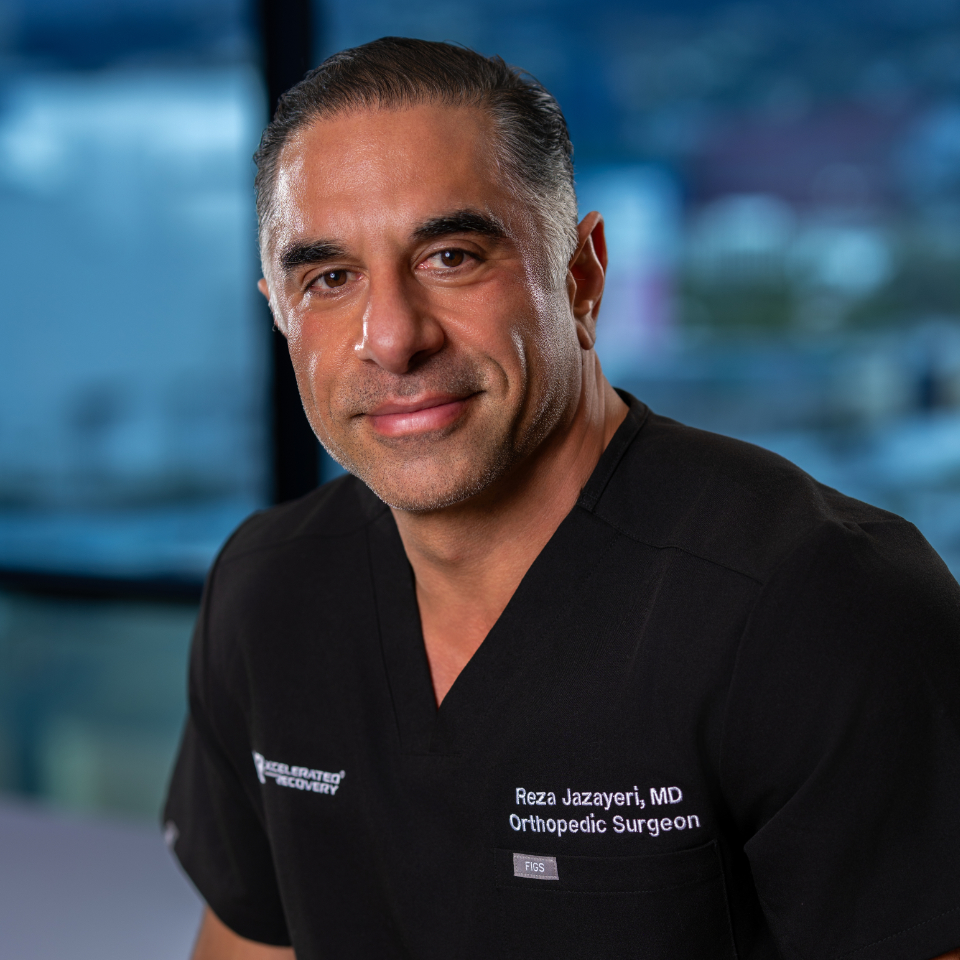
Dr. Reza Jazayeri specializes in sports medicine with expertise in shoulder, knee, and elbow injuries. A Southern California native, Dr. Jazayeri combines an engineering background with elite surgical training, completing his orthopedic surgery residency at the nationally ranked NYU Hospital for Joint Diseases and a sports medicine fellowship at the renowned Kerlan-Jobe Orthopaedic Clinic.
After more than 15 years caring for patients within the Southern California Permanente Medical Group, Dr. Jazayeri joined DOCS Health to expand a practice focused on personalized orthopedic and sports medicine care and surgical excellence. As Director of Longevity at DOCS Health, he leads the development and implementation of optimization protocols and regenerative medicine strategies designed to improve long-term musculoskeletal health and extend healthspan.
His published work includes a 2026 coauthored review of nutritional optimization in spine surgery in the Journal of the American Academy of Orthopaedic Surgeons. View Dr. Jazayeri’s research publications and training.
I am a hairdresser and I couldn’t work for the past 2 years. I saw Dr. Jayazeri and he did my shoulder replacement surgery. It was the best experience I’ve ever had. He is an amazing surgeon and human being. Now 5 weeks after my surgery, I’m back at work! I highly recommend Dr. Jazayeri.
Schedule Shoulder Replacement Care in Los Angeles
If shoulder arthritis or a rotator cuff problem is keeping you from the life you want, Dr. Jazayeri will build a plan that is as unique as you are. He sees patients at DOCS Health in Los Angeles, just minutes from Beverly Hills, as well as in Westlake Village and Orange, with virtual consultations available. Schedule a consultation to get started.
This page is for general educational purposes and does not replace an individual medical evaluation. Outcomes vary by patient.
Medically reviewed by Reza Jazayeri, M.D. on