Shoulder arthritis is a degenerative condition that wears down the smooth cartilage lining of the shoulder joint. It causes pain, stiffness, and reduced range of motion. If you live in the Greater Los Angeles area and struggle with these symptoms, you need clear, practical treatment options.
Dr. Reza Jazayeri, a double board-certified orthopedic surgeon specializing in sports medicine, offers both non-surgical and surgical care. He focuses on restoring comfort and function using a stepwise approach that starts with the least invasive methods. His training at NYU Hospital for Joint Diseases and the Kerlan-Jobe Orthopaedic Clinic shapes his precise, patient-centered care. Dr.Jazayeri, known to his patients as Dr. Jaz, sees patients at his Beverly Hills, Westlake Village, and Orange offices.
It Most Commonly Affects:
- The glenohumeral joint (ball-and-socket joint of the shoulder)
- The acromioclavicular (AC) joint (where the collarbone meets the shoulder blade)
The most common form is glenohumeral osteoarthritis, typically seen when the rotator cuff muscles and tendons are still intact. In these cases, if surgery is needed, a standard anatomic shoulder replacement may be recommended.
In contrast, when arthritis is caused by a long-standing rotator cuff tear, it leads to a condition called rotator cuff arthropathy. This alters joint mechanics and stability, and the best treatment is usually a reverse total shoulder replacement.
Shoulder Anatomy Basics:
The shoulder is a ball-and-socket joint made up of 3 bones:
- Humerus (arm bone)
- Scapula (shoulder blade)
- Clavicle (collarbone)
Cartilage covers the joint surfaces, allowing smooth movement.
Surrounding structures, like the rotator cuff muscles and tendons, labrum, and joint capsule, are essential for stability and function.
Symptoms of Shoulder Arthritis
Patients may experience:
- Persistent or worsening shoulder pain
- Stiffness and difficulty with overhead motion
- Grinding or clicking sounds in the joint
- Loss of strength and range of motion
- Discomfort during rest or at night
Dr. Jazayeri’s Comprehensive Approach
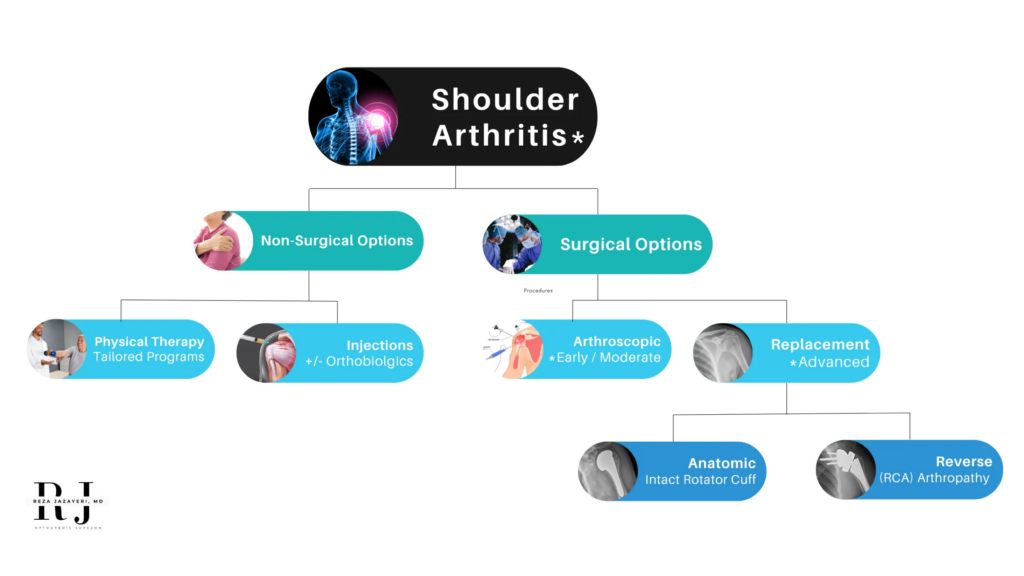
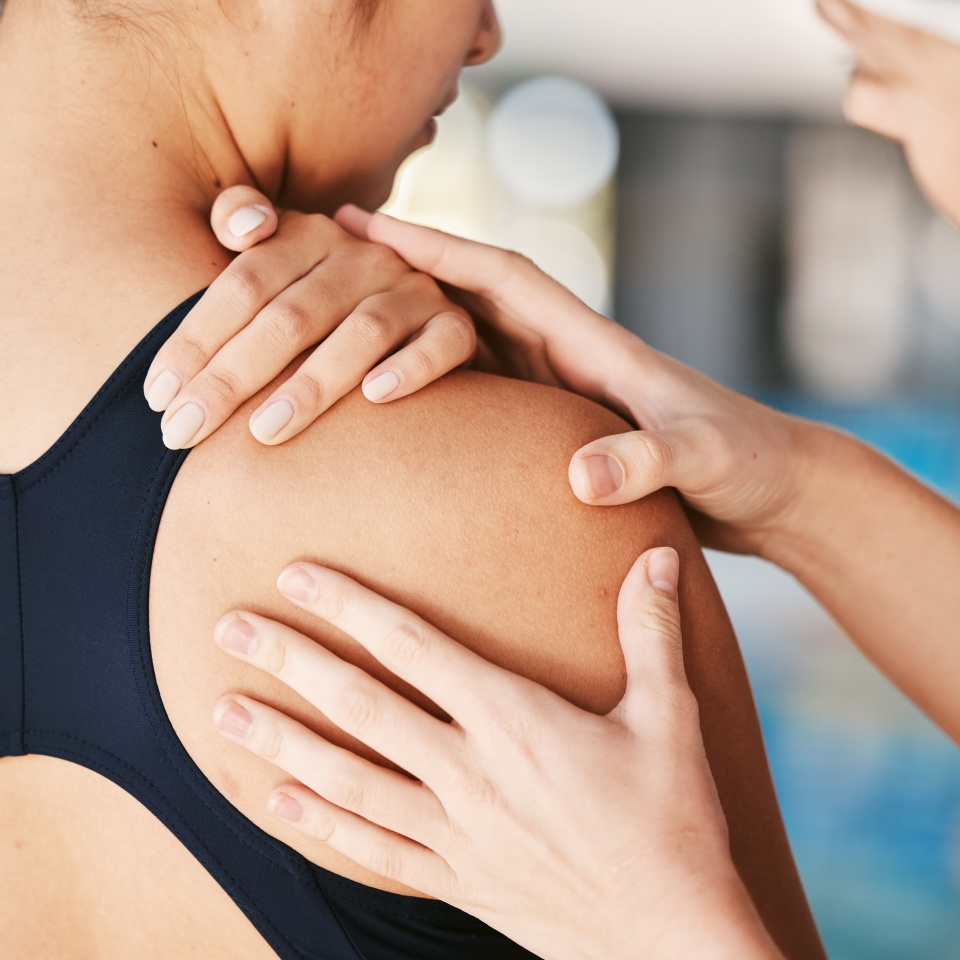
Dr. Jazayeri provides a tailored, stepwise approach to managing shoulder arthritis, beginning with non-surgical options. Surgery is rarely the first recommendation. The focus is on restoring function and relieving pain using a strategy suited to the severity of your condition.

Non-Surgical Options:
A. Physical Therapy:
Targeted exercises to maintain strength, flexibility, and shoulder mechanics.
B. Injections:
- Corticosteroids for inflammation and pain relief
- Viscosupplementation (hyaluronic acid) may provide joint lubrication
- Orthobiologics/ Platelet-Rich Plasma (PRP)*
- Orthobiologics/ Bone Marrow Aspirate Concentrate (BMAC)*
*Especially when soft tissue involvement (rotator cuff, labrum, capsule) is present without significant arthritis.
Surgical Options (Minimally Invasive / Arthroscopic):
1. Arthroscopic Debridement and Comprehensive Arthroscopic Management (CAM)*
Arthroscopic debridement is a minimally invasive surgical technique used to treat early-stage or mild shoulder arthritis. The procedure involves inserting a small camera and instruments into the joint through keyhole incisions to remove inflamed synovial tissue, loose bodies, and frayed cartilage. The joint surfaces are smoothed, and any mechanical irritation is addressed, which can help reduce pain and improve motion.
For more complex cases that still fall short of requiring joint replacement, Comprehensive Arthroscopic Management (CAM) may be considered.
*The CAM procedure involves a multi-step arthroscopic approach that may include:
- Capsular release to improve range of motion.
- Synovectomy to remove inflamed lining.
- Chondroplasty to smooth damaged cartilage.
- Removal of osteophytes (bone spurs).
- Subacromial decompression to relieve impingement.
- Distal Clavicle Excision (Mumford Procedure) removes the end of the collarbone to relieve AC joint pain and preserve shoulder motion.
- Biceps tenodesis or/ labral treatment if pathology is present.
The CAM procedure aims to reduce pain, improve function, and delay or avoid the need for arthroplasty. This approach is typically suited for younger, active patients with moderate arthritis who have preserved joint space and good rotator cuff integrity, and who may benefit from joint preservation rather than replacement.
Shoulder Arthroplasty (Replacement):
In advanced cases, replacing the ball and socket can significantly improve function and relieve pain.
2. Anatomic Shoulder Replacement:
Preserves the natural alignment of the shoulder and is typically used when the rotator cuff is intact.
In standard shoulder replacement, surgeons replace the ball at the top of the arm bone (humerus) with a metal ball, and the socket of the shoulder blade (scapula) with a plastic socket. However, this technique doesn’t work well when the rotator cuff is damaged, as it may lead to loosening of the implants.
3. Reverse Shoulder Replacement:
Designed for cases with rotator cuff deficiency or significant bone loss. The positions of the ball and socket are reversed to allow other muscles (like the deltoid) to compensate for the damaged rotator cuff.
When the rotator cuff is torn, it weakens the shoulder joint and can lead to shoulder arthritis over time. This specific type of arthritis caused by a long-standing rotator cuff tear is called rotator cuff arthropathy.
The reverse shoulder replacement ‘flips’ the design:
- The metal ball is placed on the shoulder blade (glenoid)
- The plastic socket is placed on the top of the arm bone (humerus)
- This reversed configuration allows the deltoid muscle, the large muscle on the outer shoulder, to take over much of the function normally performed by the rotator cuff, improving both movement and joint stability.
Comprehensive® Reverse Shoulder System Augmented Baseplate ~ Zimmer Biomet
Individualized Planning and Technology:
Dr. Jaz approaches surgery the same way elite athletes prepare for competition. The healthier, stronger, and more optimized your body is before surgery, the better your recovery and long-term outcome.
This structured, evidence-based approach ensures your body is fully prepared—physically, metabolically, and nutritionally—to achieve the best possible results from surgery.
Comprehensive Evaluation
- Physical exam and muscle strength testing
- X-rays to assess bone structure and joint condition
- MRI to evaluate soft tissues like the rotator cuff
- CT scans (if needed) for detailed bone and implant planning
Personalized Surgical Planning
- 3D preoperative software used to plan implant placement
- Selection between anatomic or reverse shoulder replacement based on your specific needs
- Intraoperative tools may include:
- Navigation systems
- Patient-Specific Instrumentation (PSI)
- Custom implants for complex anatomy
Metabolic and Nutritional Optimization
- Preoperative lab testing for: Vitamin D, inflammatory markers, hormone levels, and muscle status
- Correction of nutritional deficiencies
- Targeted supplements (e.g., amino acids, vitamin D) to support healing and reduce recovery time
Outpatient Surgery
- Most procedures are performed same-day
- Allows for recovery at home
- Supports quicker return to activity and mobility
Frequently Asked Questions
-
Shoulder arthritis typically causes pain, stiffness, and a reduced range of motion. You may also experience grinding or clicking sounds when moving your shoulder, along with discomfort during rest or at night.
-
Diagnosis begins with a physical exam where your specialist checks your range of motion and strength. Imaging tests like X-rays or MRIs may follow to assess the joint’s condition and any damage to surrounding tissues.
-
Non-surgical treatments include activity modifications, physical therapy, and medications to reduce inflammation. These methods aim to relieve pain and improve function without rushing into surgery.
-
Surgical options may be considered when non-surgical treatments no longer provide relief. Procedures like arthroscopic debridement or shoulder replacement can be discussed based on the severity of your condition.
-
Making small adjustments in daily habits can significantly impact your shoulder health. Proper posture, low-impact exercises, and a balanced diet can help reduce stress on the joint and improve overall comfort.
Why Choose Us For Shoulder Arthritis Care?
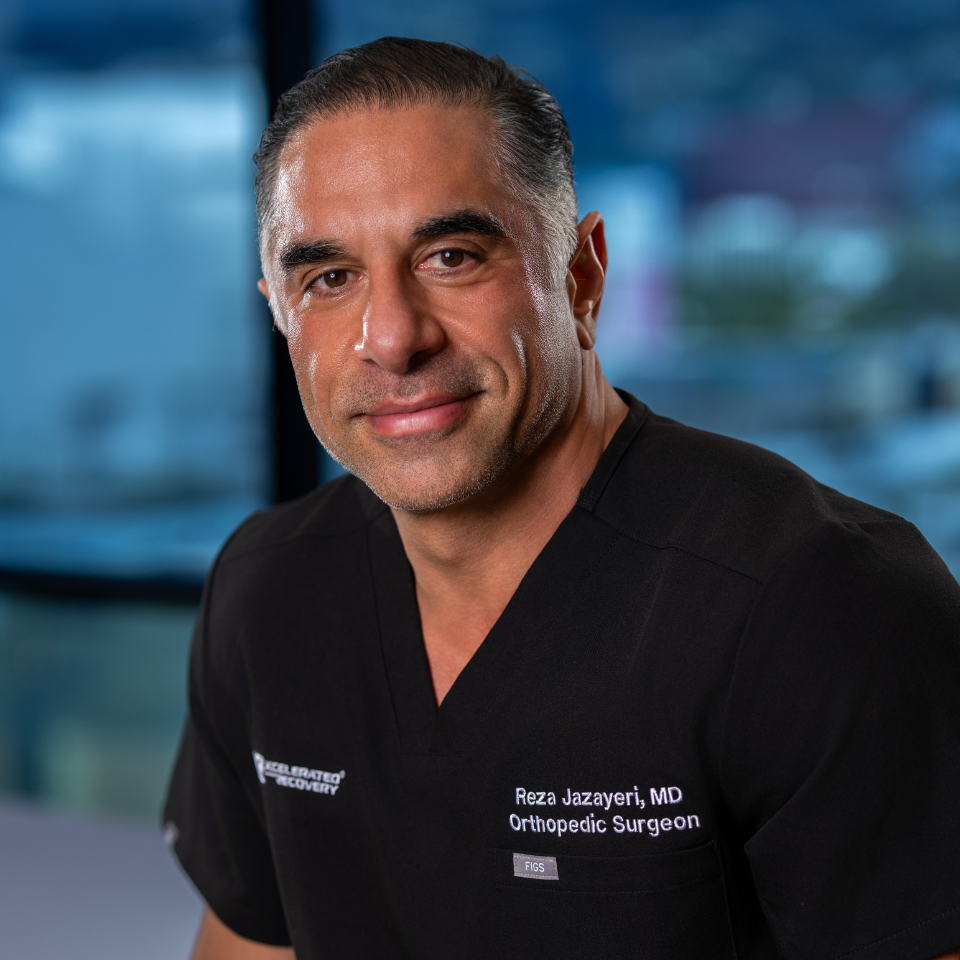
We understand how shoulder arthritis can affect your daily life. Dr. Reza Jazayeri is a double board-certified orthopedic surgeon with over 15 years of experience.
He specializes in sports medicine and has a deep focus on shoulder care. His training at top institutions like NYU Hospital for Joint Diseases and the Kerlan-Jobe Orthopaedic Clinic ensures you receive experienced treatment based on your needs.
Our approach starts with non-surgical options to relieve pain and improve function. We prioritize your comfort and activity level, exploring therapies and injections before considering surgery.
If surgery is necessary, Dr. Jaz uses advanced techniques to enhance recovery. With a commitment to personalized care, we aim to help you manage shoulder arthritis effectively and get back to doing what you love.
Meet Dr. Reza Jazayeri
Dr. Reza Jazayeri specializes in sports medicine with expertise in shoulder, knee, and elbow injuries. A Southern California native, Dr. Jazayeri combines an engineering background with elite surgical training, completing his orthopedic surgery residency at the nationally ranked NYU Hospital for Joint Diseases and a sports medicine fellowship at the renowned Kerlan-Jobe Orthopaedic Clinic.
After more than 15 years caring for patients within the Southern California Permanente Medical Group, Dr. Jazayeri joined DOCS Health to expand a practice focused on personalized orthopedic and sports medicine care and surgical excellence. As Director of Longevity at DOCS Health, he leads the development and implementation of optimization protocols and regenerative medicine strategies designed to improve long-term musculoskeletal health and extend healthspan.
His published work includes a 2026 coauthored review of nutritional optimization in spine surgery in the Journal of the American Academy of Orthopaedic Surgeons. View Dr. Jazayeri’s research publications and training.
Dr. Reza Jazayeri is fantastic. My knee was blown out in Jiu-Jitsu. Torn MCL, ACL and meniscus. He did an excellent job repairing the damage to my knee, and I’m happy to say I’m healing well, and I cannot thank him enough.
Engage With Our Specialists For Personalized Care
If shoulder arthritis limits your daily life, you can find effective care in the Greater Los Angeles area. Dr. Reza Jazayeri brings over 15 years of experience treating athletes, active adults, and combat sports practitioners. He is double board-certified in orthopedic surgery and sports medicine.
His practice has offices in Beverly Hills, Westlake Village, and Orange, with virtual consultations available across California and beyond. Every treatment plan starts with a thorough evaluation and a focus on non-surgical options first.
When surgery is necessary, he applies advanced techniques and personalized recovery protocols. Reach out to discuss your shoulder arthritis symptoms and learn which approach fits your needs.
Medically reviewed by Reza Jazayeri, M.D. on