A meniscus injury can disrupt your daily life, whether you are an athlete or someone who enjoys staying active. The meniscus is a C-shaped piece of cartilage in your knee that acts as a shock absorber between the femur (thigh bone) and tibia (shin bone). Each knee has two menisci: the medial meniscus on the inner side and the lateral meniscus on the outer side.
Dr. Reza Jazayeri, a double board-certified orthopedic surgeon specializing in sports medicine with offices in Beverly Hills, Westlake Village, and Orange, brings over 15 years of clinical experience treating athletes and active adults to patients seeking meniscus injury care in the Greater Los Angeles area. He evaluates every tear carefully to recommend a treatment path that fits your specific injury and goals.
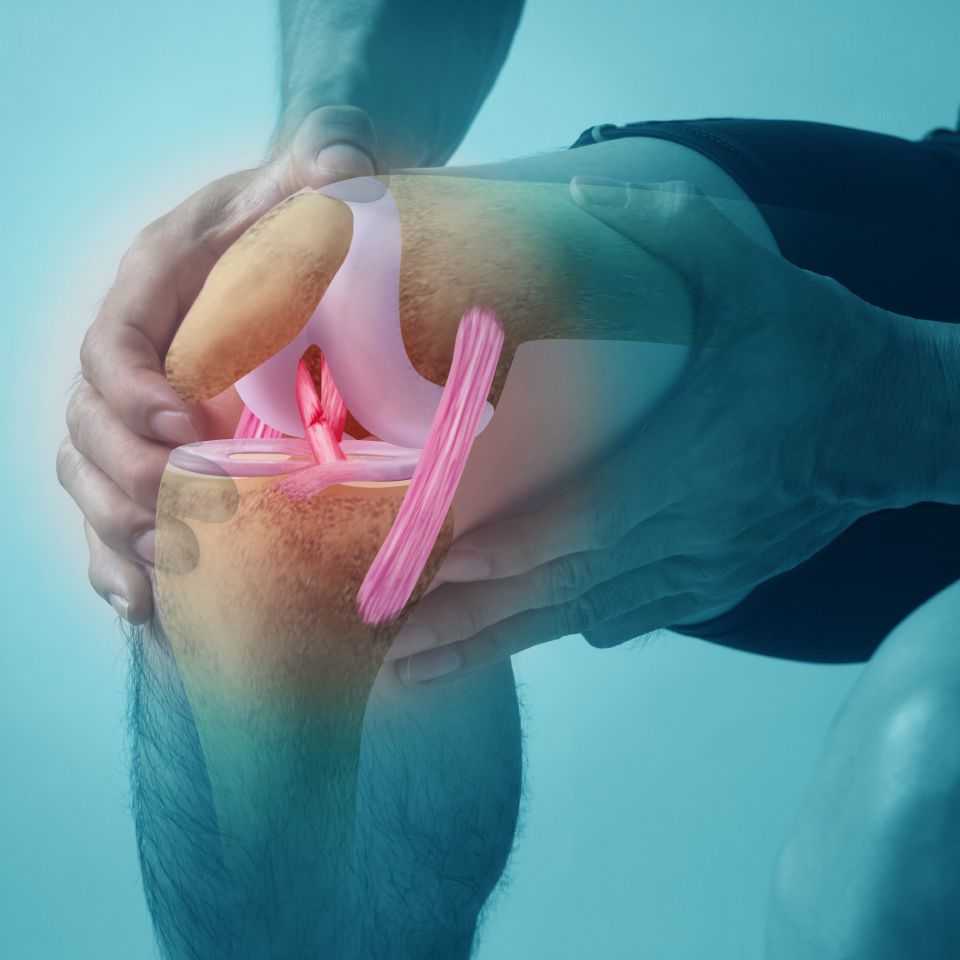
Meniscus Anatomy
Each knee has two menisci — crescent-shaped pads of fibrocartilage that sit between the femur (thighbone) and tibia (shinbone):
- Medial meniscus: located on the inner side of the knee; more frequently injured and more prone to degenerative tears with age
- Lateral meniscus: located on the outer side of the knee; more mobile and somewhat more resistant to tearing, though still vulnerable to twisting injuries
Each meniscus is anchored front and back by its anterior horn and posterior horn, which attach to the tibia and help the meniscus stay seated during knee movement. Together, the menisci distribute body weight evenly across the joint, absorb shock during walking and impact, and add stability by deepening the socket the femur sits in. Damage to either structure changes how load moves through the knee, which is why the location and pattern of a tear — not just its presence — determines the right treatment approach.
TYPES OF MENISCUS TEARS
- Vertical (Longitudinal): A tear along the length of the meniscus, often repairable when located in the vascular (outer) zone.
- Bucket Handle: A large, displaced longitudinal tear where a portion of the meniscus flips into the center of the joint, often causing mechanical symptoms like locking or inability to fully extend the knee.
- Radial: A tear starting from the inner edge and extending outward toward the periphery, disrupting the meniscus’ ability to distribute load effectively across the joint.
- Horizontal: A cleavage tear splitting the meniscus into top and bottom layers; treatment depends on size, location, and symptom severity.
- Complex: A combination of different tear patterns (e.g., horizontal, radial, longitudinal), often making repair more difficult and requiring individualized surgical decision-making.
- Degenerative: Typically seen in older adults, these tears result from gradual cartilage wear and are often managed non-operatively if asymptomatic.
- Root: A detachment of the meniscus from its anchoring point at the tibia, often occurring in patients aged 40–70 years. Root tears are biomechanically equivalent to a complete meniscectomy and are strongly associated with early arthritis, cartilage damage, and bone injury. Surgical repair is generally indicated.

Meniscus Blood Supply and Healing Potential
The meniscus has a limited blood supply, which greatly influences its ability to heal after injury.
It is divided into 3 zones:
The inner third of the meniscus, which is avascular (lacking blood supply). Tears in this zone have very poor healing capacity and typically cannot be repaired successfully.
The outer third of the meniscus, which has a rich blood supply. Tears in this zone have the highest healing potential and are most likely to be successfully repaired.
The middle third of the meniscus, where blood supply is partial and diminished. Healing here is possible but less reliable than in the outer zone.
Because of these differences, location of the tear is a critical factor when deciding whether to perform a meniscus repair or a partial meniscectomy.
Special Challenges of Bucket Handle Tears Bucket handle tears represent a complex and serious form of meniscus injury, where a large, displaced fragment of the meniscus flips into the center of the knee joint. These tears are associated with several challenges:
- Mechanical Blockage: The displaced meniscal fragment can cause the knee to physically lock, preventing full extension and often requiring urgent surgical intervention.
- Tear Size and Displacement: Bucket handle tears involve a large portion of the meniscus, making anatomic repair technically more difficult compared to smaller or peripheral tears.
- Higher Repair Failure Rates: Due to the complexity and extent of tissue damage, bucket handle repairs have a higher risk of incomplete healing.
- Tissue Quality: Chronic or long standing bucket handle tears may involve frayed or weakened tissue, reducing the likelihood of a successful repair.
- Increased Risk of Reoperation: These tears have a greater chance of requiring a second surgery if mechanical symptoms persist or healing fails.
- Longer Recovery Time: Rehabilitation following bucket handle repair is typically more prolonged, with extended restrictions on motion and weight-bearing to protect the healing meniscus.
Despite these challenges, preserving the meniscus when feasible remains critical to protect long-term knee function.
Do All Meniscus Tears Require Surgery?
Not all meniscus tears require surgery. Small, stable, or asymptomatic tears can often be managed conservatively with physical therapy, activity modification, and anti-inflammatory strategies.
1. Non-operative management is typically considered when:
- The tear is small and stable
- There are minimal or no mechanical symptoms (e.g., no locking or catching)
- The patient’s activities can be modified without significant limitation
Additionally, orthobiologic therapies, such as Platelet-Rich Plasma (PRP) or Bone Marrow Aspirate Concentrate (BMAC), may help promote healing in selected non-operative cases or as an adjunct to surgical repair.
2. Partial Meniscectomy
When repair isn’t possible, a partial meniscectomy is performed. This involves trimming and removing the damaged portion of the meniscus while leaving as much healthy cartilage as possible.
Benefits of Partial Meniscectomy:
- Shorter recovery: most patients return to regular activity within 4-6 weeks
- Outpatient procedure with minimal downtime
- Pain relief and improved knee mechanics in the short term
Important Considerations:
- Does not restore the full meniscus function
- Increased risk of long-term cartilage wear and arthritis compared to repair
- Best suited for older patients or tears in the inner (non-vascular) zone of the meniscus
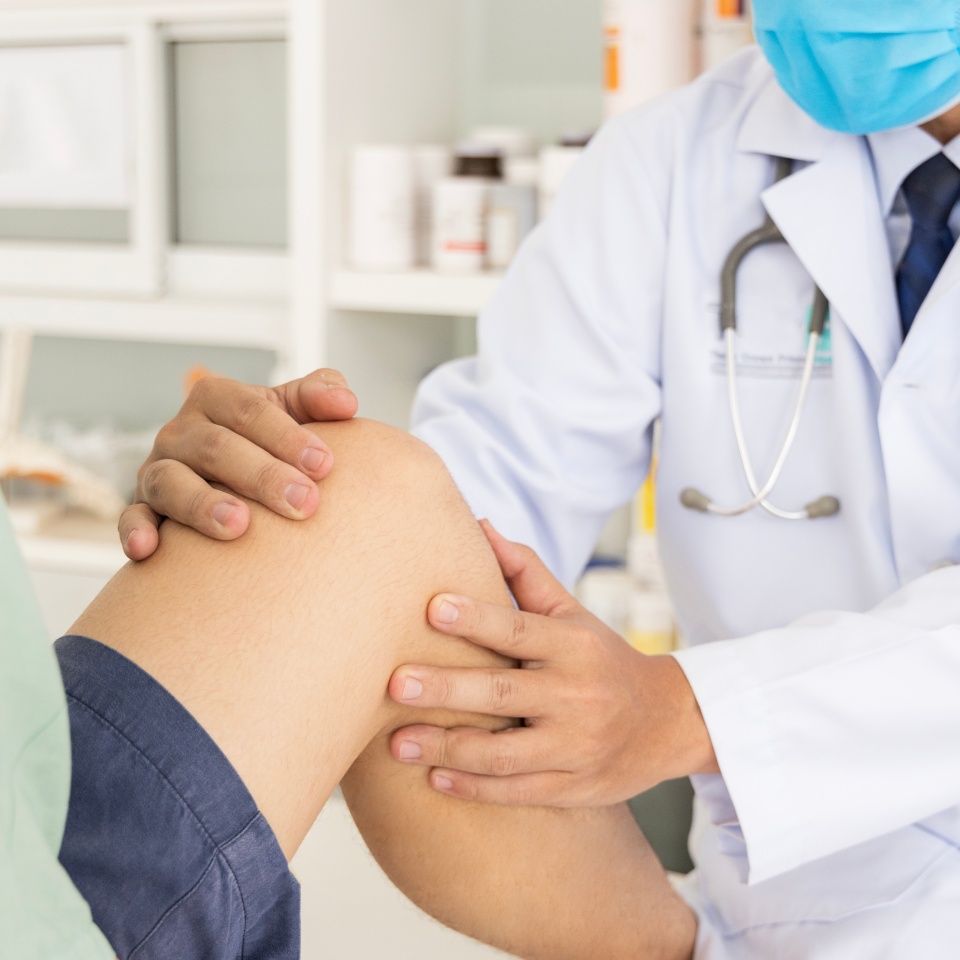
3. Meniscal Repair
The meniscus is a vital cartilage structure that cushions the knee, distributes load, and protects joint cartilage. Preserving the meniscus helps prevent long-term degeneration and arthritis. Once removed, it does not grow back.
Whenever possible, Dr. Jaz prioritizes repairing the meniscus to restore its function and maintain long-term joint health.
Benefits of Meniscal Repair:
- Maintains knee biomechanics and joint protection
- Reduces long-term risk of arthritis compared to meniscectomy
Important Considerations:
- Best suited for younger patients and tears in the vascular (outer) zone
- Longer recovery time: return to activity may take 3–6 months
- Healing is not guaranteed, even when the tear is repaired
- A second surgery may be needed if the repair does not heal
- Risk of stiffness, swelling, or incomplete healing
Enhancing Healing with Orthobiologics. Because meniscal healing depends on tear location, tissue quality, and patient factors, Dr. Jazayeri may recommend orthobiologic augmentation:
- PRP (Platelet-Rich Plasma): Concentrated platelets from your own blood to support healing
- BMAC (Bone Marrow Aspirate Concentrate): A needle is used to harvest bone marrow from your pelvis, isolating your own stem cells (autologous), which are then applied to the repair site to enhance healing potential
Dr. Jazayeri will discuss whether biologic augmentation is appropriate in your case to maximize the success of the repair.
KNEE ARTHROSCOPY POST OPERATIVE PATIENT INSTRUCTIONS CLICK HERE
What to expect with your knee arthroscopy surgery.
What Happens Next?
Dr. Jazayeri will evaluate your MRI, knee exam, and overall health to determine the most appropriate treatment. During surgery, the decision to repair or remove part of the meniscus is made based on the appearance and health of the tissue.
Key Takeaway:
- Meniscus Repair is preferred whenever possible and offers long-term protection of the joint, but it requires a longer recovery.
- Partial Meniscectomy provides faster recovery for non-repairable tears but may carry long-term joint health trade-offs.
Frequently Asked Questions About Meniscus Injuries
-
A meniscus injury occurs when the cartilage in your knee is damaged. This can happen due to sports activities, twisting motions, or even normal daily movements.
-
Symptoms of a meniscus tear include pain along the knee joint, swelling, and stiffness. Some people may also experience a locking sensation in the knee, especially with certain types of tears.
-
Initial treatments often include the R.I.C.E. method: Rest, Ice, Compression, and Elevation. For mild injuries, anti-inflammatory medications and physical therapy may also be recommended to help reduce pain and improve function.
-
Surgery may be needed for severe meniscus tears that do not respond to non-surgical treatments. Options include partial meniscectomy, which removes damaged tissue, or meniscal repair, which aims to preserve the cartilage.
-
Physical therapy is crucial for recovery, focusing on strengthening the muscles around the knee and improving range of motion. A personalized therapy program can help you return to daily activities and sports safely.
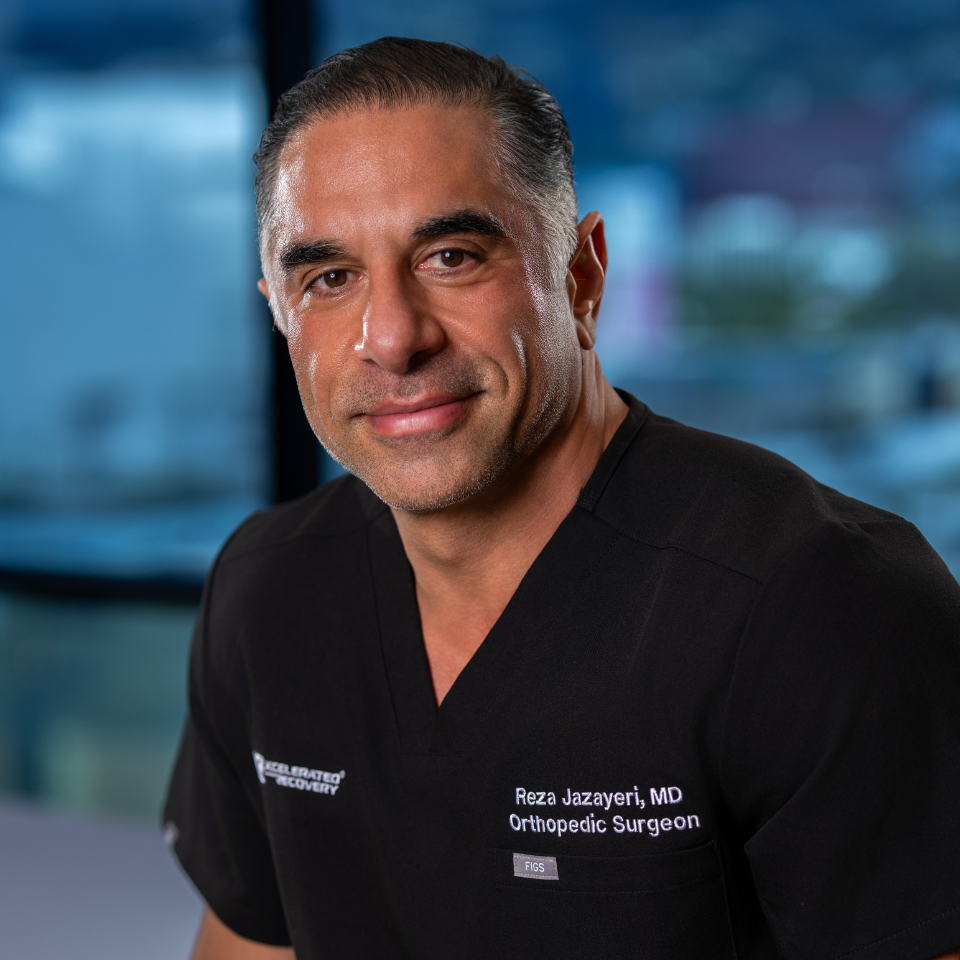
Why Choose Us For Meniscus Care?
We understand how a meniscus injury can impact your life. Dr. Reza Jazayeri, known to his patients as Dr. Jaz, is a double board-certified orthopedic surgeon with over 15 years of experience.
He specializes in sports medicine, focusing on knee injuries like meniscus tears. His training at the Kerlan-Jobe Orthopaedic Clinic ensures you receive experienced care that meets your needs.
We prioritize non-surgical options first, exploring therapies and injections before considering surgery. Dr. Jazayeri’s approach combines advanced techniques with personalized recovery plans. Whether you need physical therapy or a surgical procedure, we are here to support your journey back to an active lifestyle.
Meet Dr. Reza Jazayeri
Dr. Reza Jazayeri specializes in sports medicine with expertise in shoulder, knee, and elbow injuries. A Southern California native, Dr. Jazayeri combines an engineering background with elite surgical training, completing his orthopedic surgery residency at the nationally ranked NYU Hospital for Joint Diseases and a sports medicine fellowship at the renowned Kerlan-Jobe Orthopaedic Clinic.
After more than 15 years caring for patients within the Southern California Permanente Medical Group, Dr. Jazayeri joined DOCS Health to expand a practice focused on personalized orthopedic and sports medicine care and surgical excellence. As Director of Longevity at DOCS Health, he leads the development and implementation of optimization protocols and regenerative medicine strategies designed to improve long-term musculoskeletal health and extend healthspan.
His published work includes a 2026 coauthored review of nutritional optimization in spine surgery in the Journal of the American Academy of Orthopaedic Surgeons. View Dr. Jazayeri’s research publications and training.
I shattered my collarbone playing hockey and Dr. Jazayeri was my surgeon. Throughout the entire process he did a great job of explaining what he would be doing, making me feel comfortable and he did a masterful job of putting the plate and screws into my collarbone. I’m 3 months out and I’m already back in the gym 5 days a week, I have a full range of motion, and Dr. Jazayeri continues to check in on my progress and make sure I’m doing well. I couldn’t have asked for a better surgeon. I don’t think anyone hopes to have to see an orthopedic surgeon again, but if I ever do have another injury that requires surgery, I hope Dr. Jazayeri is my surgeon again. Thanks again for everything, and for anyone doubting whether or not they should get the surgery or not…get it. Dr. Jazayeri is a true master of his craft.
Schedule Your Consultation For Meniscus Injury Care
If knee pain, swelling, or locking is keeping you from the activities you enjoy, a thorough evaluation can clarify your options. Dr. Jaz treats every patient with the same level of care and attention he would give to his own family and friends. His practice has offices in Beverly Hills, Westlake Village, and Orange, serving the Greater Los Angeles area.
Virtual consultations are available for patients across California and beyond. To discuss your meniscus injury and learn which treatment path fits your needs, contact the practice and schedule your appointment.
Medically reviewed by Reza Jazayeri, M.D. on