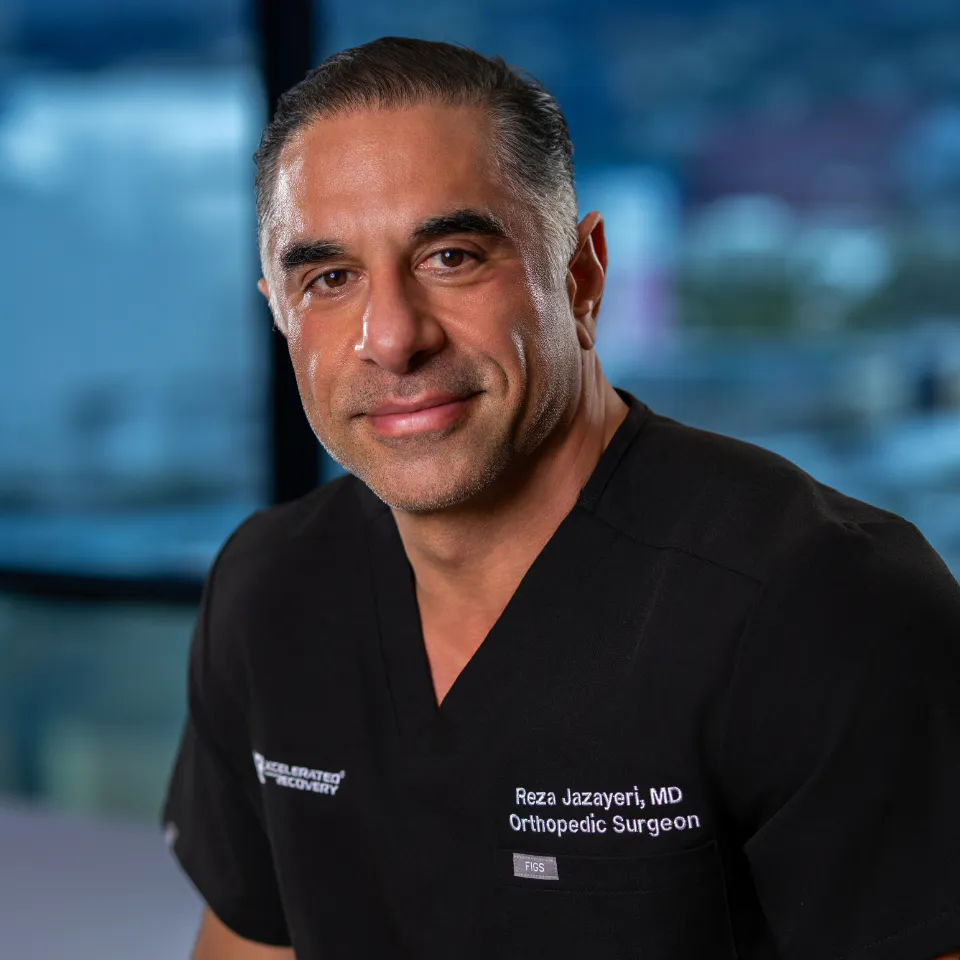
UCL reconstruction repairs a torn ulnar collateral ligament on the inner side of the elbow. Athletes who throw overhead, such as baseball pitchers, often need this procedure when the ligament fails after repeated stress. Dr. Reza Jazayeri is a double board-certified orthopedic surgeon with subspecialty certification in sports medicine.
He completed his sports medicine fellowship at the Kerlan-Jobe Orthopaedic Clinic in Los Angeles. His practice offers detailed procedure planning for shoulder, knee, and elbow conditions, including UCL reconstruction. Patients know him as Dr. Jaz, and he treats elbow ligament injuries that have not improved with non-surgical treatment at his Beverly Hills, Westlake Village, and Orange offices.
UCL Reconstruction Surgery Overview
UCL reconstruction, often called Tommy John surgery, replaces a damaged ulnar collateral ligament with a tendon graft. The graft usually comes from the patient’s own forearm, hamstring, or foot. In some cases, a donor graft is used.
The procedure takes about one to two hours under general anesthesia. Most patients go home the same day. The goal is to restore elbow stability so the joint can handle high valgus stress during throwing motions.
Dr. Jaz applies minimally invasive techniques throughout his elbow procedures. His approach includes preoperative lab testing for vitamin D levels, inflammatory markers, and muscle status. This metabolic optimization is part of his approach and is backed by his own peer-reviewed research.
Benefits Of UCL Reconstruction For Athletes
A successful UCL reconstruction can return an athlete to competitive throwing. The primary benefit is a stable elbow that no longer gives way during the late cocking and acceleration phases of a throw. For baseball pitchers, this means the ability to resume high-velocity throwing with reduced pain.
Position players and javelin throwers also benefit from restored medial elbow support. The procedure has a strong track record of allowing athletes to return to their previous level of play. Dr. Jazayeri’s clinical focus includes sports medicine for shoulder, knee, and elbow injuries.
His experience treating competitive athletes and combat sports practitioners gives him a practical grasp of what a return to sport really demands. He structures each recovery plan around the specific stresses of the patient’s sport.
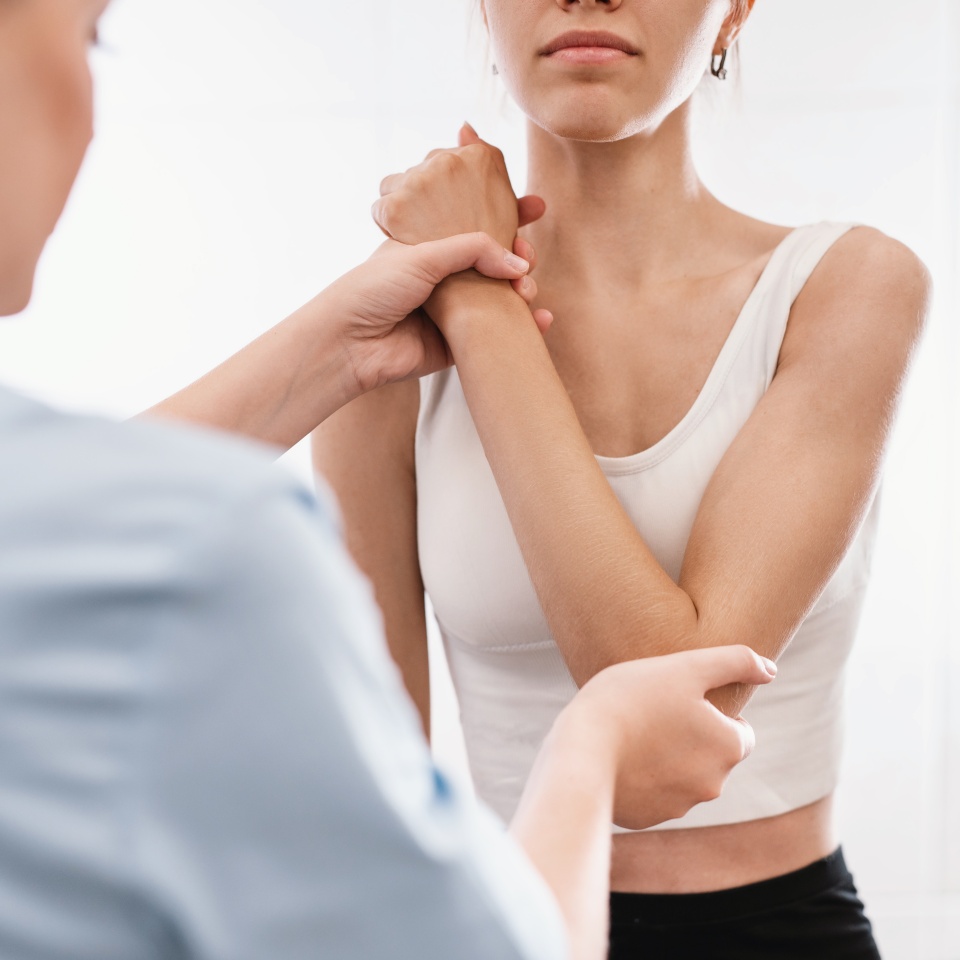
Surgical Process Of UCL Reconstruction
The surgeon drills tunnels in the humerus and ulna bones at the elbow. The tendon graft is threaded through these tunnels in a figure-eight or docking pattern. This recreates the native ligament’s path.
The graft is tensioned and secured with sutures or small implants. Over time, the body remodels the graft into living ligament tissue. Dr. Jazayeri uses a framework called the Bio-Fertilization Technique.
This approach combines biologic augmentation, intraosseous modulation, and metabolic optimization. Biologics such as PRP or stem cell augmentation may be used to support graft healing.
The technique is designed to create a favorable environment for tissue integration. The procedure is performed in the Los Angeles area at affiliated surgical locations.
Rehabilitation After UCL Surgery
Rehabilitation begins soon after surgery with protected motion. The elbow is placed in a hinged brace that allows controlled range of motion while protecting the graft. Early therapy focuses on reducing swelling and preventing stiffness.
Gentle wrist and hand exercises maintain grip strength and circulation. Around week four to six, active elbow motion begins without resistance. Strengthening exercises for the forearm, shoulder, and core follow.
A structured throwing program starts with short toss and progresses to long toss and flat-ground work. Dr. Jazayeri offers a digital rehab partnership through myHealthTrack. This remote recovery program helps patients stay on track between office visits in Los Angeles.
Recovery Timeline For UCL Reconstruction
Full recovery after UCL reconstruction typically takes nine to twelve months. The first six weeks focus on healing and gentle motion. From week six to month four, strength and flexibility work increases.
A formal throwing program often begins around month four or five. Return to competitive pitching usually happens between month nine and twelve. Every recovery follows its own pace.
Dr. Jaz monitors progress through clinical exams and functional testing. He does not advance a patient to the next phase until the elbow meets specific strength and range-of-motion benchmarks. His recovery optimization resources cover sleep, rehabilitation, and nutrition.
These factors directly affect graft healing and overall recovery speed. Patients who follow the full protocol give themselves a better chance at a durable return to sport.
Factors Influencing UCL Surgery Decisions
Several factors shape the decision to proceed with UCL reconstruction. The severity of the ligament tear matters. Partial tears may heal with rest and therapy.
Full-thickness tears in high-demand athletes often need surgery. Previous treatment attempts also play a role. If structured non-surgical care fails to relieve pain or instability, reconstruction becomes the next logical step.
The patient’s athletic goals are central. A pitcher who wants to continue competing at a high level may choose surgery sooner than a recreational athlete. Age, overall health, and the condition of the surrounding joint surfaces are considered.
Dr. Jazayeri takes a non-surgical-first approach. He explores therapy and injections before recommending surgery. When reconstruction is the right choice, he explains the risks, including infection, nerve irritation, and stiffness, so patients can make an informed decision.
Preparing For Your UCL Reconstruction
Preparation starts weeks before the surgery date. Dr. Jazayeri may order preoperative lab testing to check vitamin D, inflammatory markers, hormone levels, and muscle status. Targeted supplementation may be prescribed to correct any deficiencies.
This metabolic tune-up is a core part of his protocol. Prehabilitation exercises strengthen the shoulder, core, and lower body. A strong kinetic chain reduces stress on the healing elbow later.
Patients receive detailed pre-op instructions covering medications, fasting, and what to bring on surgery day. Arranging help at home for the first week is important.
Simple tasks like meal prep and driving will be difficult with one arm in a brace. The practice serves patients throughout the Greater Los Angeles area, with virtual consultations available for those traveling from outside California.
Postoperative Care For Optimal Recovery
The first few days after surgery focus on pain control, swelling management, and rest. Ice and elevation are essential. The surgical dressing stays clean and dry.
Patients follow a specific wound care routine. The hinged brace is worn as directed. Physical therapy starts within the first week.
Attendance at every therapy session matters. Exercises done at home between visits reinforce progress. Nutrition plays a key role in healing.
Adequate protein intake and anti-inflammatory foods support tissue repair. Dr. Jazayeri’s recovery optimization page covers these topics in detail.
He also publishes clinically authored content on his blog about orthobiologics, recovery protocols, and in-season athlete management. Patients who engage with these resources tend to feel more confident during the long rehabilitation process.
Frequently Asked Questions About UCL Reconstruction Surgery
-
UCL reconstruction, also known as Tommy John surgery, repairs a torn ulnar collateral ligament in the elbow. This surgery is common among athletes who perform repetitive overhead activities, like baseball pitchers.
-
The surgery typically lasts 1 to 2 hours and is often done on an outpatient basis. Full recovery usually takes 9 to 12 months, with a structured rehabilitation program to regain strength and mobility.
-
The main benefit is a stable elbow that allows athletes to return to competitive throwing. Many athletes find they can resume high-velocity throwing with less pain after the surgery.
-
Rehabilitation starts soon after surgery with a focus on gentle motion and reducing swelling. As healing progresses, strengthening exercises and a structured throwing program are introduced to help you return to your sport.
-
Preparation includes preoperative lab tests and possibly some prehabilitation exercises to strengthen your body. It’s also important to arrange for help at home after surgery, as daily tasks may be challenging with a brace on your arm.
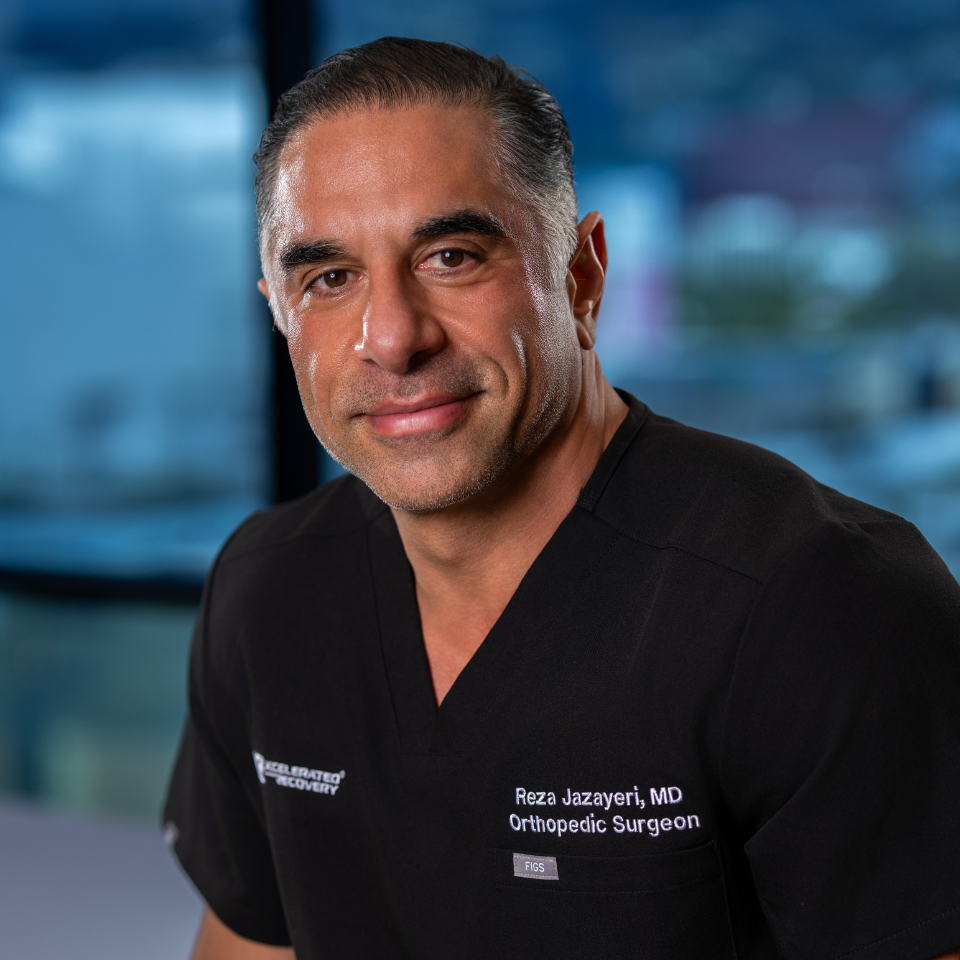
Why Choose Us For UCL Reconstruction?
When it comes to UCL reconstruction, you want a surgeon who understands the unique demands of throwing athletes. Dr. Reza Jazayeri is a double board-certified orthopedic surgeon specializing in sports medicine.
He has treated many athletes facing elbow injuries. His fellowship training at the Kerlan-Jobe Orthopaedic Clinic in Los Angeles provides him with a deep grasp of UCL injuries.
At our practice, we focus on personalized care. Dr. Jazayeri uses advanced techniques, including minimally invasive surgery and metabolic optimization, to enhance recovery.
We also emphasize a non-surgical-first approach, exploring therapy options before recommending surgery. Our goal is to help you return to your sport safely and effectively.
Meet Dr. Reza Jazayeri
Dr. Reza Jazayeri specializes in sports medicine with expertise in shoulder, knee, and elbow injuries. A Southern California native, Dr. Jazayeri combines an engineering background with elite surgical training, completing his orthopedic surgery residency at the nationally ranked NYU Hospital for Joint Diseases and a sports medicine fellowship at the renowned Kerlan-Jobe Orthopaedic Clinic.
After more than 15 years caring for patients within the Southern California Permanente Medical Group, Dr. Jazayeri joined DOCS Health to expand a practice focused on personalized orthopedic and sports medicine care and surgical excellence. As Director of Longevity at DOCS Health, he leads the development and implementation of optimization protocols and regenerative medicine strategies designed to improve long-term musculoskeletal health and extend healthspan.
His published work includes a 2026 coauthored review of nutritional optimization in spine surgery in the Journal of the American Academy of Orthopaedic Surgeons. View Dr. Jazayeri’s research publications and training.
Can’t recommend Dr. Jazayeri enough. He truly cares for his patients and has been there every step of the way for my shoulder surgeries, ready to answer any questions or concerns. I couldn’t have asked for a better orthopedic surgeon.
Schedule Your Consultation For UCL Reconstruction
If elbow pain or instability is keeping you off the field, a consultation can clarify your options. Dr. Jazayeri brings over 15 years of experience treating athletes and active adults. He is double board-certified in orthopedic surgery and sports medicine.
His fellowship training at the Kerlan-Jobe Orthopaedic Clinic in Los Angeles provided him with extensive exposure to elbow ligament injuries in elite throwers. He will evaluate your elbow, review imaging, and discuss whether UCL reconstruction or a non-surgical path fits your goals at his Beverly Hills, Westlake Village, or Orange office. Virtual consultations are available for patients across California and beyond. Reach out today to take the next step toward a stable, functional elbow.
Medically reviewed by Reza Jazayeri, M.D. on