Tendons and ligaments heal slowly because their blood supply is limited, and the spot where they attach to bone is the hardest part to heal of all. That is why a mechanically sound repair can still fail, especially after a large rotator cuff tear, an ACL reconstruction, or a complex tendon rupture. The Bio-Fertilization™ Protocol is a surgical framework developed by Dr. Reza Jazayeri to change that equation, pairing a standard repair with a thick biologic composite made from a patient’s own healing cells and growth factors. Placed directly at the tendon-to-bone interface during surgery, the composite is designed to give the body everything it needs to rebuild stronger, more reliable tissue.
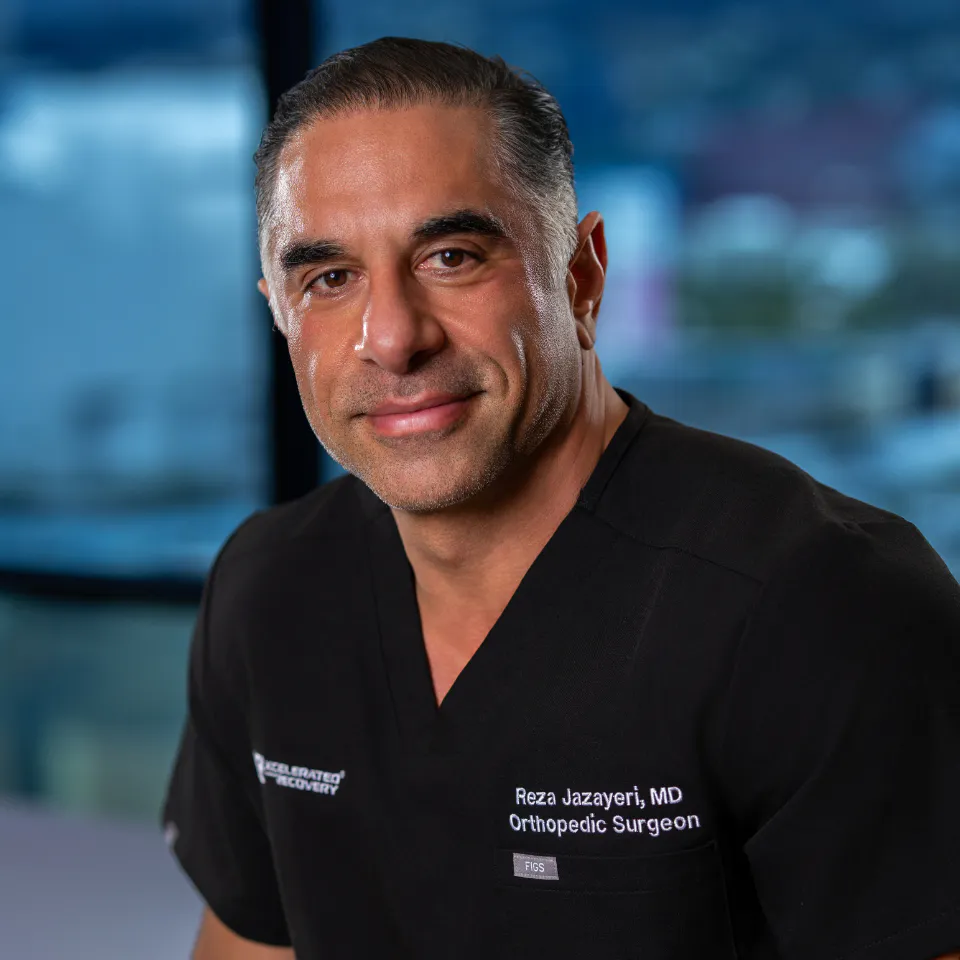
Dr. Jaz is a double board-certified orthopedic surgeon and sports medicine specialist who serves as Director of DOCS Longevity and leads the Department of Optimization and Regenerative Medicine at DOCS Health in Los Angeles. He developed the Bio-Fertilization™ Protocol after more than 15 years in practice and fellowship training at the Kerlan-Jobe Orthopaedic Clinic, where he cared for professional athletes from Major League Baseball, the NBA, and the NFL. He has published peer-reviewed research on biologics and nutritional optimization for orthopedic surgery in the Journal of the American Academy of Orthopaedic Surgeons and teaches the technique as faculty at AAOS, AOSSM, and international sports medicine meetings. Patients travel to his Los Angeles, Beverly Hills, Westlake Village, and Orange County offices from across the country and internationally to work with him on complex and revision cases.
What Is the Bio-Fertilization™ Protocol?
Bio-Fertilization™ is a way of adding the body’s own healing ingredients to a surgical repair. During surgery, Dr. Jaz collects healing cells and growth factors from the patient, mixes them into a thick composite, and places the composite exactly where the tendon or ligament attaches to bone. The goal is simple: give the repair a richer healing environment than stitches and anchors alone can provide. The technique is used together with a standard repair, not instead of one. The tendon or ligament is still fixed with the most up-to-date surgical techniques.
Dr. Jaz often describes the repair site like a garden. Seeds are the living healing cells that can help build new tissue. Fertilizer is the growth factors that signal the body to start repairing. Soil is the framework that holds everything in place and gives new tissue something to grow into. A standard repair puts the tendon back where it belongs. Bio-Fertilization™ adds the seeds, fertilizer, and soil.
One key feature sets this approach apart from most biologic injections: the mix is a thick composite rather than a liquid. During arthroscopic surgery, the joint is constantly rinsed with fluid, and liquid biologics can wash away before they ever take effect. A composite placed inside the bone and sealed under the repair is designed to stay where it is needed, protecting the biologic signal through the critical early days of healing.
A mechanically sound repair still has to be finished by the patient’s own biology. Bio-Fertilization delivers the right ingredients, in the right place, at the right moment — and that’s what makes healing more reliable.
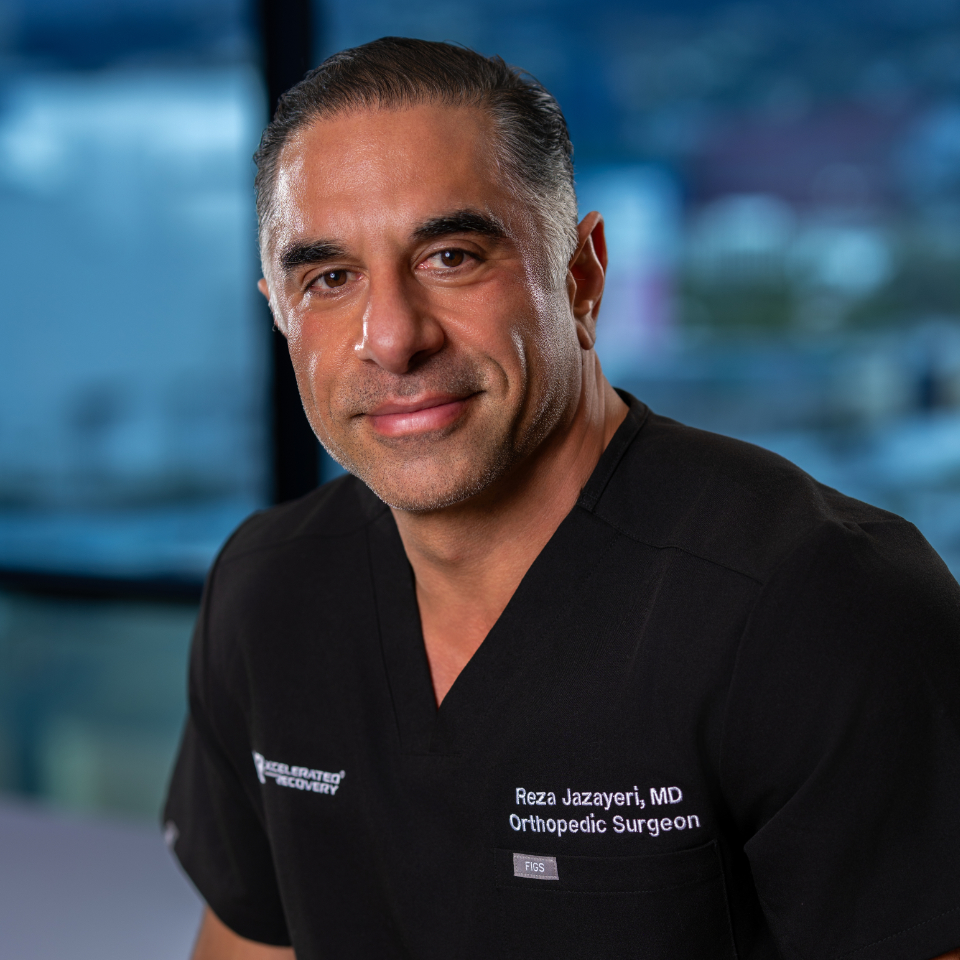
Dr. Reza Jazayeri, M.D
Why Tendon-to-Bone Healing Needs Help
Tendons and ligaments have a poor blood supply, so they heal slowly compared to muscle or skin. The attachment point where a tendon meets bone, known as the enthesis, is especially difficult to regenerate in adults. That is one reason some repairs, like large rotator cuff tears, can fail to heal fully or tear again even when the surgical technique is excellent. Improvements in suture anchors, tape augmentation, and rehabilitation have steadily reduced retear rates, but the underlying biology has remained the limiting factor. Bio-Fertilization™ is designed to address that biology directly.
The Four Ingredients of the Bio-Fertilization™ Protocol
Three of the four ingredients come from the patient’s own body, so there is no risk of rejection from those components. Tissue such as the shoulder bursa or the fat pad below the kneecap, which would normally be trimmed and discarded during surgery, is saved and reused as part of the composite.
- BMAC (Bone Marrow Aspirate Concentrate): Drawn from the back of the patient’s pelvic bone and concentrated in the operating room into a few milliliters of marrow. BMAC supplies the “seeds” of the composite: healing and repair cells taken directly from the patient.
- Local Healing Cells: Collected from tissue near the injury site, such as the bursa over the rotator cuff or the infrapatellar fat pad below the kneecap during ACL surgery. These cells are already suited to the area being repaired and serve as additional “seeds.”
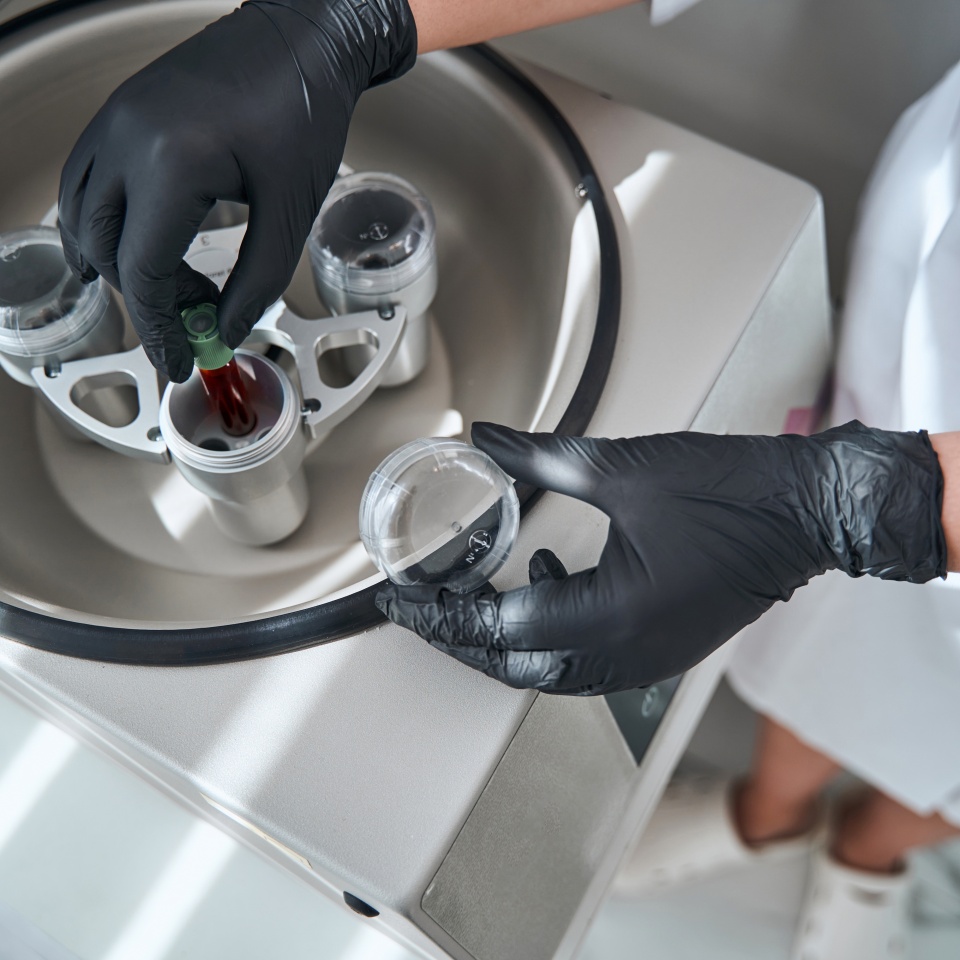
- PRP (Platelet-Rich Plasma): Processed from a small sample of the patient’s own blood, spun down to concentrate the platelets. PRP is the “fertilizer” of the composite, delivering growth factors that signal the body to begin repair.
- DBM (Demineralized Bone Matrix): Donor bone that has been processed and sterilized by a tissue bank. DBM is the “soil” of the composite, soaking up the liquids and transforming the mix into a thick substance that stays put after it is placed.
Where the Bio-Fertilization™ Protocol Can Be Used
The same principle applies anywhere a tendon or ligament must heal to bone. Dr. Jaz selects the specific recipe and placement based on the injury, the patient’s tissue quality, and the surgical plan.
- Rotator Cuff Repair: Local cells are collected from the subacromial bursa and combined with BMAC, PRP, and DBM into a composite placed into the bone where the cuff tendon reattaches.
- ACL Reconstruction: Local cells come from the infrapatellar fat pad below the kneecap, and the composite is placed into the bone tunnels around the new graft.
- Pectoralis (Chest Muscle) Tendon Repair: PRP and BMAC are delivered at the tendon-to-bone attachment on the upper arm, with an ADM graft added to reinforce the repair.
- Hamstring Repair: PRP and BMAC are placed at the tendon-to-bone attachment on the sit bone of the pelvis, with an ADM graft reinforcing the reconstruction.
- Distal Biceps Repair (Elbow): PRP and BMAC are placed at the tendon-to-bone attachment on the forearm, with an ADM graft added for additional strength.
- Other Tendon-to-Bone Repairs: Dr. Jaz evaluates every case individually and may recommend Bio-Fertilization™ for additional procedures based on the injury pattern, tissue quality, and recovery goals.
About ADM (Acellular Dermal Matrix): For pectoralis, hamstring, and distal biceps repairs, an ADM graft is added to the composite. ADM is donor skin tissue with all cells removed, leaving behind a strong collagen sheet. It reinforces the repaired tendon and gives healing cells a framework to grow into during recovery.
What to Expect on Surgery Day
Every step of the Bio-Fertilization™ Protocol is performed during one operation while the patient is under anesthesia. The technique typically adds a modest amount of time to the procedure.
- Anesthesia. The patient is comfortably asleep under the care of the anesthesia team.
- Bone Marrow Collection. A needle is placed through a small skin opening over the back of the hip bone to draw marrow, which is then concentrated in the operating room into a few milliliters of BMAC.
- Blood Draw for PRP. A small sample of blood is taken and spun down to concentrate the platelets and growth factors.
- Arthroscopy. Small cameras and instruments are inserted into the joint through tiny incisions to begin the repair.
- Healing-Tissue Collection. Tissue near the injury, such as the shoulder bursa or the knee fat pad, is gently collected with a special filter and finely minced for use in the composite.
- Mixing the Composite. BMAC, PRP, the minced local tissue, and DBM are combined into a thick biologic composite.
- Placing the Composite. The composite is delivered directly into the bone where the tendon or ligament will reattach.
- Completing the Repair. The tendon or ligament is secured with anchors, sutures, or a graft, which also seals the composite in place beneath the repair.
Potential Benefits, Risks, and Realistic Expectations
Potential Benefits
- Uses the Patient’s Own Biology: BMAC, local cells, and PRP are all drawn from the patient, so three of the four components carry no risk of rejection.
- Reuses Tissue That Would Otherwise Be Discarded: The shoulder bursa, knee fat pad, and similar tissues are collected during surgery rather than trimmed away.
- Composite Stays at the Repair: The thick composite is designed to remain at the tendon-to-bone interface rather than wash away in the arthroscopic fluid.
- Performed in the Same Surgery: The entire protocol is completed during the original operation, with no need for a separate procedure.
Possible Risks
- Hip Soreness or Bruising: Mild and short-lived soreness or bruising at the hip, where the marrow is drawn, is the most common side effect.
- Rare Hip-Site Complications: Infection, bleeding, or nerve irritation at the bone marrow aspiration site is uncommon but possible.
- Donor-Tissue Considerations: DBM and ADM are screened and sterilized before use, but any donor tissue carries a very small residual risk.
- Underlying Surgical Risks: The usual risks associated with the underlying orthopedic surgery itself still apply.
Realistic Expectations
Biologic augmentation is an evolving field within orthopedic surgery. Research is promising, but no technique can guarantee healing, and outcomes depend on the underlying injury, tissue quality, patient health, and rehabilitation. These biologics are not FDA-approved specifically for this use and are applied at the surgeon’s discretion based on clinical judgment and current evidence. Many insurance plans do not cover biologic augmentation, so patients are encouraged to ask the practice team about cost before scheduling surgery. A patient’s own effort in rehabilitation, nutrition, and avoiding tobacco or nicotine products matters as much as the biologics themselves.
Nutrition and XR Xcelerated Recovery® Support
Biologics send the signal to heal, but nutrition supplies the materials. Returning to the garden metaphor: BMAC and local cells are the seeds, PRP is the fertilizer, and DBM or ADM is the soil. Amino acids are the building blocks, the raw material the body uses to make new collagen, tendon, and muscle. Surgery is a major physiologic stress, and the body breaks down muscle protein to meet the demand for repair. Growth factors from PRP and cells from BMAC can only build new tissue if the building blocks are available. Going into surgery well nourished rather than depleted gives the biologics the best chance to work.
XR Xcelerated Recovery® is an amino acid nutritional supplement designed to support healing as part of a complete surgical plan. Dr. Jaz typically recommends taking XR daily for one week before surgery and two weeks after, along with a carbohydrate drink on the morning of surgery so patients are not fasted when they enter the operating room. The practice team provides exact timing instructions for every patient. A protein-rich diet is continued throughout the rest of recovery. Together, biologics, a strong surgical repair, nutrition, and rehabilitation form one comprehensive plan to optimize healing.
Disclosure: Dr. Jazayeri is the founder of XR Xcelerated Recovery®. XR is a nutritional supplement and is not intended to diagnose, treat, cure, or prevent any disease. Patients should check with their physician before use if they have kidney or liver disease, diabetes, or dietary restrictions.
Frequently Asked Questions About the Bio-Fertilization™ Protocol
-
The Bio-Fertilization™ Protocol is a surgical framework developed by Dr. Jaz that combines a standard tendon or ligament repair with a thick biologic composite made from the patient’s own healing cells and growth factors. The composite is placed directly at the tendon-to-bone interface during surgery to support stronger, more reliable biologic healing.
-
The protocol is considered for patients undergoing rotator cuff repair, ACL reconstruction, pectoralis repair, hamstring repair, distal biceps repair, and selected other tendon-to-bone procedures. Candidacy depends on the injury, tissue quality, and recovery goals, and Dr. Jaz reviews each case individually during consultation.
-
Most patients experience mild soreness or bruising at the marrow collection site on the back of the hip for a few days. Ice, position changes, and the prescribed pain management plan typically control it well, and the soreness is separate from the main surgical recovery.
-
The goal of the protocol is a stronger, more reliable repair rather than a shorter rehabilitation timeline. Overall healing time still depends on the underlying injury, tissue quality, nutritional status, and commitment to physical therapy. Patients are encouraged to follow the rehab plan carefully, eat a protein-rich diet, avoid tobacco and nicotine products, and prioritize sleep.
-
Many insurance plans do not cover biologic augmentation, and coverage varies by carrier and plan type. Patients are encouraged to contact the practice before surgery to discuss cost estimates and payment options so there are no surprises on the day of surgery.
-
Following the rehabilitation plan is the single most important factor. Supporting recovery with a protein-rich diet, avoiding tobacco and nicotine, prioritizing quality sleep, and taking XR Xcelerated Recovery® as directed can all help the body use the biologic signals that the protocol provides.
Why Choose Dr. Jaz for the Bio-Fertilization™ Protocol
- Developer of the Protocol: Dr. Jaz created and refined the Bio-Fertilization™ Protocol and continues to publish, teach, and lecture on biologically enhanced tendon-to-bone healing at national and international meetings.
- Double Board-Certified Expertise: Certified by the American Board of Orthopaedic Surgery in both orthopedic surgery and sports medicine, a distinction held by only a small fraction of practicing orthopedic surgeons.
- Fellowship Training at Kerlan-Jobe: Completed a sports medicine fellowship at Kerlan-Jobe Orthopaedic Clinic, a Cedars-Sinai-affiliated program long associated with care for professional athletes in Major League Baseball, the NBA, and the NFL.
- Director of DOCS Longevity: Leads the Department of Optimization and Regenerative Medicine at DOCS Health, where biologics, surgical technique, and nutritional strategy are combined into one comprehensive recovery plan.
- Integrated Recovery Framework: Patients receive a coordinated plan that includes prehabilitation, perioperative nutrition, XR Xcelerated Recovery® support, and digital rehabilitation through the myHealthTrack partnership.
Meet Dr. Reza Jazayeri
Dr. Reza Jazayeri specializes in sports medicine with expertise in shoulder, knee, and elbow injuries. A Southern California native, Dr. Jazayeri combines an engineering background with elite surgical training, completing his orthopedic surgery residency at the nationally ranked NYU Hospital for Joint Diseases and a sports medicine fellowship at the renowned Kerlan-Jobe Orthopaedic Clinic.
After more than 15 years caring for patients within the Southern California Permanente Medical Group, Dr. Jazayeri joined DOCS Health to expand a practice focused on personalized orthopedic and sports medicine care and surgical excellence. As Director of Longevity at DOCS Health, he leads the development and implementation of optimization protocols and regenerative medicine strategies designed to improve long-term musculoskeletal health and extend healthspan.
His published work includes a 2026 coauthored review of nutritional optimization in spine surgery in the Journal of the American Academy of Orthopaedic Surgeons. View Dr. Jazayeri’s research publications and training.
Can’t recommend Dr. Jazayeri enough. He truly cares for his patients and has been there every step of the way for my shoulder surgeries, ready to answer any questions or concerns. I couldn’t have asked for a better orthopedic surgeon.
Learn More About the Bio-Fertilization™ Protocol
Patients who want to see the technique in action or hear Dr. Jaz discuss the science behind it have two resources available. A surgical video on his practice channel walks viewers through the Bio-Fertilization™ Protocol as it is performed during a rotator cuff repair. For a deeper conversation about preparing for and recovering from surgery like an athlete, Dr. Jaz joined Ben Greenfield on the Boundless Life podcast in October 2026 to discuss the Surgical Athlete approach, which combines strength, nutrition, biologics, and recovery technologies into a single preoperative and postoperative strategy.
Schedule a Bio-Fertilization™ Consultation in Los Angeles
Patients who are preparing for rotator cuff surgery, ACL reconstruction, or another tendon-to-bone procedure, as well as those who have experienced a previous repair failure, can request a consultation with Dr. Jaz to discuss whether the Bio-Fertilization™ Protocol is right for their specific case. Every consultation includes a detailed review of imaging, tissue quality, and personal goals, along with a clear explanation of surgical, biologic, and nutritional options. Call 1-844-JAZ-0911 or book an appointment online to visit his Los Angeles, Beverly Hills, Westlake Village, or Orange County office, or to request a virtual consultation from anywhere in the country.
Medically reviewed by Reza Jazayeri, M.D. on