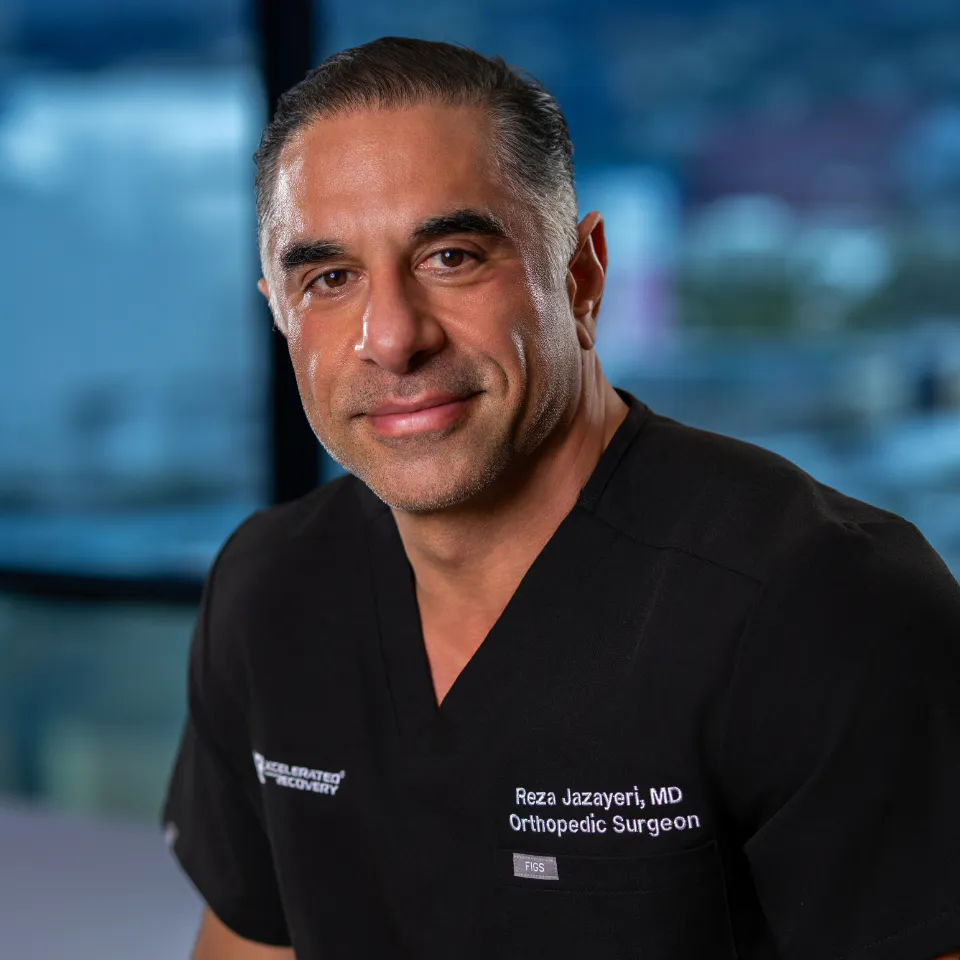
PCL reconstruction repairs a torn posterior cruciate ligament, a strong band of tissue that stabilizes the knee joint. Dr. Reza Jazayeri is a double board-certified orthopedic surgeon with a clinical focus on the shoulder, knee, and elbow. He completed his sports medicine fellowship at the Kerlan-Jobe Orthopaedic Clinic in Los Angeles.
With over 15 years of experience treating athletes and active adults, he provides patients across the Greater Los Angeles area with detailed care. Dr. Jaz treats PCL injuries at his Beverly Hills, Westlake Village, and Orange offices, and offers virtual visits for patients who can’t easily travel in. If a high-impact injury or sports trauma has damaged your PCL, knowing your surgical and non-surgical options helps you make a clear decision about your care.
PCL Reconstruction Surgery Overview
The posterior cruciate ligament sits deep inside the knee and prevents the shinbone from moving too far backward. A PCL tear often happens when the bent knee hits a dashboard during a car accident or when an athlete falls onto a flexed knee. Reconstruction uses a tissue graft, either from your own body or a donor, to replace the damaged ligament.
The procedure is usually done arthroscopically through small incisions. Dr. Jazayeri applies minimally invasive techniques throughout his practice, which can reduce tissue disruption and support a smoother recovery. The goal is to restore knee stability so you can return to the activities that matter to you.
Symptoms Of A PCL Injury
PCL injuries do not always cause the loud pop that people associate with ACL tears. You may notice knee pain that feels deep or vague, along with mild to moderate swelling that appears within hours of the injury. Many patients report a feeling of instability or that the knee might give way, especially when walking on uneven ground or going down stairs.
Stiffness and difficulty bearing weight are also common signs. Because symptoms can be subtle, some people delay seeking care.
If you have persistent knee discomfort after a fall or collision in the Los Angeles area, you should seek a thorough evaluation. This can identify whether the PCL is involved.
Who Is A Candidate For PCL Reconstruction
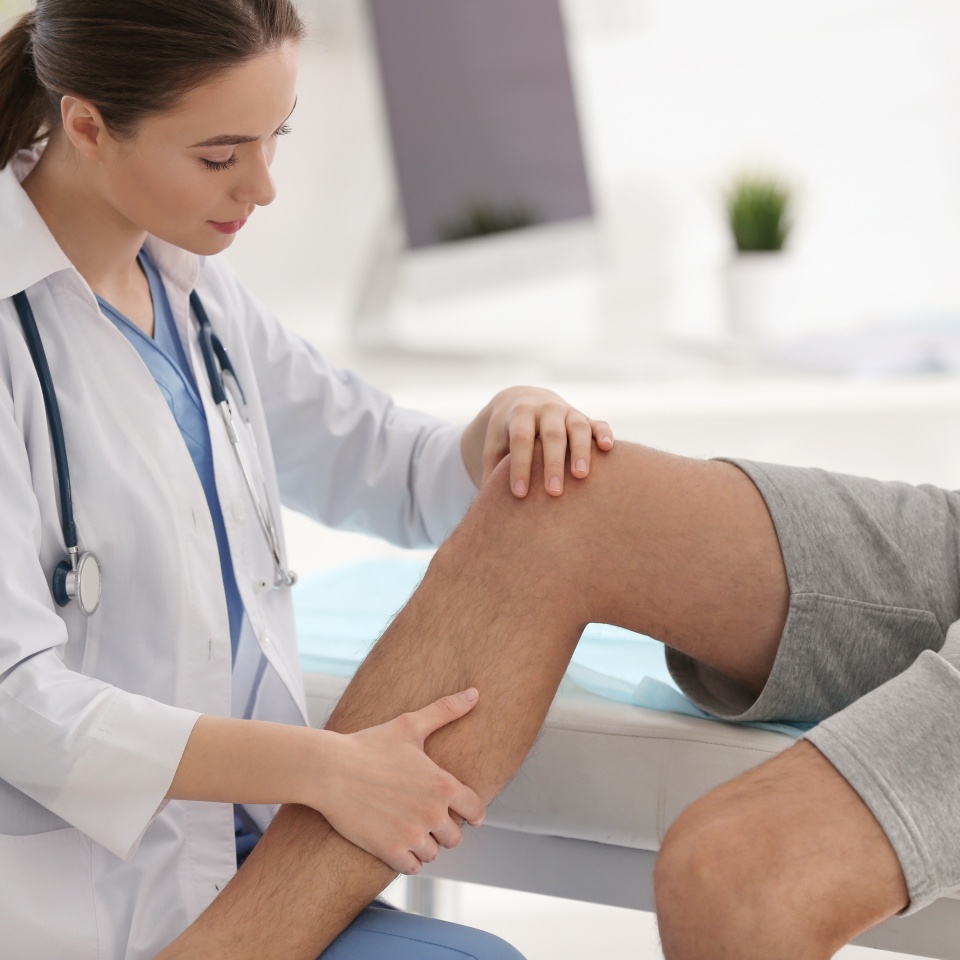
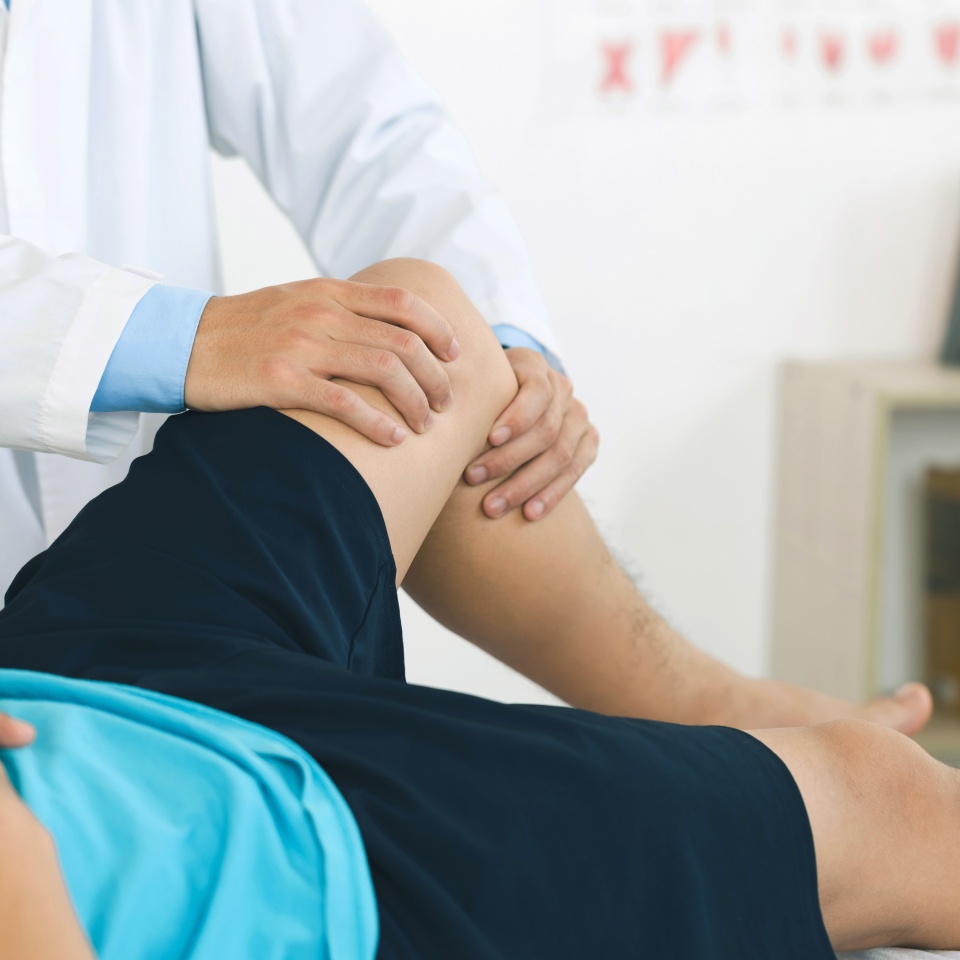
Surgery is typically considered for people with a complete or grade III tear, particularly when the knee feels unstable during daily activities. You may also be a candidate if you have a multi-ligament injury or if non-surgical treatment has not improved your function. Athletes who need to pivot, cut, or jump often choose reconstruction to regain the stability required for their sport.
Dr. Jazayeri takes a non-surgical-first approach, exploring therapy and injections before recommending surgery. When conservative care does not meet your needs, he discusses how PCL reconstruction can help restore knee mechanics and long-term joint health.
Surgical Techniques For PCL Reconstruction
Arthroscopic PCL reconstruction uses a camera and specialized instruments inserted through small portals around the knee. Dr. Jazayeri prepares the graft site, removes the torn ligament remnants, and secures the new graft in tunnels drilled into the thighbone and shinbone. Graft choices include autografts from your own tissue or allografts from donor tissue.
His proprietary Bio-Fertilization Technique combines biologic augmentation, intraosseous modulation, and metabolic optimization to support the healing environment. Preoperative lab testing for vitamin D, inflammatory markers, and hormone levels is a standard part of his protocol. This approach is backed by his own peer-reviewed research and reflects his focus on musculoskeletal longevity.
What To Expect During Recovery
Recovery after PCL reconstruction follows a phased timeline. You will wear a knee brace for several weeks to protect the graft while it heals. Crutches help you avoid putting full weight on the leg early on.
Most patients can return to desk work within a few weeks, but full recovery for sports typically takes 9 to 12 months. Dr. Jazayeri builds prehabilitation into patient preparation, which means you start conditioning exercises before surgery to support a smoother postoperative course. His digital rehab partnership with myHealthTrack offers a remote recovery program that helps patients stay on track between office visits in Los Angeles.
Physical Therapy After PCL Surgery
Physical therapy begins soon after surgery with gentle range-of-motion exercises. The early focus is on reducing swelling, activating the quadriceps, and gradually increasing knee flexion. As healing progresses, your therapist introduces strengthening and balance work to restore functional movement.
Dr. Jaz coordinates closely with your physical therapist to align your rehab with the surgical plan. Consistent therapy is essential for regaining full knee function and preventing stiffness. Patients in the Greater Los Angeles area have access to skilled rehabilitation teams who understand the specific demands of PCL recovery.
Non-Surgical Treatment Options For PCL Injuries
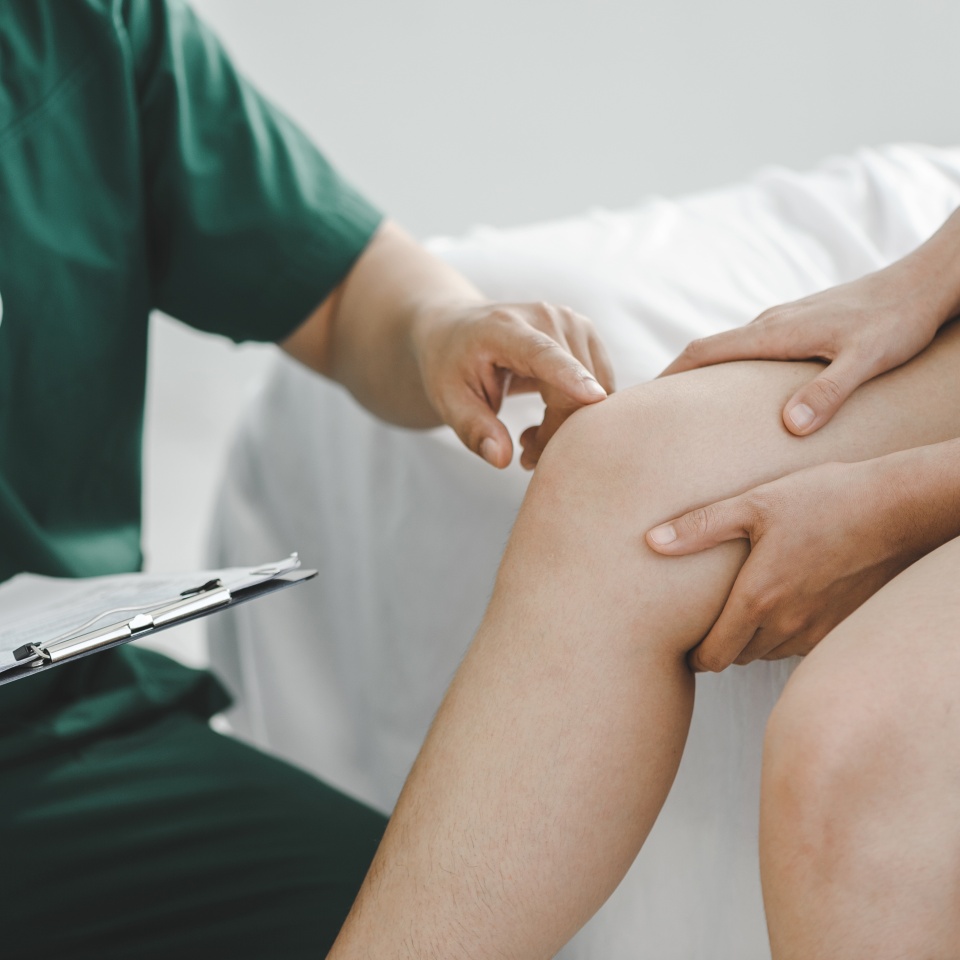
Not every PCL tear requires surgery. Partial tears and isolated injuries often respond well to structured physical therapy focused on quadriceps strengthening and proprioception training. Bracing can provide external support while the ligament heals naturally.
Dr. Jaz also offers biologics and regenerative medicine options, including PRP and stem cell augmentation, which may support the body’s healing response. His practice emphasizes exploring these non-surgical paths first. If your knee remains stable and your activity goals do not demand high-level pivoting, you may avoid surgery altogether with a well-designed conservative program.
Benefits Of Choosing Dr. Jazayeri For Your Surgery
Dr. Jazayeri is a double board-certified orthopedic surgeon with subspecialty certification in sports medicine. He trained at NYU Hospital for Joint Diseases and completed his fellowship at the Kerlan-Jobe Orthopaedic Clinic, one of the most respected sports medicine programs in the country. His practice includes detailed procedure pages and pre-op and post-op instruction resources so you know what to expect at every stage.
He serves as faculty at the Smith+Nephew UFC Combat Sports Medicine Course and founded the Xcelerated Recovery Science Organization. His philosophy is simple: treat every patient with the same level of care and attention he would give to his own family and friends.
Collarbone Fractures (Clavicle Fractures):
Open Reduction Internal Fixation With a Plate and Suture Implant Animation
This animated video demonstrates the use of a plate, screws, and suture button implant to repair a break in the collarbone.
Watch: Arthrex® Distal Clavicle Fracture Repair Using Coracoid Fixation
PCL Reconstruction Surgery FAQ
-
PCL reconstruction surgery is a procedure to repair a torn posterior cruciate ligament in the knee. This ligament is vital for stabilizing the knee joint, and surgery often involves using a graft to replace the damaged tissue.
-
Candidates for PCL reconstruction typically include those with a complete tear who experience instability during daily activities or sports. Athletes who need to pivot, cut, or jump may also be candidates if non-surgical treatments have not improved their condition.
-
Recovery from PCL reconstruction usually takes 9 to 12 months. You will wear a knee brace and use crutches initially, with physical therapy starting soon after surgery to help regain strength and mobility.
-
Yes, many PCL injuries can be treated non-surgically, especially partial tears. Options include physical therapy, bracing, and biologic treatments like PRP, which can help support healing without surgery.
-
When choosing a surgeon, consider their experience and specialization in sports medicine. Dr. Jazayeri, for example, is a double board-certified orthopedic surgeon with over 15 years of experience in treating knee injuries.
Why Choose Dr. Jazayeri For PCL Reconstruction?
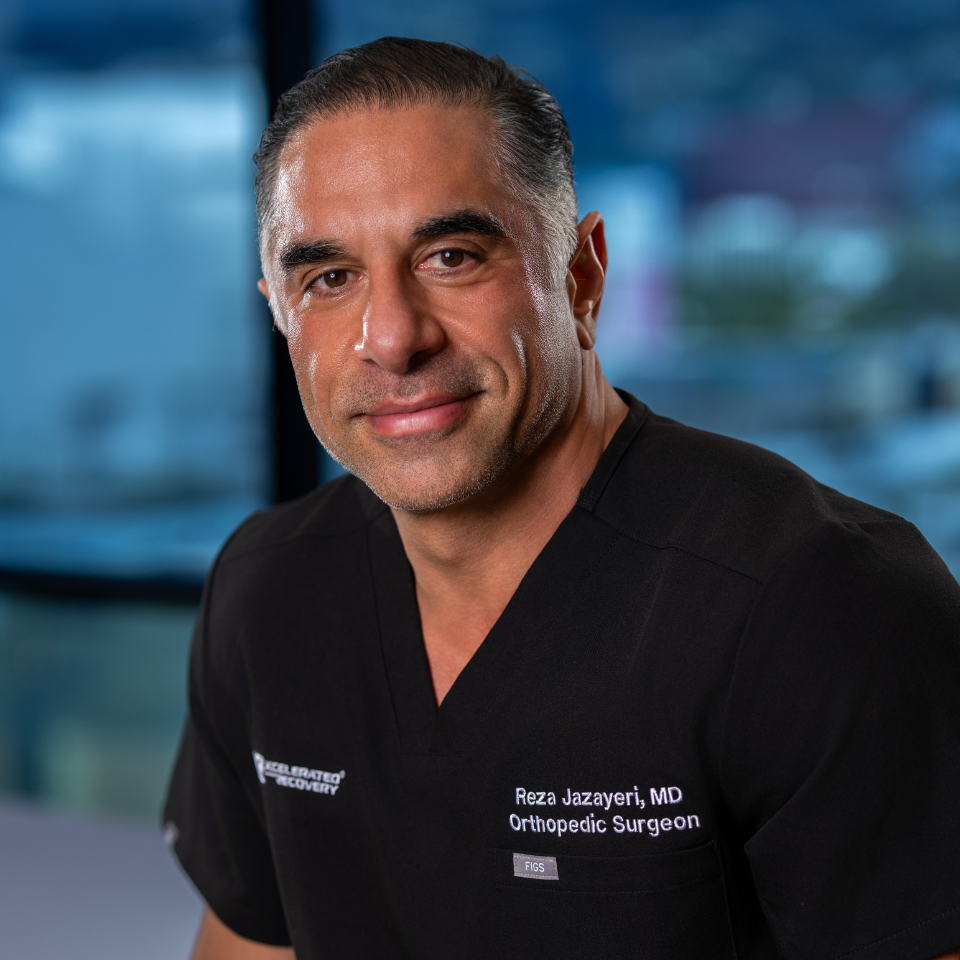
When it comes to PCL reconstruction, you want a surgeon who understands the unique challenges of knee injuries. Dr. Reza Jazayeri is a double board-certified orthopedic surgeon with over 15 years of experience.
He specializes in sports medicine and has treated many athletes and active adults in the Greater Los Angeles area. His training at NYU Hospital for Joint Diseases and the Kerlan-Jobe Orthopaedic Clinic provides him with a solid foundation in advanced surgical techniques.
Dr. Jazayeri uses minimally invasive methods for PCL reconstruction, which can lead to quicker recovery times. He focuses on personalized care, exploring non-surgical options before recommending surgery.
His proprietary protocols, like the Bio-Fertilization Technique, aim to enhance healing and support long-term knee health. You can trust that he treats every patient with the same care he would give to his own family.
Meet Dr. Reza Jazayeri
Dr. Reza Jazayeri specializes in sports medicine with expertise in shoulder, knee, and elbow injuries. A Southern California native, Dr. Jazayeri combines an engineering background with elite surgical training, completing his orthopedic surgery residency at the nationally ranked NYU Hospital for Joint Diseases and a sports medicine fellowship at the renowned Kerlan-Jobe Orthopaedic Clinic.
After more than 15 years caring for patients within the Southern California Permanente Medical Group, Dr. Jazayeri joined DOCS Health to expand a practice focused on personalized orthopedic and sports medicine care and surgical excellence. As Director of Longevity at DOCS Health, he leads the development and implementation of optimization protocols and regenerative medicine strategies designed to improve long-term musculoskeletal health and extend healthspan.
His published work includes a 2026 coauthored review of nutritional optimization in spine surgery in the Journal of the American Academy of Orthopaedic Surgeons. View Dr. Jazayeri’s research publications and training.
I am fortunate to have had Dr. Jazayeri as my surgeon. Both of my shoulders have been replaced, and the results are amazing. My range of motion is excellent. Dr. Jaz takes a holistic approach to patient care. He is caring, really listened to my concerns and took his time explaining things during my appointments. I carefully followed his instructions for pre op prep and post op care. He recommended vitamins, protein, and amino acid supplements to promote healing. I was diligent in using the My Health Track app for prehab and rehab exercises. I am confident that utilizing all of the tools Dr. Jaz provided were instrumental in my recovery and the great results.
Schedule Your Consultation For PCL Reconstruction
If knee instability is keeping you from the activities you enjoy, a consultation can clarify your options.In-person visits are available at his Beverly Hills, Westlake Village, or Orange offices. Virtual consultations are also available for patients across California and beyond. To learn more about PCL reconstruction and whether it fits your needs, contact the practice today and take the next step toward a more stable, functional knee.
Medically reviewed by Reza Jazayeri, M.D. on