If you have experienced repeat shoulder dislocations and significant bone loss, the Latarjet procedure may be a treatment option to consider. This surgical technique transfers a piece of bone from the coracoid process to the front of the glenoid. The goal is to restore stability and prevent further dislocations.
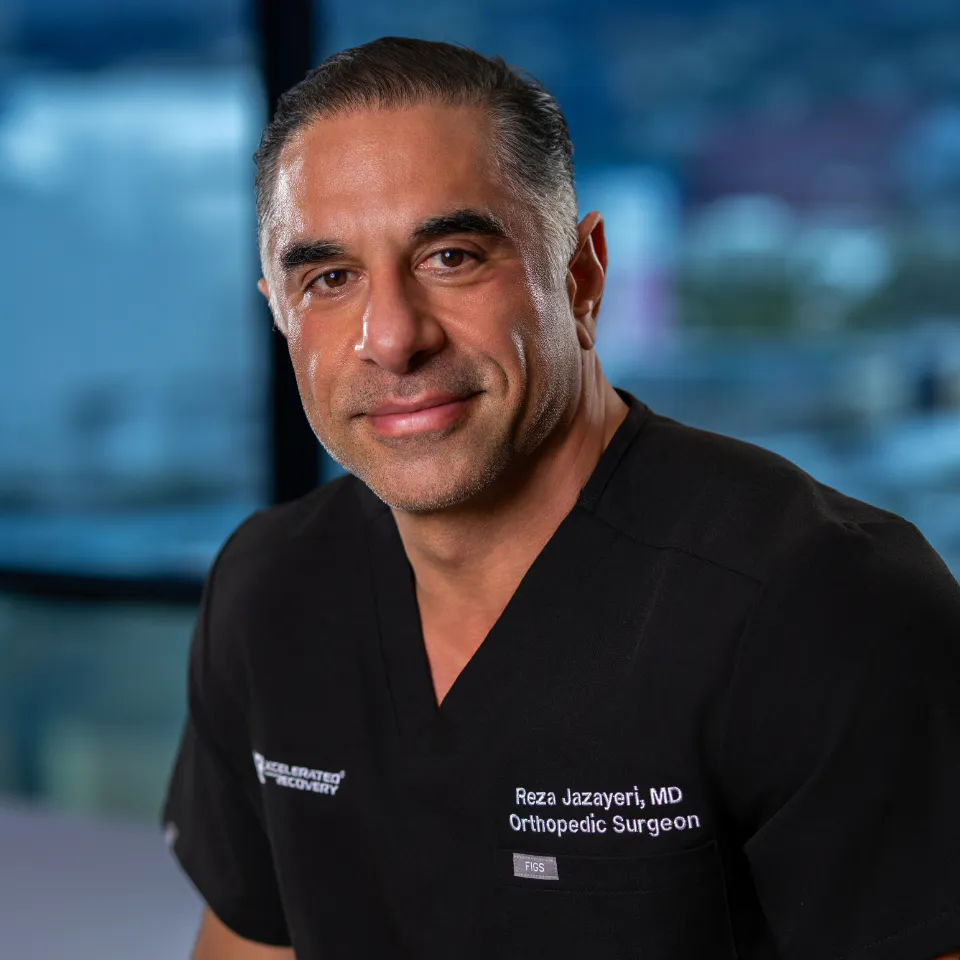
Dr. Reza Jazayeri, known to his patients as Dr. Jaz, is a double board-certified orthopedic surgeon specializing in sports medicine. His training at NYU Hospital for Joint Diseases and the Kerlan-Jobe Orthopaedic Clinic informs his approach to complex shoulder care. Dr. Jaz performs this procedure at his Beverly Hills, Westlake Village, and Orange offices, and offers virtual consultations for patients farther away.
Description:
Historically, this surgery was the standard treatment for people with shoulder dislocations. However, with the advent of arthroscopic surgical techniques, the Latarjet procedure is reserved for patients who have worn away at least 25% of their shoulder socket or present with multiple issues that require a multifaceted approach. In these patients, Latarjet surgery is highly successful at preventing additional dislocations.
Latarjet Procedure Overview For Shoulder Stability
The Latarjet procedure was developed by a French surgeon in the 1950s. It is commonly performed when there is significant bone loss in the front of the glenoid from repeat dislocations. After repeated shoulder dislocations, the shoulder loses the bony and musculature integrity needed to keep the joint in place.
Historically, this surgery was the standard treatment for people with shoulder dislocations. With the advent of arthroscopic surgical techniques, the Latarjet procedure is now reserved for patients who have worn away at least 25% of their shoulder socket or present with multiple issues that require a multifaceted approach.
Anatomy
The shoulder is a ball-and-socket joint made up of three bones: the humerus (armbone), scapula (shoulder blade) and clavicle (collarbone). The bones are covered with articular cartilage for smooth, pain-free motion of the joint. The muscles and tendons that surround the shoulder provide stability and support. All of these structures allow the shoulder to rotate through a greater range of motion than any other joint in the body. But this mobility comes with a price – a higher risk of injury and dislocation. Shoulder instability occurs when the ligaments, bones and muscles do not keep the ball tightly in the socket, leading to repeat dislocations.
When is surgery recommended?
Although the vast majority of people with shoulder instability do very well with simple arthroscopic techniques, there’s a small subset with extensive pathologies for whom a more complex procedure is warranted. If you have shoulder instability, it’s important that you consult a qualified orthopedic surgeon to select the right surgical option for you.
Surgical Technique Of The Latarjet Procedure
The shoulder is a ball-and-socket joint made up of three bones: the humerus, scapula, and clavicle. The bones are covered with articular cartilage for smooth, pain-free motion. The muscles and tendons that surround the shoulder provide stability and support.
All of these structures allow the shoulder to rotate through a greater range of motion than any other joint in the body. This mobility comes with a higher risk of injury and dislocation.
During the Latarjet procedure, a piece of bone from the coracoid process is transferred to the front of the glenoid to provide structural support. The surgery is typically performed under general anesthesia and involves a 5cm incision at the front of the shoulder.
What is the recovery time?
Following Latarjet surgery, patients typically spend six weeks in a sling to keep the shoulder immobilized and allow the bones to heal. Rehabilitation then begins to restore range of motion, strength and flexibility. Most people return to full function within four to six months.
Rehabilitation Strategies Post Latarjet Procedure
Rehabilitation after the Latarjet procedure is crucial for a successful recovery. The process begins with passive range of motion exercises and progresses to strengthening exercises around 12 weeks post-surgery.
Patients are advised to follow specific post-operative care instructions. These include the use of a specialized sling and a gradual return to activities.
Dr. Jaz offers a digital rehab partnership with myHealthTrack, a remote recovery program that supports patients throughout their rehabilitation. This resource is available to patients across California and beyond, including those in the Beverly Hills and greater Los Angeles area.
Potential Risks Associated With The Latarjet Procedure
While the Latarjet procedure has a high success rate in preventing recurrent instability, it carries risks. These include infection, nerve damage, and potential non-union of the bone graft. Common considerations for patients include the extent of shoulder instability, previous surgical outcomes, and the desire to return to sports.
Dr. Jaz discusses these risks with each patient during the consultation process. His clinical approach uses biologics and regenerative medicine, including PRP and stem cell augmentation, to support healing. His Bio-Fertilization Technique combines biologic augmentation, intraosseous modulation, and metabolic optimization within a single surgical framework.

Athletic Return After Latarjet Procedure
For athletes in the Los Angeles area, returning to sport is often a primary concern. The Latarjet procedure is particularly effective for those involved in overhead or contact sports. Dr. Jazayeri serves as faculty at the Smith+Nephew UFC Combat Sports Medicine Course, reflecting his deep grasp of the demands placed on competitive athletes.
His BOAT Protocol, a biologically optimized ACL reconstruction and recovery framework, demonstrates his commitment to structured, research-informed recovery pathways. The same level of attention applies to shoulder patients working toward an athletic return. Recovery timelines vary, and each plan is built around the individual’s goals and tissue healing.
Choosing A Provider For The Latarjet Procedure
Selecting a surgeon for the Latarjet procedure requires careful consideration of training, experience, and clinical approach. Dr. Jazayeri is double board-certified in orthopedic surgery and sports medicine. He completed his sports medicine fellowship at the Kerlan-Jobe Orthopaedic Clinic in Los Angeles and his residency at NYU Hospital for Joint Diseases.
He is a member of the American Academy of Orthopaedic Surgeons and the American Orthopaedic Society for Sports Medicine. Patients can reach him at three offices: Beverly Hills, Westlake Village, and Orange, or connect virtually from anywhere in California and beyond.
Collarbone Fractures (Clavicle Fractures):
Open Reduction Internal Fixation With a Plate and Suture Implant Animation
This animated video demonstrates the use of a plate, screws, and suture button implant to repair a break in the collarbone.
Watch: Arthrex® Distal Clavicle Fracture Repair Using Coracoid Fixation
Frequently Asked Questions About The Latarjet Procedure
-
The Latarjet procedure is a surgical technique aimed at stabilizing the shoulder joint. It is often recommended for patients with recurrent shoulder dislocations and significant bone loss in the glenoid.
-
This procedure is particularly beneficial for high-level athletes and individuals involved in overhead or contact sports. If you have shoulder instability and have not found relief with simpler treatments, consulting a qualified orthopedic surgeon is essential.
-
Recovery typically involves wearing a sling for about six weeks to keep the shoulder immobilized. After that, patients usually start with passive range of motion exercises, progressing to strengthening exercises around 12 weeks post-surgery.
-
While the procedure has a high success rate, it does carry risks such as infection, nerve damage, and potential non-union of the bone graft. It’s important to discuss these risks with your surgeon during the consultation.
-
Before your consultation, it’s helpful to gather information about your shoulder history and any previous treatments. This will help your surgeon understand your condition and recommend the best treatment options for you.
Why Choose Us For Your Latarjet Procedure
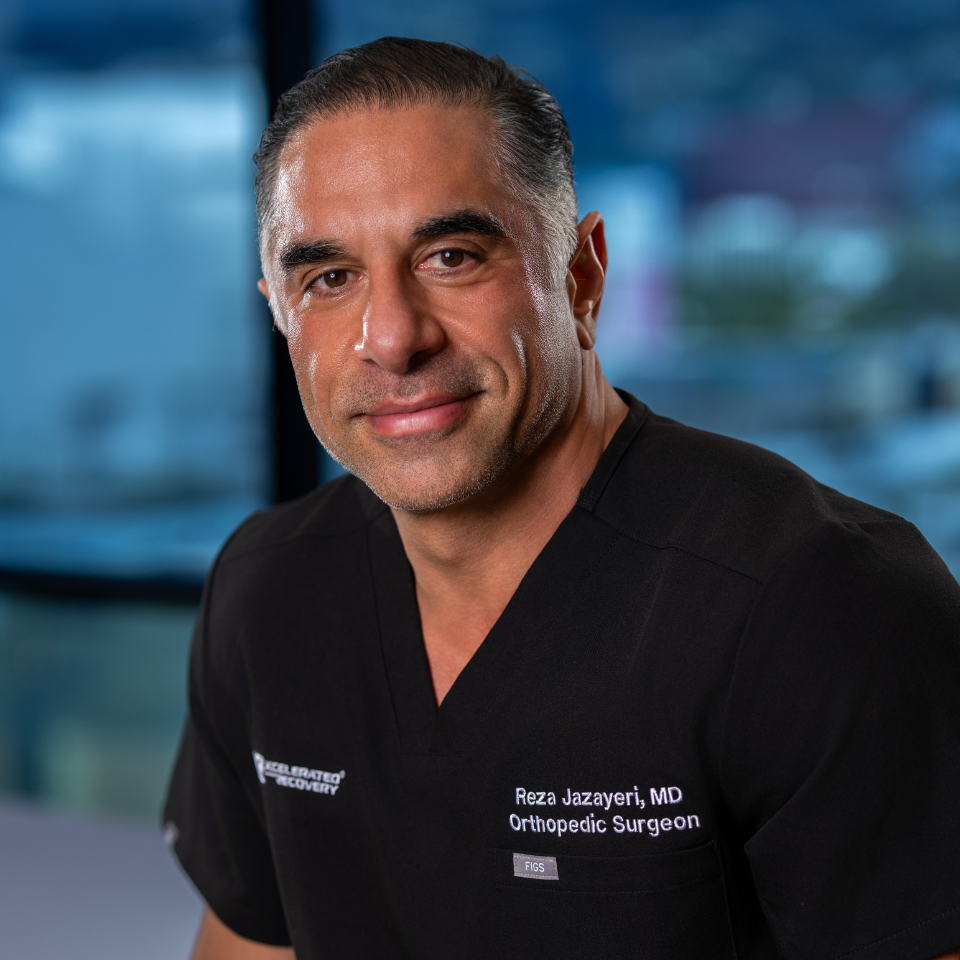
Choosing the right provider for your Latarjet procedure is crucial. Dr. Reza Jazayeri is a double board-certified orthopedic surgeon with over 15 years of experience.
He specializes in sports medicine and has a deep grasp of shoulder issues. His training at NYU Hospital for Joint Diseases and the Kerlan-Jobe Orthopaedic Clinic ensures you receive experienced care that meets your needs.
We focus on personalized treatment plans. Dr. Jazayeri explores non-surgical options first and uses minimally invasive techniques whenever possible.
He believes in treating every patient with the same care he would give to his family. This commitment to quality care sets us apart in the Greater Los Angeles area.
We also offer resources like prehabilitation programs and digital rehab partnerships to support your recovery. With a focus on nutrition and metabolic optimization, you can trust that your journey to recovery is in experienced hands.
Meet Dr. Reza Jazayeri
Dr. Reza Jazayeri specializes in sports medicine with expertise in shoulder, knee, and elbow injuries. A Southern California native, Dr. Jazayeri combines an engineering background with elite surgical training, completing his orthopedic surgery residency at the nationally ranked NYU Hospital for Joint Diseases and a sports medicine fellowship at the renowned Kerlan-Jobe Orthopaedic Clinic.
After more than 15 years caring for patients within the Southern California Permanente Medical Group, Dr. Jazayeri joined DOCS Health to expand a practice focused on personalized orthopedic and sports medicine care and surgical excellence. As Director of Longevity at DOCS Health, he leads the development and implementation of optimization protocols and regenerative medicine strategies designed to improve long-term musculoskeletal health and extend healthspan.
His published work includes a 2026 coauthored review of nutritional optimization in spine surgery in the Journal of the American Academy of Orthopaedic Surgeons. View Dr. Jazayeri’s research publications and training.
i’m a physician in the LA area about 10 years out of school. I tore my right pec muscle in the gym and immediately called my ortho friends in the area for a recommendation (none of them did pec/shoulder). Dr Jax came highly recommended and I was not disappointed. his urgency and communication was excellent , got me scheduled right away and was checking on me the whole way. really felt like he went above and beyond during the surgery adding a bone marrow aspirate to help it heal. 9 months out and strength and mobility are great
Schedule Your Consultation For The Latarjet Procedure
If you are considering the Latarjet procedure in Los Angeles, a consultation with Dr. Jazayeri can help you understand your options. He treats every patient with the same level of care and attention he would give to his own family and friends.
His practice offers detailed procedure education, pre-op and post-op instructions, and a recovery optimization program that covers sleep, rehabilitation, and nutrition. To learn more about the Latarjet procedure and whether it fits your needs, schedule a consultation at the Beverly Hills, Westlake Village, or Orange office, or request a virtual visit.
Medically reviewed by Reza Jazayeri, M.D. on