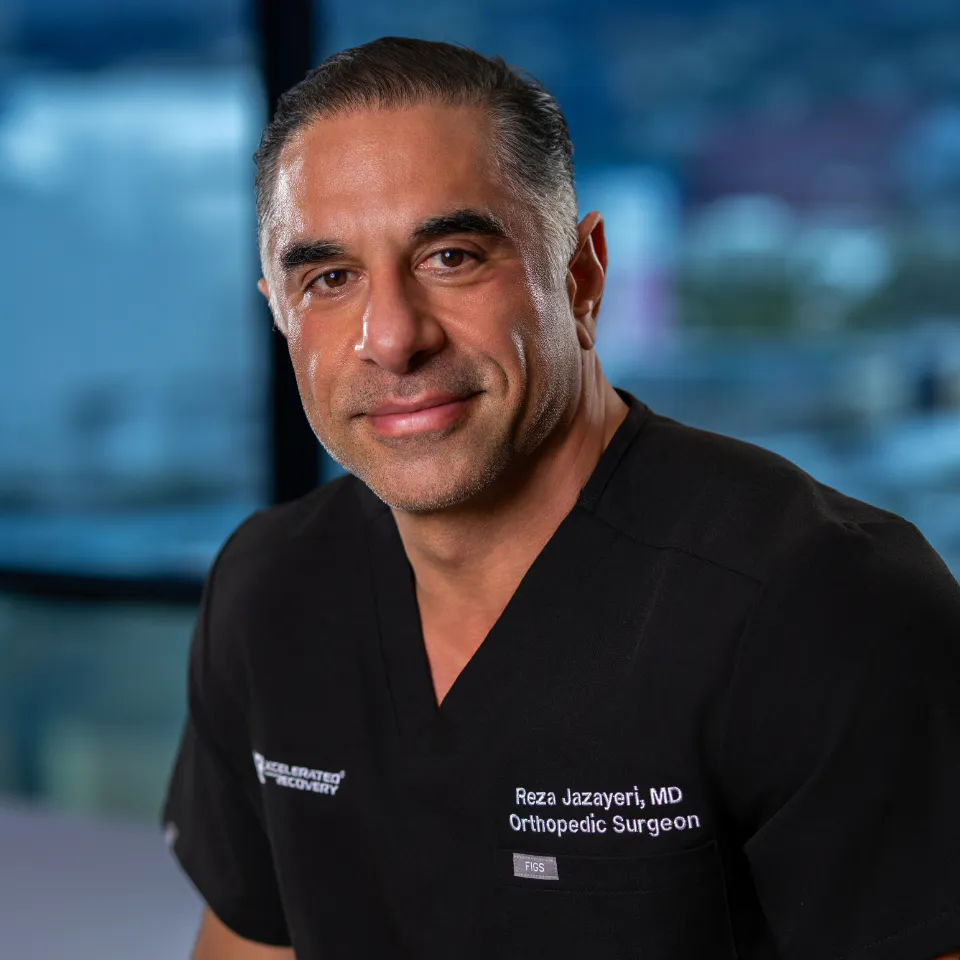
When a hamstring injury does not respond to rest or basic care, you may need to learn about hamstring repair options. Dr. Reza Jazayeri is a double board-certified orthopedic surgeon with over 15 years of experience treating athletes and active adults across the Greater Los Angeles area.
He completed his sports medicine fellowship at the Kerlan-Jobe Orthopaedic Clinic and takes a non-surgical-first approach whenever possible. Dr. Jaz sees patients at his Beverly Hills, Westlake Village, and Orange offices, with virtual consultations available for those who can’t easily travel in. The full range of treatment paths is the first step toward making a confident decision about your recovery.
Hamstring Anatomy
The hamstring group consists of four muscles located at the back of the thigh:
- Biceps Femoris (long head and short head)
- Semitendinosus
- Semimembranosus
These muscles originate from the pelvis (ischial tuberosity) and insert along the knee and lower leg bones. They play a crucial role in hip extension, knee flexion, and dynamic lower extremity stability.
Understanding Hamstring Ruptures
Hamstring injuries can occur at various sites:
- Proximal Rupture (near the pelvis)
- Midsubstance Tear (within the muscle belly)
- Distal Rupture (near the knee)
Epidemiology and Injury Types:
- Hamstring injuries are common in athletes and active individuals, with a higher incidence in sprinting and explosive activities.
- Approximately 12-25% of hamstring injuries are complete ruptures; the remainder are partial tears.
- Proximal ruptures (especially avulsions) are more often complete and occur most commonly in middle-aged athletes.
Midsubstance and distal injuries are more frequently partial tears, but complete distal tendon ruptures can occur in specific high-load injuries.

Treatment Options
Non-Operative Treatment
Recommended for partial tears and some minimally displaced complete ruptures.
May include:
- Activity modification and rest
- Physical therapy emphasizing gradual range of motion and strengthening
- Platelet-Rich Plasma (PRP) injections can be considered to promote healing in select cases.
Non-operative care is appropriate for low-demand patients, partial tears, or complete tears with minimal tendon retraction (<2 cm).
Surgical Treatment
Indicated for:
- Complete proximal avulsions (especially if ≥2 tendons detached or significant tendon retraction >2 cm)
- High-grade complete midsubstance or distal ruptures with significant functional loss
- Surgical repair involves reattaching the tendon(s) to the bone using strong anchors or sutures.
Ideal Candidates for Surgery:
- Active individuals
- High-demand athletes
- Patients with significant weakness, difficulty walking, or loss of lower extremity function
Post-Operative Rehabilitation
- First 4–6 weeks: Protected weight-bearing, use of brace or crutches as needed, gentle range of motion exercises.
- Weeks 6–12: Progressive strengthening begins, focusing on core stability and hamstring activation under guidance.
- 3–4 months: Return to light jogging and non-contact drills.
- 4–6 months: Gradual return to full sports participation, depending on strength recovery, functional milestones, and sport-specific demands.
Proximal Hamstring Tears
What Is a Proximal Hamstring Tear?
Causes, Symptoms, and Diagnosis
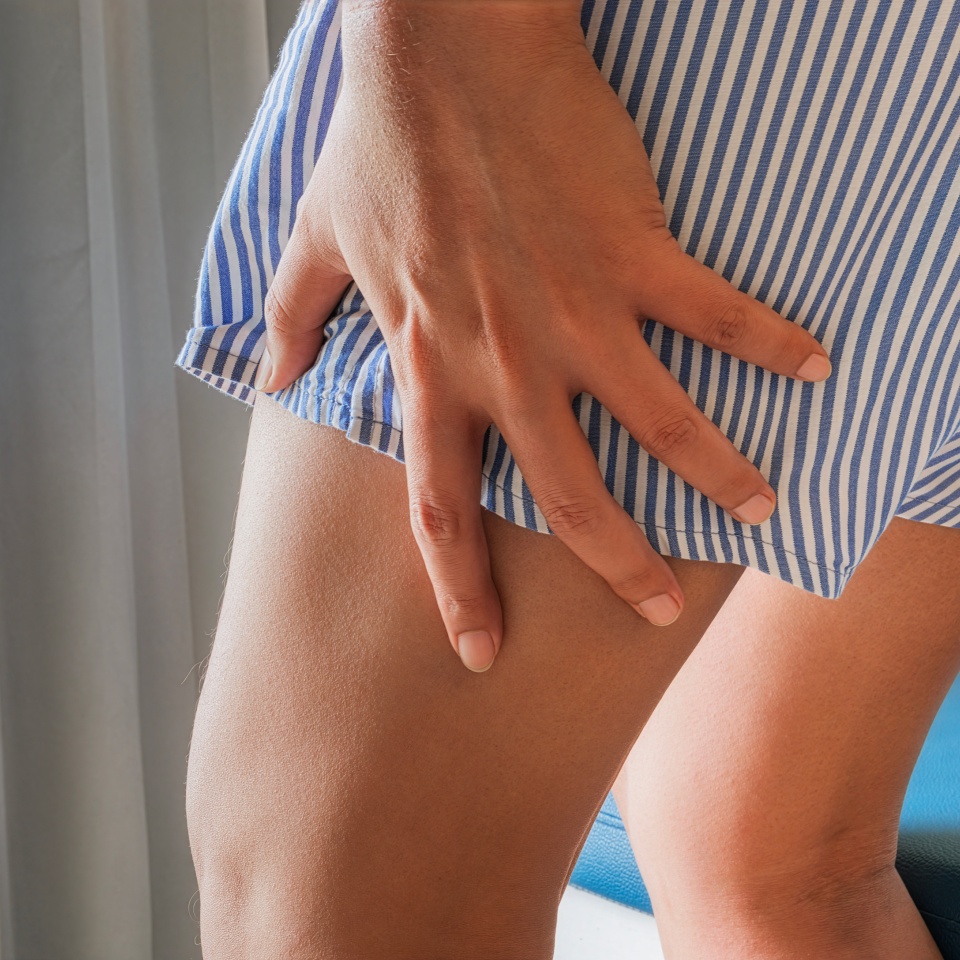
Movements that cause the hamstring muscles to quickly contract or stretch often lead to injury. While the hamstring muscles are more likely to be injured, tears can also affect the tendons at the hip that attach the muscles to the pelvis.
Proximal Hamstring Tear Treatment
With and Without Surgery
Treatment for a hamstring tear at the hip will vary depending on the level of injury. Some partial tears can be rehabilitated with rest and physical therapy. More involved tears, especially if more than one tendon is affected, can benefit from surgery to restore strength and function.
Proximal Hamstring Tear Surgery
Surgical Animations
Surgery for a hamstring tear at the hip most often involves using sutures and anchors to reattach the torn tendon back to the pelvis.
Proximal Hamstring Tear Surgery
Surgical Demonstrations
During hamstring tear surgery, a surgeon makes an incision along the back of the thigh. This allows the surgeon to access the torn hamstring tendon and reattach it to the pelvis.
Frequently Asked Questions About Hamstring Repair
-
Common symptoms include deep buttock pain, swelling, and difficulty with activities like sitting or running. These signs often indicate that you should seek medical attention to prevent further injury.
-
Non-surgical options typically include rest, ice, compression, and physical therapy. Platelet-Rich Plasma (PRP) injections may also be considered to help promote healing in certain cases.
-
Surgery is usually needed for complete proximal avulsions or high-grade complete tears with significant functional loss. If two or more tendons are detached or there is significant tendon retraction, surgical repair is often the best option.
-
Recovery involves a structured rehabilitation program that starts with protected weight-bearing and gentle range of motion exercises. Over time, progressive strengthening is introduced, typically allowing a return to full activities within 4 to 6 months.
-
Most patients return to their previous activity level, but some may experience persistent tightness or minor strength differences. Following rehabilitation protocols is crucial to minimize the risk of re-injury and support long-term function.
Why Choose Dr. Reza Jazayeri For Hamstring Repair?
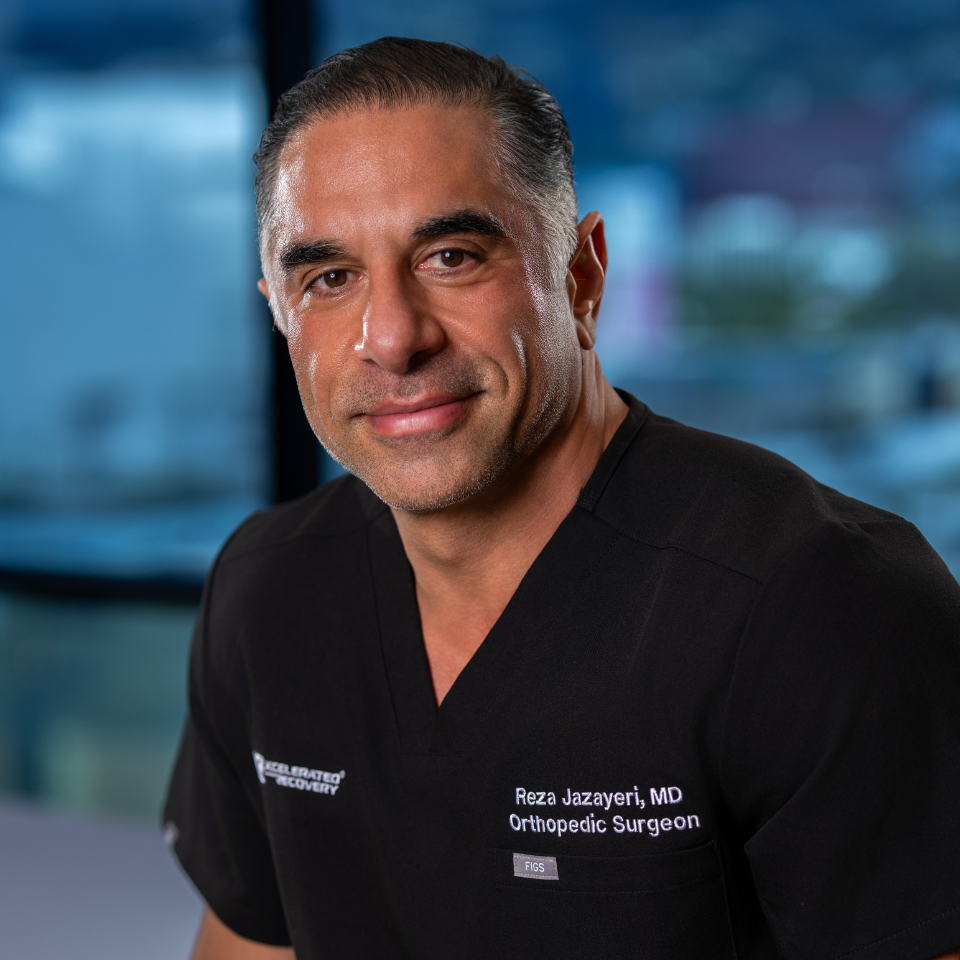
Dr. Reza Jazayeri is a double board-certified orthopedic surgeon with over 15 years of experience in sports medicine. He specializes in treating hamstring injuries, ensuring you receive personalized care. His training at the Kerlan-Jobe Orthopaedic Clinic gives him advanced skills in both surgical and non-surgical options for hamstring repair.
Dr. Jaz focuses on minimally invasive techniques and biologics, like PRP, to promote healing. He believes in a non-surgical-first approach whenever possible. This means you can explore all options before considering surgery, making your recovery path clearer and more comfortable.
Located in the Greater Los Angeles area, Dr. Jazayeri is dedicated to helping athletes and active individuals return to their routines. His commitment to patient education ensures you understand every step of your treatment. With a focus on long-term health and recovery, you can trust that you are in good hands.
Meet Dr. Reza Jazayeri
Dr. Reza Jazayeri specializes in sports medicine with expertise in shoulder, knee, and elbow injuries. A Southern California native, Dr. Jazayeri combines an engineering background with elite surgical training, completing his orthopedic surgery residency at the nationally ranked NYU Hospital for Joint Diseases and a sports medicine fellowship at the renowned Kerlan-Jobe Orthopaedic Clinic.
After more than 15 years caring for patients within the Southern California Permanente Medical Group, Dr. Jazayeri joined DOCS Health to expand a practice focused on personalized orthopedic and sports medicine care and surgical excellence. As Director of Longevity at DOCS Health, he leads the development and implementation of optimization protocols and regenerative medicine strategies designed to improve long-term musculoskeletal health and extend healthspan.
His published work includes a 2026 coauthored review of nutritional optimization in spine surgery in the Journal of the American Academy of Orthopaedic Surgeons. View Dr. Jazayeri’s research publications and training.
Dr. Jazayeri did my shoulder replacement after many other surgeons said it was too damaged too difficult to reconstruct. I was deeply grateful for him taking on my surgery. I am now three months after complex shoulder operation. I have very little pain and have near full range of motion. Can’t thank him enough for all that he did as well as having fantastic bedside manners.
Consult With Dr. Reza Jazayeri For Treatment Options
If you are dealing with a hamstring injury and want to understand your hamstring repair options, Dr. Jazayeri provides thorough evaluations at his Beverly Hills, Westlake Village, and Orange offices. As a double board-certified orthopedic surgeon with fellowship training from the Kerlan-Jobe Orthopaedic Clinic, he brings deep experience in sports medicine to every consultation.
Virtual consultations are available for patients across California and beyond. Whether you need non-surgical management or advanced surgical repair, you will receive a clear, evidence-based plan built around your goals and lifestyle. Contact the office to schedule a consultation.
Medically reviewed by Reza Jazayeri, M.D. on