Rotator cuff repair is one of the most common shoulder surgeries performed in the United States, but it is also one of the most biologically demanding. The tendon has a relatively poor blood supply, the tissue is often compromised by years of wear, and even a technically perfect repair can retear if the body’s underlying healing environment is not strong enough to support it. That is why one of the most important advances in shoulder surgery in the last decade has come not from new hardware or instruments, but from biology.
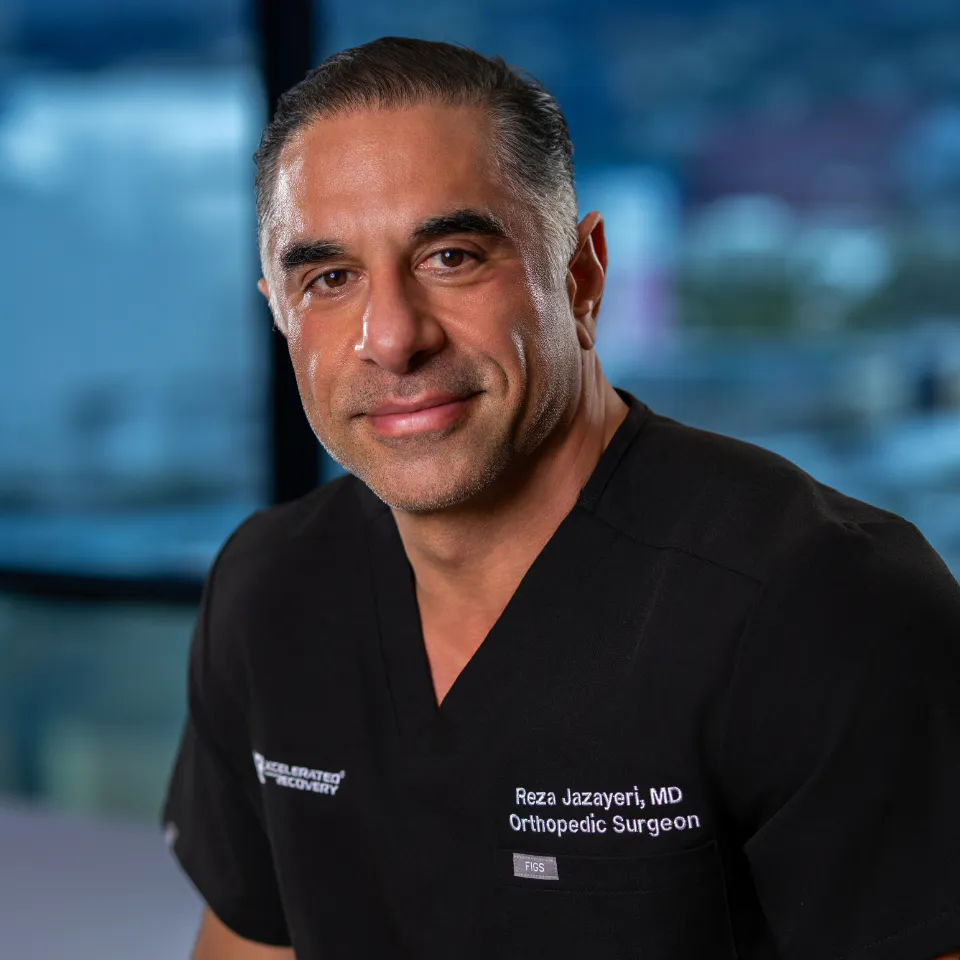
Dr. Reza Jazayeri, M.D., serves as Director of Longevity at DOCS Health in Beverly Hills, where regenerative medicine and biologic surgical augmentation are a central part of his practice. He developed and published the Bio Fertilization™ Rotator Cuff Repair technique, a biologically enhanced approach that uses mesenchymal stem cell augmentation at the tendon-bone interface. The technique has been featured in a surgical demonstration video available on his practice channel, and reflects years of work integrating orthobiologic therapies into standard surgical care.
Why Rotator Cuff Healing Is So Challenging
A torn rotator cuff is really a disrupted tissue interface. The tendon has to heal back to the bone at what is known as the enthesis, a specialized transition zone that does not regenerate easily in adults. Published retear rates after traditional rotator cuff repair vary widely depending on tear size, tissue quality, and patient factors, and larger tears in older patients carry some of the highest retear risk.
Improvements in suture anchors, repair configurations, and rehabilitation have all reduced retears over the years. But the core biological problem has remained: the tendon-bone interface must form new fibrocartilage, and the patient’s cellular healing response is the variable that determines whether that happens.
What Bio Fertilization™ Adds to the Standard Repair
Bio Fertilization™ is a biologically enhanced rotator cuff repair technique developed by Dr. Jazayeri that introduces mesenchymal stem cells at the healing site during surgery. Rather than relying solely on the native healing environment, the technique delivers a concentrated population of regenerative cells directly to the tendon-bone interface, with the goal of supporting stronger and more reliable biologic healing.
The approach is designed to complement, not replace, the standard mechanical elements of repair. The surgeon still mobilizes the tendon, debrides damaged tissue, and secures the repair with anchors and suture configurations appropriate to the tear pattern. The biologic augmentation is then layered onto that foundation — essentially “fertilizing” the repair site to support the body’s own healing machinery.
How Biologic Augmentation Supports Tendon Healing
Mesenchymal stem cells are versatile regenerative cells that can participate in the formation of new connective tissue and help modulate inflammation during early healing. Orthobiologics used in shoulder surgery also include platelet-rich plasma (PRP) and other growth-factor preparations. Each category has a slightly different role.
- Mesenchymal Stem Cells: Regenerative cells with the capacity to support new tissue formation at the tendon-bone interface.
- Platelet-Rich Plasma: A concentrated growth-factor source that can help modulate inflammation and support early tendon healing.
- Scaffold and Patch Augmentation: Materials that provide mechanical support to the repair while tissue biology matures, often used in revision or large tears.
- Nutritional and Metabolic Optimization: Whole-body support of protein balance, vitamin D status, and amino acid availability to reinforce surgical biology from within.
Who May Benefit from a Biologically Enhanced Repair
Bio Fertilization™ is not the right choice for every patient. The technique is considered on a case-by-case basis and is most often discussed with patients whose biology or tear pattern puts them at higher risk of retear. The conversation usually begins with imaging review, a focused physical exam, and a detailed look at activity demands and recovery goals.
- Larger or Multi-Tendon Tears: Cases in which the biologic healing demand is significantly higher than a small, isolated tear.
- Revision Rotator Cuff Repair: Patients who have already experienced a retear and need an approach that does more than repeat the original repair.
- Compromised Tissue Quality: Tendons with thinning, chronic degeneration, or delamination that would benefit from cellular support.
- High-Demand Patients: Active adults, athletes, and working professionals whose goals require a durable, high-quality repair.
“A repair that is mechanically sound but biologically weak is vulnerable from day one. The future of rotator cuff surgery is matching the biology to the mechanics, so the repair we build in the operating room is the repair the body actually finishes on its own.”
— Dr. Reza Jazayeri, M.D.
Explore Biologically Enhanced Shoulder Surgery in Beverly Hills
Patients considering rotator cuff repair — or those who have already experienced a retear — can request a consultation with Dr. Jazayeri in Beverly Hills to discuss whether biologic augmentation is appropriate for their specific case. Every evaluation includes a detailed review of imaging, tissue quality, and personal goals, along with a clear explanation of both surgical and non-surgical options. Contact the office today to learn more about Bio Fertilization™ and the role of regenerative medicine in long-term shoulder health.
Medically reviewed by Reza Jazayeri, M.D. on
Posted on behalf of