Choosing between anatomic shoulder replacement and reverse shoulder replacement depends largely on your rotator cuff and the condition of your shoulder socket. Your surgeon also considers previous injuries and the movements you want to get back.
Both options replace damaged joint surfaces, but each relies on different mechanics. You might start considering replacement when arthritis pain or lost motion sticks around even after trying nonsurgical treatments.
How Do Anatomic and Reverse Replacements Work?
An anatomic shoulder replacement recreates your shoulder’s natural ball-and-socket structure. It usually works well if your rotator cuff can keep the joint stable and your socket has enough bone to support an implant.
A reverse shoulder replacement switches the positions of the ball and socket, so your deltoid muscle can lift your arm even if your rotator cuff is badly damaged. The American Academy of Orthopaedic Surgeons describes reverse replacement as an option for severe rotator cuff damage, certain fractures, and failed previous replacements.
What Does Your Surgeon Look At Before Choosing?
Your surgeon looks at what’s going on inside your shoulder and what you want to be able to do after surgery. They consider:
- Rotator cuff function: Can the tendons still stabilize and control the joint?
- Socket wear: Has arthritis changed the shape or strength of the glenoid bone?
- Prior damage: Have you had fractures, tendon repairs, or a previous replacement?
- Daily demands: Which movements have become painful or difficult?
X-rays show how much wear your joint has. CT scans can show socket bone changes more clearly, and MRI can check your rotator cuff tendons when needed.
Can You Need a Reverse Replacement With an Intact Rotator Cuff?
A healthy rotator cuff often favors anatomic replacement, but severe socket wear or deformity can change the recommendation.
In a 2025 study of 111 patients with shoulder arthritis, rotator cuff deficiencies, and inadequate socket bone led surgeons to change some planned anatomic replacements to reverse during surgery. Even careful preoperative planning cannot always settle the choice.
Both surgeries are designed to relieve pain and help you move better in daily life. You may not regain full movement, and recovery requires rehabilitation.
How Does Dr. Jazayeri Approach Shoulder Replacement?
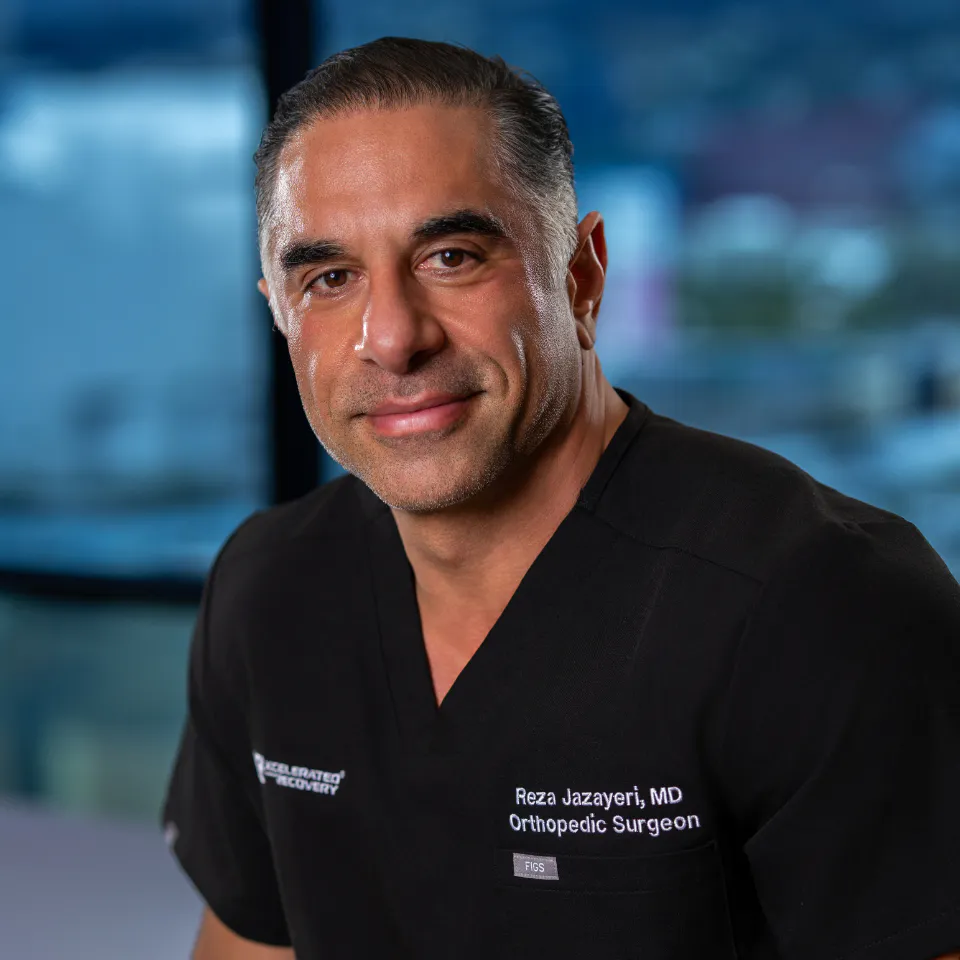
Dr. Reza Jazayeri is a double board-certified orthopedic surgeon with fellowship training in sports medicine. His shoulder replacement services include both anatomic and reverse procedures.
For reverse replacement, he uses 3D surgical planning to study your socket and plan implant placement before surgery. If arthritis has left your socket badly worn, it’s worth talking about this approach. He sees patients throughout Southern California.
Frequently Asked Questions
Does a rotator cuff tear always mean reverse replacement?
No. Tear size, tendon function, and the condition of the joint all influence the choice.
Is reverse shoulder replacement only for older patients?
No. Younger patients may also need it, depending on rotator cuff function and socket bone.
Will I need physical therapy after surgery?
Usually. Rehabilitation helps you regain movement and strength, and the plan depends on which operation you have.
Find Out Which Shoulder Replacement Fits Your Needs
If shoulder pain is waking you up or making everyday movement difficult, Dr. Jazayeri can review your rotator cuff, socket wear, and shoulder replacement options. Contact our practice to schedule a consultation at one of our convenient Southern California locations.
Medically reviewed by Reza Jazayeri, M.D. on
Posted on behalf of