Few questions come up more often after knee surgery than “when can I get back to my sport?” It is also one of the most important questions an orthopedic surgeon can help a patient answer correctly. Returning too early after ACL reconstruction is the single most common driver of graft retears, contralateral ACL injuries, and long-term dissatisfaction with surgical outcomes. Returning well, on the other hand, can put athletes back on the field stronger than they were before the original injury.
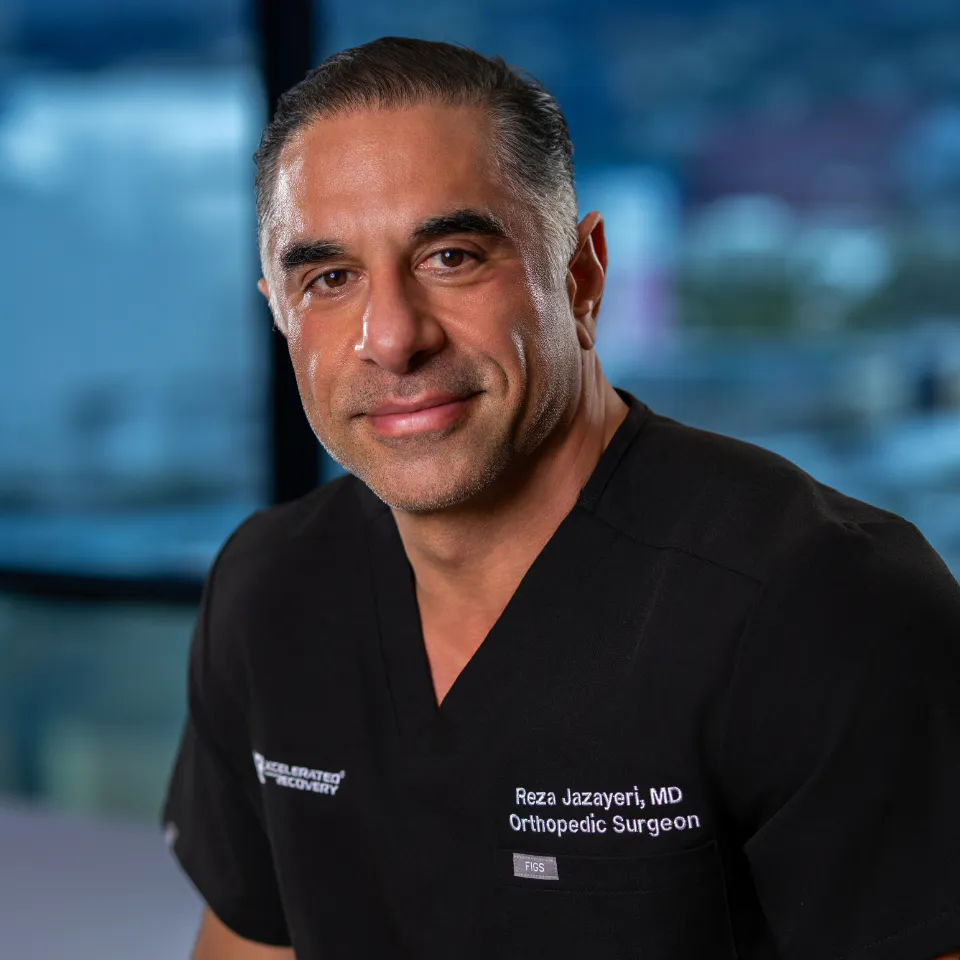
Dr. Reza Jazayeri, M.D., is a fellowship-trained sports medicine surgeon and member of the American Orthopaedic Society for Sports Medicine (AOSSM). He serves as faculty at the Global Knee Innovation Summit in Dubai, the Soccer Medicine Updates and Innovations program for the 2026 World Cup, and the AOSSM Annual Meeting, where he teaches on ACL management and return-to-sport protocols for knee surgery patients. At his Beverly Hills practice, he applies that same evidence-based framework to the rehabilitation timelines of the recreational athletes, working professionals, and competitive athletes he cares for.
Why “Six Months” Is No Longer the Answer
For years, patients heard the same rough timeline: six months from ACL surgery to return to sport. Modern sports medicine has moved well past that number. Current research consistently shows that waiting at least nine to twelve months, and passing criteria-based return-to-sport testing, substantially reduces the risk of retear and contralateral ACL injury — especially in younger athletes and those returning to cutting or pivoting sports.
In other words, the calendar matters less than the milestones. A patient who meets specific strength, symmetry, and neuromuscular control benchmarks at ten months is a far safer candidate for return than one who is simply “six months out.”
The Phases of ACL Recovery
A structured ACL recovery moves through identifiable phases, each with its own objectives. Progression is based on meeting the goals of the current phase, not on reaching a specific week on the calendar.
- Early Recovery (weeks 0 to 2): Pain and swelling control, full passive knee extension, gentle range-of-motion work, and regaining quadriceps activation.
- Strength Foundation (weeks 2 to 12): Gradual loading, normalized gait, single-leg strength development, and restoration of full range of motion.
- Advanced Strength and Control (months 3 to 6): Bilateral strength symmetry, early agility drills, and introduction of sport-specific movement patterns.
- Neuromuscular and Plyometric Training (months 6 to 9): Cutting, pivoting, jumping, and landing mechanics progressed in a controlled environment.
- Return-to-Sport Testing (months 9+): Objective strength, hop, and performance testing; sport-specific drills; and progressive exposure to competitive environments.
Key Rehabilitation Milestones
Modern return-to-sport decisions are built around measurable milestones, not a single clearance date. These benchmarks help patients, surgeons, and physical therapists align on readiness.
- Quadriceps Strength Symmetry: The operative leg should reach at least 90 percent of the non-operative leg’s strength before full return.
- Single-Leg Hop Testing: Symmetry on single-leg, triple, and crossover hop tests is a well-established predictor of safe return.
- Landing Mechanics: Controlled, symmetrical landings with minimal knee valgus during jumping and cutting drills.
- Sport-Specific Performance: The ability to perform cutting, pivoting, and sprinting at sport-realistic speeds without hesitation or compensation.
- Psychological Readiness: Confidence in the knee, measured through validated questionnaires and open conversation with the care team.
The Often-Overlooked Role of Psychological Readiness
Physical readiness is only one side of the equation. Fear of reinjury is a well-documented factor that influences athletic performance after ACL reconstruction, and patients who feel unprepared often perform in ways that actually increase their injury risk — hesitating on cuts, landing stiffly, or avoiding full sprint effort. Addressing this directly, through gradual exposure, sport-specific coaching, and honest conversation with the surgical and rehabilitation team, is a critical part of safe return.
“The safest return to sport is not a date on a calendar. It’s a combination of objective strength, confident movement, and the athlete’s own belief that the knee is ready. When those three line up, outcomes are excellent.”
— Dr. Reza Jazayeri, M.D.
Schedule an ACL Consultation in Beverly Hills
Dr. Jazayeri cares for ACL patients at every phase of the journey, from the initial injury and surgical decision through full return to competitive sport. His Beverly Hills practice applies criteria-based recovery protocols informed by the latest sports medicine literature and his own faculty work with knee-focused international programs. Patients and parents of young athletes are welcome to request a consultation to discuss ACL reconstruction options, rehabilitation expectations, and a return-to-sport plan built around long-term knee health, not just a target date.
Medically reviewed by Reza Jazayeri, M.D. on
Posted on behalf of