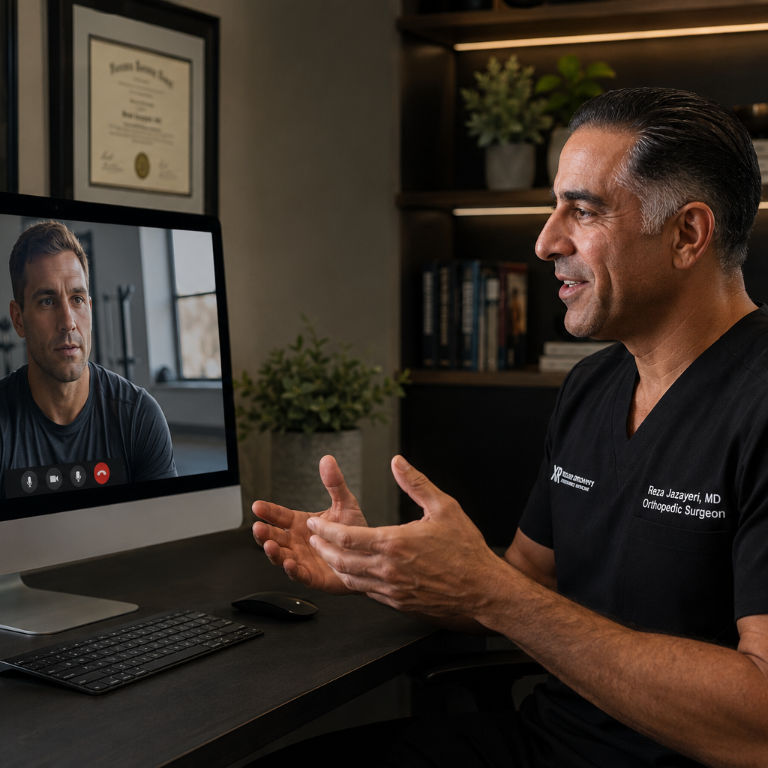
A hip labral tear can disrupt your daily life and limit the activities you enjoy. Dr. Reza Jazayeri is a double board-certified orthopedic surgeon with a sports medicine fellowship from the Kerlan-Jobe Orthopaedic Clinic in Los Angeles. He brings over 15 years of experience treating athletes and active adults seeking relief.
His clinical focus on the shoulder, knee, and elbow is supported by a non-surgical-first approach. He explores conservative measures before considering surgical options. If you need treatment for a hip labral tear in the Greater Los Angeles area, knowing your options is the first step toward moving comfortably again.
Dr. Jazayeri is one of the best surgeons I’ve ever had. Last year I fell on my left shoulder and damaged it so badly that the only option was a total reverse shoulder replacement. After consulting with Dr. Jazayeri, he explained the procedure and also the follow-up issues. He didn’t sugar coat anything but said he was confident he could take away my pain and restore almost all of my shoulder motion. He delivered exactly as he had promised. I also took his advice and did the amino acid regimen as part of my recovery. I’m so lucky to have had him as my surgeon for this procedure. Thank you, Dr. Jazayeri, so much.
Symptoms Of Hip Labral Tear To Recognize
Recognizing the signs of a hip labral tear helps you seek care early. Many people feel a deep pain in the groin or front of the hip. This discomfort often worsens with prolonged sitting, walking, or twisting movements.
You might notice a clicking or catching sensation inside the joint. Some patients report stiffness and a feeling that the hip will give way during activity.
The symptoms can mimic other hip conditions, so a thorough evaluation matters. If these issues sound familiar, a consultation with an experienced orthopedic surgeon in Los Angeles can clarify what you are dealing with.
How Hip Labral Tears Are Diagnosed
Diagnosis starts with a detailed physical exam. Dr. Jaz will move your hip through specific positions to pinpoint pain and assess range of motion. He listens carefully to your description of when symptoms began and what makes them worse.
Imaging tests provide a clearer picture. An MRI with contrast, called an MR arthrogram, often reveals the tear in the labral cartilage. In some cases, a CT scan helps evaluate the bone structure of the hip joint.
This combination of hands-on assessment and advanced imaging leads to an accurate diagnosis. Patients throughout Greater Los Angeles rely on this thorough process to guide treatment decisions.


Conservative Treatments For Hip Labral Tear Relief
Many hip labral tears respond well to non-surgical care. Dr. Jazayeri follows a non-surgical-first approach, starting with the least invasive options. Rest and activity modification give inflamed tissue time to calm down.
You may need to pause high-impact exercise and switch to gentler movement. Nonsteroidal anti-inflammatory drugs, or NSAIDs, can reduce pain and swelling. These medications help you stay comfortable while the joint heals.
Conservative treatment works best when you follow a structured plan and avoid rushing back into aggravating activities. For active adults in Los Angeles, this patient-centered strategy often provides meaningful relief without surgery.
Physical Therapy Techniques For Hip Labral Tear
Physical therapy plays a central role in recovery. A targeted program strengthens the muscles around your hip, improving stability and reducing stress on the torn labrum. Your therapist will guide you through exercises that build core strength and correct movement patterns.
Stretching tight hip flexors and hamstrings can ease tension across the joint. Balance training helps restore confidence in your hip during daily activities.
Dr. Jazayeri coordinates with skilled therapists in the Greater Los Angeles area to create a plan that matches your specific needs. Consistent therapy often allows patients to return to their routines with less pain and better function.
Corticosteroid Injections For Hip Labral Tear Management
When pain persists despite rest and therapy, a corticosteroid injection may offer relief. The injection delivers anti-inflammatory medication directly into the hip joint. This can reduce swelling and ease discomfort for weeks or months.
The procedure is performed with image guidance to ensure accurate placement. While the injection does not heal the tear itself, it can create a window of comfort that allows you to participate more fully in physical therapy.
Dr. Jazayeri uses this tool selectively, always with a focus on your long-term joint health. Patients in Los Angeles appreciate having this option as part of a detailed treatment plan.
Surgical Options For Hip Labral Tear Repair
If conservative measures do not provide enough relief, surgery may be the next step. Arthroscopic labral repair uses small incisions and a tiny camera to access the joint. The surgeon reattaches the torn labrum to the rim of the hip socket using small anchors.
In cases where the tissue is too damaged for repair, debridement removes the frayed edges to eliminate catching and pain. Dr. Jaz applies minimally invasive techniques throughout his practice, which can lead to less tissue disruption. His surgical training at NYU Hospital for Joint Diseases and the Kerlan-Jobe Orthopaedic Clinic in Los Angeles informs every procedure he performs.


Rehabilitation After Hip Labral Tear Surgery
Recovery after surgery follows a phased rehabilitation program. The first phase protects the repair with limited weight-bearing and gentle range-of-motion exercises. You will use crutches for a period determined by your specific procedure.
As healing progresses, physical therapy advances to strengthening and gait training. Most patients can expect a return to normal activities within three to six months. Dr. Jazayeri incorporates prehabilitation before surgery to prepare your body for recovery.
His focus on nutritional optimization and structured conditioning supports the healing process. Patients across Greater Los Angeles benefit from this disciplined approach to post-surgical care.
Maintaining Communication With Your Healthcare Provider
Open dialogue with your orthopedic surgeon leads to better outcomes. You should report any changes in symptoms, new discomfort, or concerns about your progress. Dr. Jazayeri treats every patient with the same level of care and attention he would give to his own family and friends.
This philosophy shapes how he communicates throughout your treatment journey. Regular follow-up visits allow him to adjust your plan as needed.
Whether you choose conservative care or surgery, staying connected with your provider keeps your recovery on track. Virtual consultations are available for patients across California, making it easier to maintain that connection.
Frequently Asked Questions
-
A hip labral tear is an injury to the cartilage that surrounds the hip joint. It can cause pain, clicking sensations, and instability in the hip area.
-
Common symptoms include deep pain in the groin or hip, stiffness, and a clicking sensation when moving the joint. These symptoms may worsen with activities like sitting for long periods or twisting movements.
-
Diagnosis typically involves a physical examination and imaging tests like MRI or CT scans. A thorough assessment helps determine the extent of the injury and guides treatment options.
-
Treatment options range from conservative measures like rest and physical therapy to surgical interventions if necessary. Dr. Jazayeri often starts with non-surgical approaches before considering surgery.
-
Recovery involves a phased rehabilitation program, starting with limited weight-bearing and gentle exercises. Most patients can return to normal activities within three to six months, depending on their specific situation.
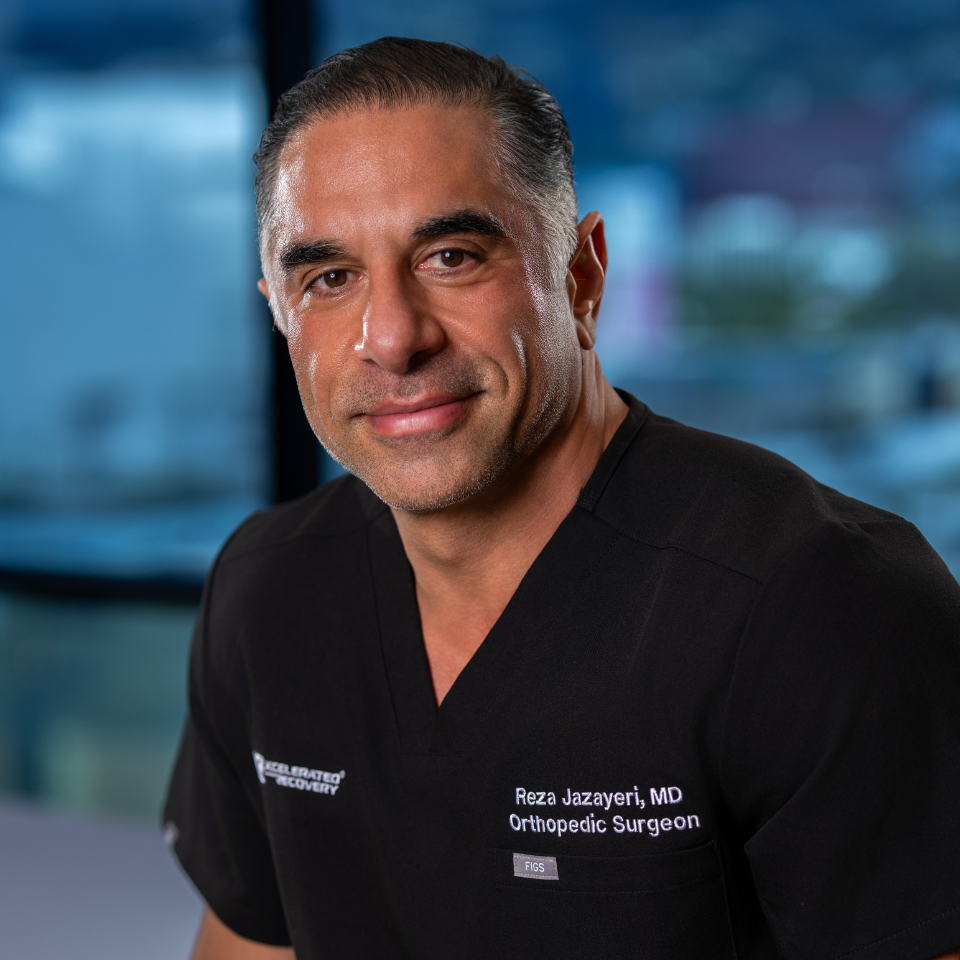
Why Choose Dr. Jaz For Your Hip Labral Tear Treatment?
Dr. Reza Jazayeri is a double board-certified orthopedic surgeon specializing in sports medicine, with a fellowship from the Kerlan-Jobe Orthopaedic Clinic in Los Angeles. His focus on hip labral tears means you receive care from someone who understands your specific needs.
Dr. Jazayeri takes a non-surgical-first approach. He explores conservative treatments like physical therapy and injections before considering surgery.
If surgery is needed, he uses minimally invasive techniques to help you recover faster. Patients in the Greater Los Angeles area appreciate his commitment to personalized care and open communication throughout their treatment journey.
Meet Dr. Reza Jazayeri
Dr. Reza Jazayeri specializes in sports medicine with expertise in shoulder, knee, and elbow injuries. A Southern California native, Dr. Jazayeri combines an engineering background with elite surgical training, completing his orthopedic surgery residency at the nationally ranked NYU Hospital for Joint Diseases and a sports medicine fellowship at the renowned Kerlan-Jobe Orthopaedic Clinic.
After more than 15 years caring for patients within the Southern California Permanente Medical Group, Dr. Jazayeri joined DOCS Health to expand a practice focused on personalized orthopedic and sports medicine care and surgical excellence. As Director of Longevity at DOCS Health, he leads the development and implementation of optimization protocols and regenerative medicine strategies designed to improve long-term musculoskeletal health and extend healthspan.
His published work includes a 2026 coauthored review of nutritional optimization in spine surgery in the Journal of the American Academy of Orthopaedic Surgeons. View Dr. Jazayeri’s research publications and training.
Explore Treatment Options For Your Hip Labral Tear
Living with hip pain does not have to be your normal. Dr. Reza Jazayeri offers experienced, patient-focused care for a hip labral tear at his Beverly Hills, Westlake Village, and Orange offices.
He has double board certification in orthopedic surgery and sports medicine. His fellowship training at the Kerlan-Jobe Orthopaedic Clinic reflects a commitment to helping active adults move and feel better.
Take the next step toward relief. Schedule a consultation to discuss your symptoms and explore a treatment plan built around your goals.
Medically reviewed by Reza Jazayeri, M.D. on